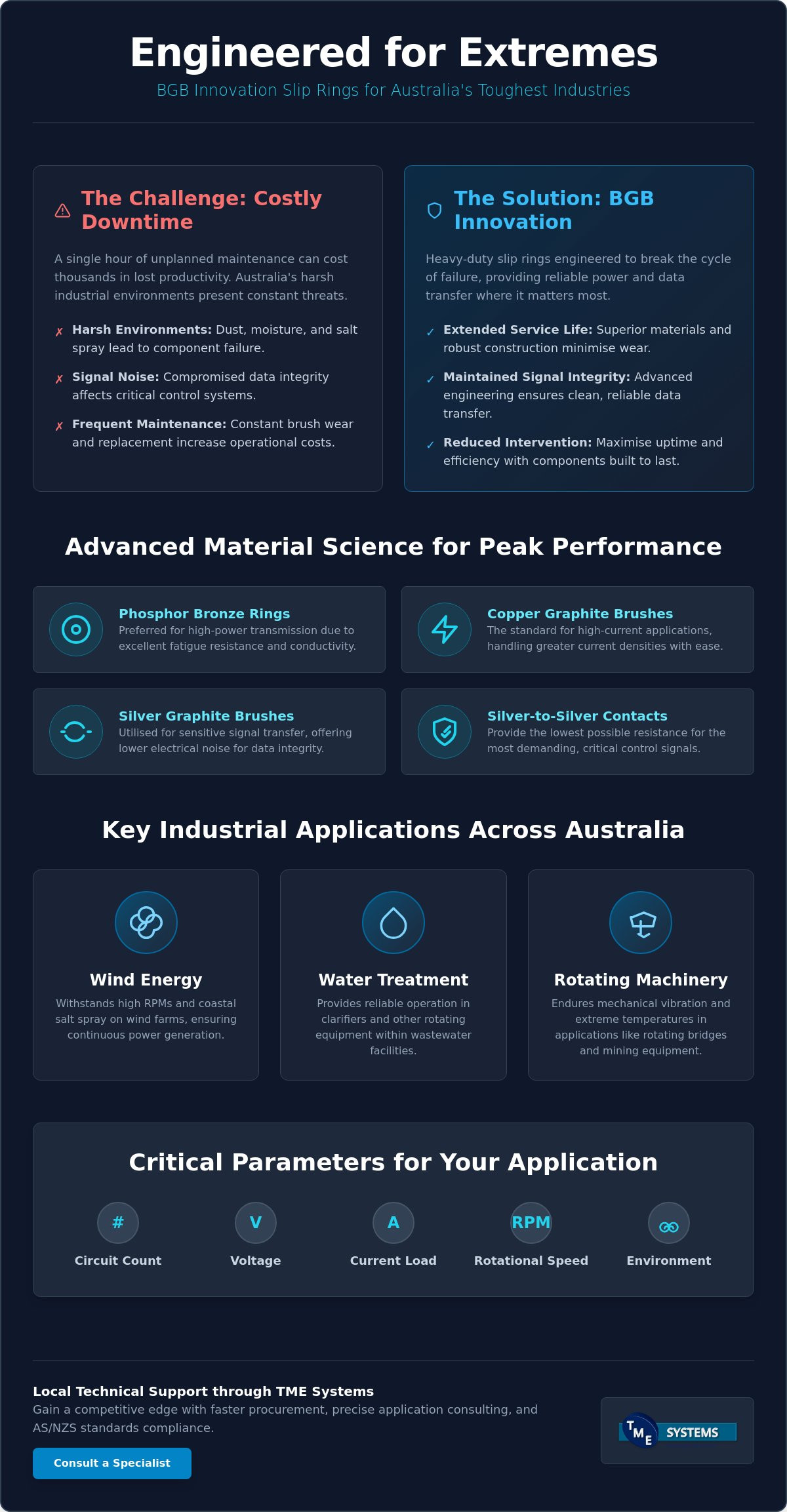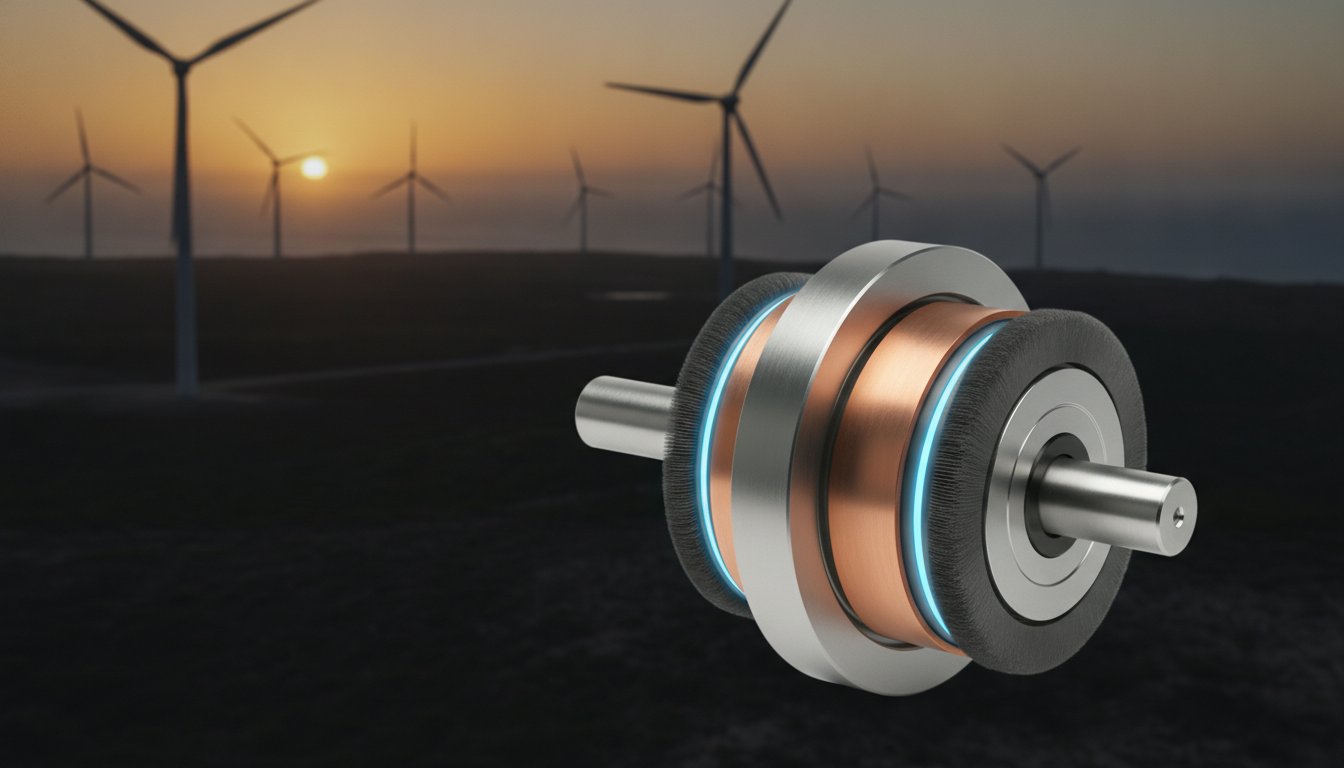
A single hour of unplanned maintenance on a rotating bridge or wind turbine can cost an industrial operation thousands in lost productivity. You likely recognise that in Australia's rugged environments, the climate is rarely kind to electrical components. Dust, moisture, and constant mechanical wear often lead to signal noise and frequent brush replacements that compromise your uptime. It's a challenging cycle that many engineering teams accept as a standard cost of doing business, but BGB Innovation slip rings Australia offer a pathway to break that cycle through superior engineering and local technical support.
This article explores how these heavy-duty solutions provide reliable power and data transfer for the country's most demanding industrial environments. You'll discover how advanced material science and robust configurations extend service life while maintaining critical signal integrity for your data transfer needs. We also preview how direct access to local expertise helps you navigate the requirements of the AS/NZS 61439.1:2026 standards to ensure your rotating systems operate with maximum efficiency and minimal intervention.
Key Takeaways
- Understand why BGB Innovation slip rings Australia are engineered to survive the most demanding local industrial environments while minimising brush wear and maintenance.
- Examine the technical specifications of heavy-duty assemblies, including the AC Series, to ensure your hardware meets the latest AS/NZS 61439.1:2026 standards.
- Identify how specialised rotary interfaces solve specific challenges in Australian wind energy and water treatment facilities, particularly regarding signal integrity.
- Learn the critical parameters for specifying a slip ring, including circuit count, voltage requirements, and the impact of RPM on component service life.
- Gain insights into the benefits of local technical support for faster procurement and precise application consulting through TME Systems.
BGB Innovation Slip Rings Australia: Engineering for Rugged Environments
Australia's primary industries, such as wind energy and wastewater treatment, rely on continuous mechanical rotation. When these systems fail, the financial impact is immediate. To understand the solution, one must first ask, What is a Slip Ring? Essentially, it's an electromechanical device that allows the transmission of power and electrical signals from a stationary to a rotating structure. While the concept is straightforward, the execution in harsh environments requires specialised engineering. BGB Innovation has established itself as a global leader in this field. For local operators, BGB Innovation slip rings Australia provide the necessary resilience for high-current and harsh-environment applications. TME Systems acts as the local technical partner, ensuring that Australian engineers have direct access to these heavy-duty assemblies without the logistical hurdles of international procurement.
The partnership between BGB and TME Systems is centred on technical accuracy. It isn't just about shipping boxes; it's about application consulting. Whether you're dealing with the extreme heat of the Pilbara or the coastal salt spray of a Victorian wind farm, the selection process must be deliberate. TME Systems provides the bridge between BGB’s manufacturing capabilities and the specific operational realities of Australian worksites. This ensures that every BGB Innovation slip rings Australia deployment is fit for purpose and compliant with local standards.
Why Heavy Duty Specifications Matter
Standard slip rings often fail in industrial settings because they aren't built for mechanical vibration or high RPM. A light-duty capsule ring might work for a camera, but it'll likely disintegrate in a clarifier or a wind turbine. Heavy-duty assemblies use robust housings and advanced brush materials to maintain contact longevity. It's a matter of pragmatism. Investing in premium BGB hardware reduces the frequency of site visits. In the long run, the reduction in maintenance downtime far outweighs the initial capital expenditure.
BGB’s Reputation in Global Engineering
BGB's history is deeply connected to the wind energy and water treatment sectors. They've spent decades refining material science to address common failure points like signal noise and oxidation. Their commitment to custom-engineered solutions means they don't just sell a part; they provide a component designed for a specific physical configuration. This focus on environmental resilience is why their hardware is found in some of the most demanding offshore and industrial sites worldwide. They prioritise stability and precision over quick wins, which builds trust with engineering teams who cannot afford equipment failure.
Technical Specifications of Heavy Duty Slip Ring Assemblies
The performance of heavy-duty rotary interfaces depends entirely on their internal architecture. For BGB Innovation slip rings Australia, this architecture is defined by the AC Series and robust standard ranges designed to handle high voltage and current loads. A typical assembly consists of three core components: the rings, the brushes, and the protective housing. Each element must be specified according to the environmental and electrical demands of the site. When reviewing the Technical Specifications of Slip Rings, it's clear that material choice directly correlates with signal integrity and mechanical wear.
Material Science: Rings and Brushes
Material selection is not a one-size-fits-all process. For high-power transmission channels, Phosphor Bronze is the preferred ring material due to its excellent fatigue resistance and conductivity. Regarding brushes, copper graphite is the standard for high-current applications because it handles higher current densities. Conversely, silver graphite brushes are utilised for sensitive signal and data transfer. These brushes offer lower electrical noise, which is vital for maintaining data integrity in harsh industrial settings. For the most demanding data requirements, silver-to-silver contacts provide the lowest possible resistance. This ensures that critical control signals remain clear and reliable. If you're unsure which material suits your current load, you can consult with a specialist on BGB specifications to avoid premature component failure.
Design Configurations: Standard vs Pancake
Physical constraints often dictate the choice between through-bore and pancake designs. Through-bore slip rings are ideal when the assembly must be mounted on an existing shaft or when hydraulic lines need to pass through the centre of the unit. They provide a versatile platform for combining electrical circuits with other rotary joints. In contrast, pancake slip rings solve height constraints. If vertical space is limited but you cannot sacrifice circuit count, the flat, disc-like configuration of a pancake ring provides a compact solution. BGB also offers customisation options that allow for the integration of electrical, optical (FORJs), and fluid rotary joints into a single, unified assembly. This modularity ensures that the BGB Innovation slip rings Australia range can be tailored to meet the exact mechanical and electrical thresholds of any Australian industrial project.
Key Industrial Applications Across Australia
Australian industrial operations often face environmental extremes that standard electrical components simply cannot withstand. From the salt-laden air of coastal wind farms to the abrasive dust of the Pilbara, the demand for reliable rotary interfaces is constant. BGB Innovation slip rings Australia are engineered to address these specific regional challenges by prioritising mechanical durability and environmental sealing. These assemblies are common in sectors where downtime isn't just an inconvenience, but a significant financial liability.
In the mining and heavy machinery sector, vibration is the primary cause of electrical contact failure. Excavators and stacker-reclaimers operate under constant mechanical stress that can lead to signal flickering or power arcs in inferior components. BGB designs use specialised brush holders and reinforced housings to maintain contact stability. Similarly, in lifting platforms and cranes, these slip rings ensure that safety systems and control signals receive continuous power regardless of the boom's rotation. This reliability is essential for meeting Australian safety standards on busy construction and port sites.
For operators managing the broader logistics and machinery of these maritime hubs, you can discover BTR Marine Services LLC for expert assistance with the sale and purchase of industrial and commercial vessels.
Wind Turbine Performance and Maintenance
The wind energy sector is perhaps the most demanding environment for rotary interfaces. Inside the nacelle, slip rings facilitate pitch control and signal transfer between the stationary tower and the rotating blades. Understanding how slip rings work in these high-altitude environments explains why BGB's material science is so critical. Because many Australian wind farms are located in remote areas, the cost of sending a technician for a brush replacement is exceptionally high. BGB's brushes are designed for extended service intervals, which directly reduces the operational expenditure of the farm. Additionally, many of these units feature integrated lightning protection systems to safeguard sensitive electronics during storms.
Ruggedised Solutions for Water and Waste
Water and wastewater treatment plants require components that can survive high humidity and corrosive atmospheres. BGB Innovation slip rings Australia are frequently specified for rotating bridges, clarifiers, and rotary distributors. These applications demand high IP ratings to prevent the ingress of moisture and biological agents. BGB utilises advanced sealing technologies and corrosion-resistant materials to ensure that the electrical path remains clear over years of outdoor exposure. In large-scale irrigation projects across the Murray-Darling Basin, these ruggedised assemblies allow for the reliable automation of water distribution systems. If your facility requires a high degree of environmental protection, you can view the BGB range to find a solution with the appropriate sealing specifications.
Specifying the Right BGB Slip Ring for Your Application
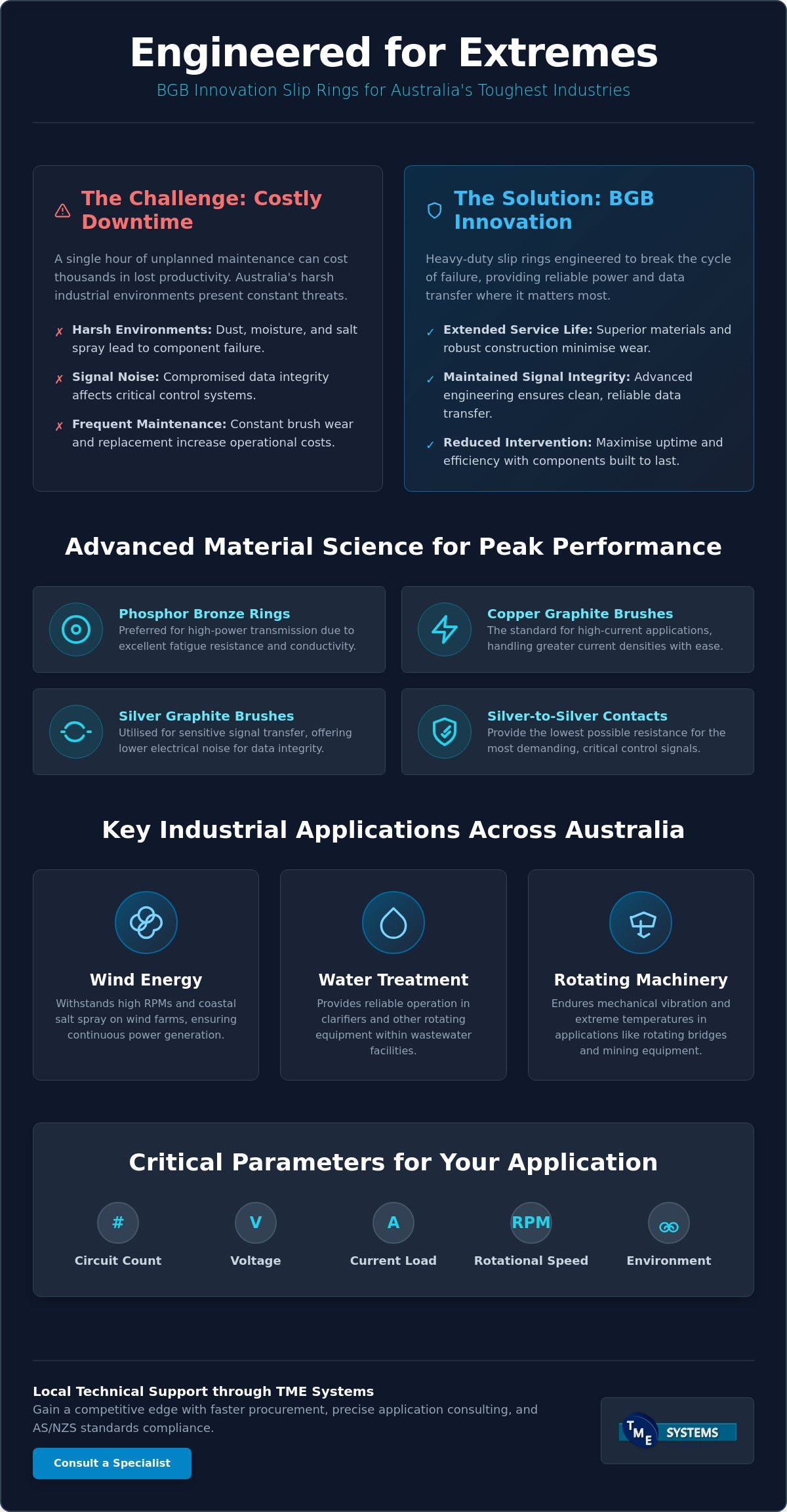
Selecting the correct rotary interface requires a methodical technical audit of your machinery's requirements. You shouldn't simply match the dimensions of a legacy part; you must evaluate the current electrical load and the physical environment where the unit will operate. When specifying BGB Innovation slip rings Australia, the primary data points include the total circuit count, the peak voltage, and the maximum current per channel. It's also vital to consider operational speed. High RPM increases friction at the brush interface, which generates heat and accelerates wear. If your application involves high-speed rotation, you'll need an assembly designed to dissipate thermal energy effectively to maintain its service life.
Mounting styles also play a critical role in the selection process. Depending on your equipment's architecture, you might require a flange mount for external attachment, a shaft mount for direct integration, or specialised brackets for unique orientations. Each choice affects how easily the unit can be accessed for future inspections. Getting these parameters right during the design phase prevents costly retrofitting later.
Environmental Resilience in Australian Conditions
The Australian climate presents unique challenges that standard industrial hardware often fails to meet. In outback environments, ambient temperatures can exceed 45°C, which leads to significant thermal expansion in metal components. BGB Innovation slip rings Australia are engineered with tolerances that account for these fluctuations to prevent mechanical binding. In mining regions like the Pilbara, sealing against fine iron ore dust is a priority, as these abrasive particles can quickly degrade conductive surfaces. For Australian marine applications, an IP67 rating is essential to ensure the internal contacts remain protected against temporary immersion and high-pressure salt spray.
Similarly, protecting the interiors of service vehicles from these harsh conditions is a practical necessity; you can learn more about Tru-Fit Carpets by Vision Auto for durable, custom-fit automotive flooring and insulation designed for rugged use.
Circuit and Signal Configuration
Modern industrial machinery often requires the simultaneous transfer of high-voltage power and sensitive data. This creates a risk of crosstalk and electromagnetic interference if the assembly isn't properly shielded. BGB designs allow for the mixing of power and signal channels while maintaining strict signal integrity. For high-bandwidth telemetry, you can integrate Fibre Optic Rotary Joints (FORJs) into the assembly. When determining your circuit count, it's a pragmatic choice to include spare channels to future-proof your machinery for additional sensors or control modules. To ensure your hardware matches these precise requirements, you should review the BGB technical data sheets before finalising your specification.
TME Systems: Your Local Partner for BGB Innovation in Australia
Sourcing heavy-duty rotary interfaces from international manufacturers often introduces logistical complexity and technical ambiguity. For Australian engineering firms, the primary concern is ensuring that a specified component will perform reliably in local conditions without the risk of extended lead times or misaligned specifications. TME Systems serves as the authorised local partner for BGB Innovation slip rings Australia, providing a direct link to BGB's global manufacturing excellence. This partnership ensures that procurement is streamlined and that technical support is available within the same time zone as your project site.
The benefit of this local presence extends beyond simple logistics. It involves a deep understanding of the mechanical and electrical variables unique to the Australian market, including compliance with the latest AS/NZS 61439.1:2026 standards. By acting as a knowledgeable intermediary, TME Systems helps clients navigate the complexities of hardware selection. This reduces the risk of specifying an under-powered or incompatible unit. An expert-led selection process is a pragmatic way to minimise unplanned downtime and ensure that rotating systems operate at peak efficiency from the moment of installation.
For managers overseeing broader facility upgrades or complete turnkey solutions for industrial buildings, click here to discover how A1 Precision Solutions delivers comprehensive project management across Australia.
Technical Application Consulting
Engaging with a specialist early in the design phase is critical for successful integration. TME Systems provides comprehensive Technical Application Consulting for Rotary Connectors, assisting engineers in translating complex site requirements into precise hardware specifications. This process includes reviewing initial technical drawings and evaluating the physical constraints of the machinery to ensure the housing and mounting styles are appropriate. Through these local channels, Australian operators can access BGB's custom engineering capabilities. This allows for the development of bespoke slip ring assemblies that address specific environmental challenges or unique circuit configurations that standard off-the-shelf parts cannot accommodate.
Direct Supply and Support
Maintaining a single point of contact for multiple high-performance brands simplifies the procurement cycle for procurement officers and technical managers alike. TME Systems ensures that all BGB Innovation Slip Rings supplied are fully compatible with existing Australian industrial equipment. This localised support model provides a safety net for long-term operations, offering a reliable pathway for component replacement and technical queries. By bridging the gap between global manufacturing and local application, TME Systems reinforces the operational stability of Australia's wind energy, water treatment, and mining sectors.
Optimising Industrial Rotation with Local Technical Expertise
Reliable rotation in Australia's most demanding sectors depends on components that can withstand abrasive dust, extreme heat, and constant mechanical vibration. Throughout this guide, we've examined how material science and precise environmental sealing prevent signal noise and premature brush wear. By specifying BGB Innovation slip rings Australia, you're choosing hardware with a proven track record in the national wind energy and mining sectors. This ensures your systems remain operational with fewer service intervals and higher data integrity.
As the authorised Australian supplier, TME Systems provides more than just hardware. Our NSW office offers expert technical selection advice to help you navigate complex requirements, from initial drawings to final installation. We understand the physical and functional realities of your worksite and are committed to the technical success of your project. Whether you're upgrading a clarifier or a wind turbine, we invite you to Request a Technical Consultation for BGB Innovation Slip Rings today. We're ready to help you secure the long-term reliability your operation requires.
Frequently Asked Questions
What makes BGB Innovation slip rings suitable for heavy-duty use?
BGB Innovation slip rings are engineered with high-grade alloys and robust enclosures that withstand mechanical vibration and high-current loads. Their architecture prioritises longevity in abrasive environments, making them ideal for the heavy-duty requirements of Australian industrial sites. The use of high-fatigue materials like Phosphor Bronze ensures the assembly remains stable under constant mechanical stress.
Can BGB slip rings be customised for combined power and data transfer?
Yes, these assemblies allow for the simultaneous transmission of power and data through dedicated, isolated channels. By using shielded circuits and silver-to-silver contacts, BGB Innovation slip rings Australia maintain signal integrity while preventing electromagnetic interference between power lines and sensitive telemetry. This makes them a reliable choice for modern automated machinery that requires high-bandwidth communication alongside high-voltage power.
How do I determine the correct IP rating for an Australian mining application?
Selection depends on the specific site risks, such as fine iron ore dust or high-pressure cleaning requirements. An IP65 rating is generally sufficient for dust protection in dry environments, while IP67 is required if the equipment faces temporary immersion or intense water spray. It's best to evaluate the peak exposure levels of your specific worksite before finalising the enclosure specification.
What is the typical maintenance interval for a BGB carbon brush system?
Maintenance intervals are influenced by operational speed and environmental contamination, though BGB systems are engineered for longer service life than standard alternatives. You should schedule regular inspections based on your specific duty cycle to monitor brush wear and ensure electrical contact stability. Proactive monitoring helps you avoid unplanned downtime by identifying wear before it compromises the electrical path.
Are BGB Innovation slip rings compatible with Australian electrical standards?
These slip rings meet international engineering standards and are suitable for use in systems designed to comply with AS/NZS 61439.1:2026. TME Systems provides technical guidance to ensure the hardware integrates correctly with Australian-compliant switchgear and control assemblies. This ensures your installation remains safe and meets all local regulatory requirements for industrial hardware.
What information is required to get a technical quote for a BGB slip ring?
To provide an accurate technical quote, we require the total number of circuits, the required voltage and current per channel, the maximum RPM, and the preferred mounting configuration. Details regarding the operating environment, such as ambient temperature and moisture levels, are also essential. Providing these data points ensures the quoted hardware matches your application's physical and electrical thresholds.
How does ambient temperature in Australia affect slip ring performance?
High ambient temperatures can lead to thermal expansion and increased electrical resistance within the assembly. BGB Innovation slip rings Australia account for these variables by using materials that maintain mechanical tolerances and dissipate heat effectively. This prevents component binding or premature failure even when operating in the extreme heat typical of the Australian outback.
Can I integrate hydraulic rotary unions with BGB electrical slip rings?
Yes, through-bore configurations allow for the integration of hydraulic or pneumatic rotary unions within the same rotating axis. This modular approach enables the simultaneous transfer of electrical power, data, and fluids in a single, compact unit. It's an efficient solution for complex machinery like excavators or rotating distributors that require multiple media types to pass through a single centre point.