What if the reel is right for the job, but its rotary electrical interface isn’t? Selecting an electrical swivel for cable reeling applications means looking beyond cable storage and deployment. The reel manages the cable; the swivel, also called a slip ring or rotary electrical joint, maintains an electrical connection as the system rotates. Confusing these roles can lead to a specification that doesn’t suit the reel’s operating duty.
The rotary connection needs to match the application’s electrical and mechanical demands as well as the reel itself. This guide explains how the interface works, compares relevant connection approaches and identifies the details needed for sound engineering selection. You’ll consider circuit count, current, voltage, rotational speed, mounting style and environmental conditions, then see how those requirements shape a practical specification. Prosper Rotation slip rings are one product category to consider, and technical application consulting can help translate cable reel duty into a suitable rotary connector specification.
Key Takeaways
- Understand how the reel handles cable storage and movement while the rotary interface maintains electrical continuity during rotation.
- Build an electrical swivel for cable reeling applications specification around reel duty, rotation pattern, circuit count, electrical load and operating conditions.
- Compare swivel, slip ring and collector ring options by their function and fit with the application’s electrical and mechanical demands.
- Prepare equipment drawings, wiring details and operating information to support a focused engineering review.
- See how technical application consulting and Prosper Rotation slip rings can support selection against your application requirements.
How do electrical swivels work in cable reeling?
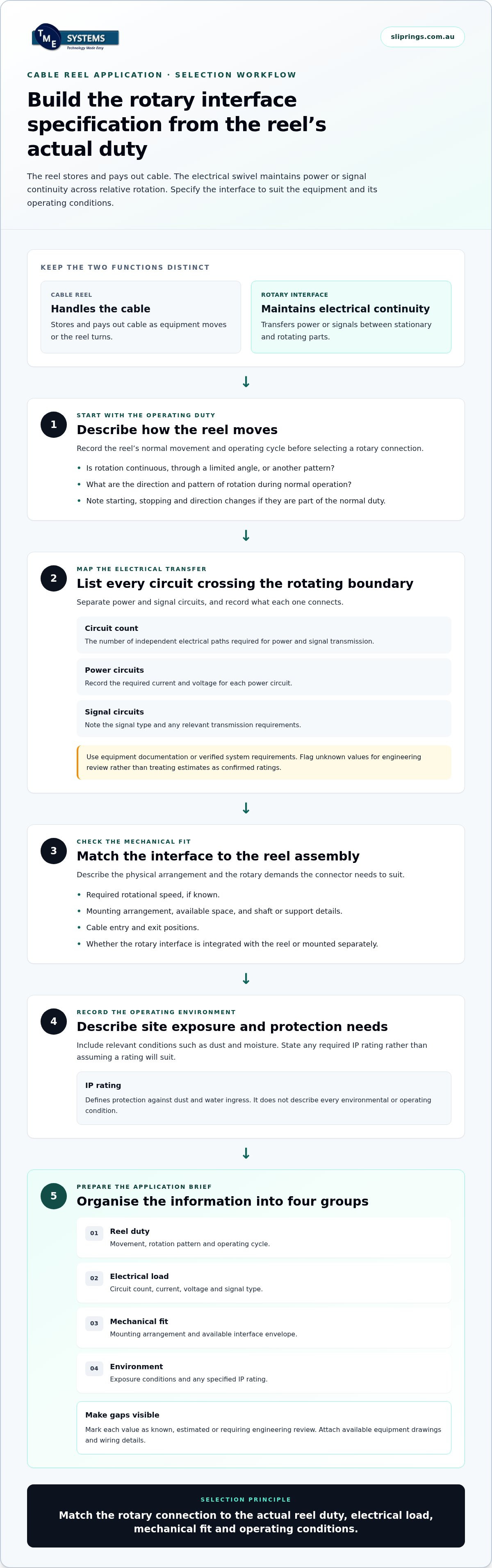
A cable reel and its electrical swivel perform different jobs. The reel stores and pays out cable as equipment moves or the reel turns. The swivel provides the rotary electrical interface, allowing power or signals to pass between stationary and rotating parts without relying on the cable to accommodate continuous rotation.
An electrical swivel maintains electrical continuity across relative rotation; the cable reel manages the cable’s winding and payout. This distinction is central to selecting an electrical swivel for cable reeling applications. The interface must suit the reel’s duty and the circuits it needs to carry. A slip ring is one form of rotary electrical connection, and terminology can vary with application and design.
How the electrical interface works as the reel rotates
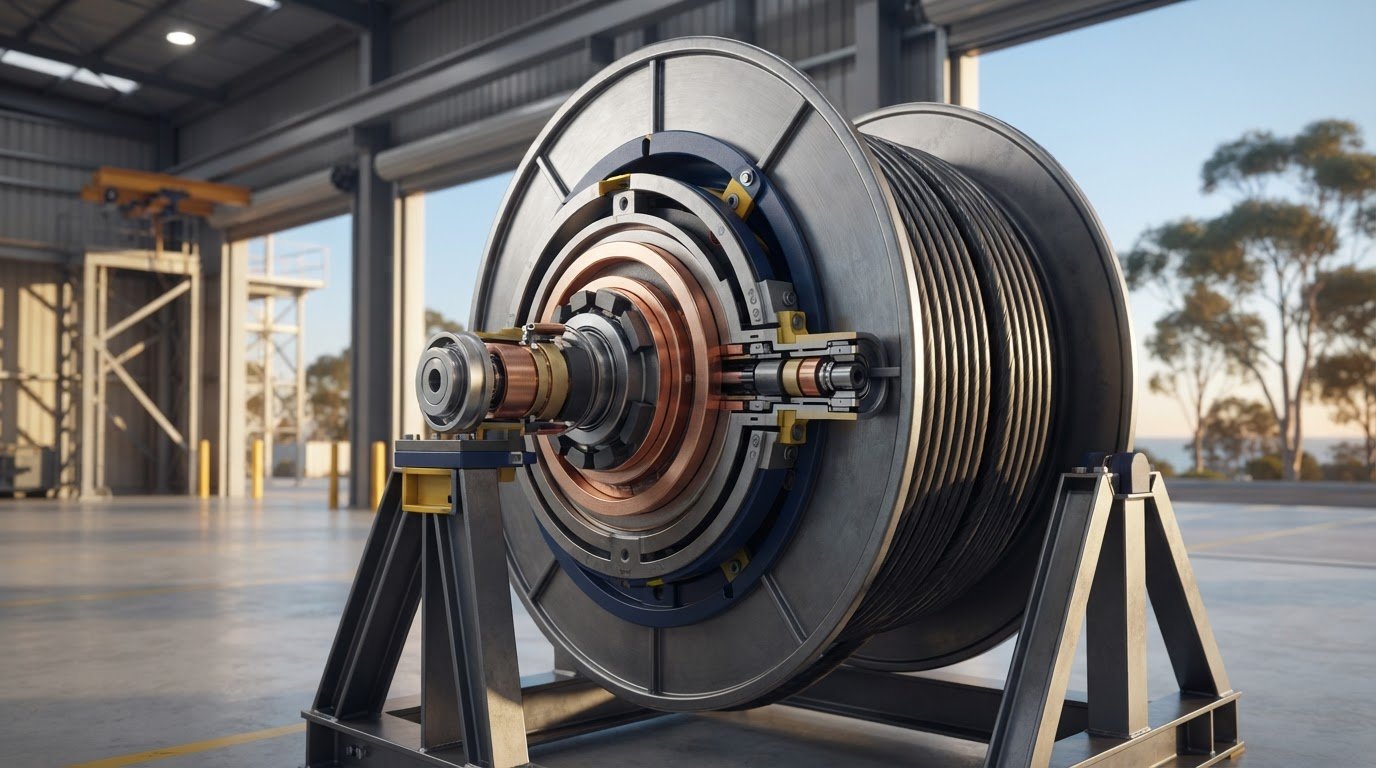
In a typical arrangement, one side of the rotary interface is fixed to the supporting structure, while the other turns with the reel or rotating assembly. Conductive paths within the interface connect the electrical circuits across those two sides as they move relative to each other. This allows electrical transfer during the intended rotary motion without winding the fixed-side wiring around the rotating assembly.
The arrangement depends on the equipment. A rotary interface may be integrated with the reel assembly or mounted separately. Its mounting and connections need to suit how the reel rotates, how it is supported, and where the electrical conductors enter and leave the assembly.
When a cable reeling system needs a rotary electrical connection
A rotary connection is relevant when electrical supply or signals must pass from a stationary source to rotating equipment. For example, a moving machine may need power or control signals while cable is wound onto or paid out from a rotating reel. The swivel transfers electricity across the rotating boundary; it doesn’t perform the reel’s cable-handling function.
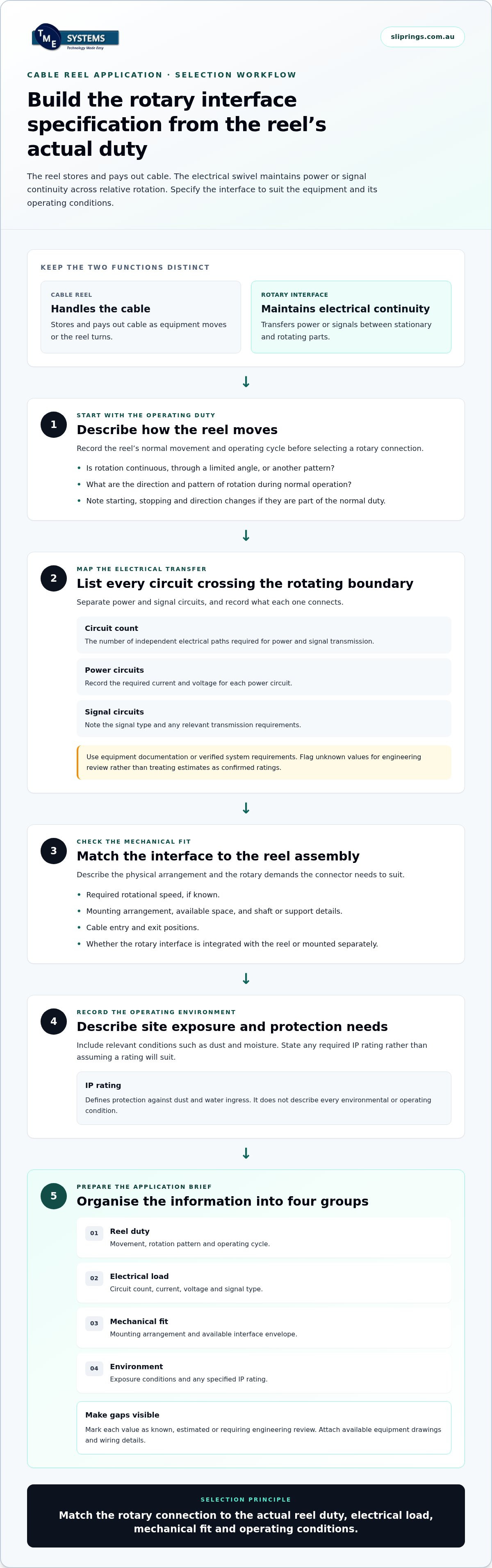
Start by identifying whether the reel rotates continuously, moves through a limited angle or operates in another pattern. Then establish which circuits must cross the interface. Requirements may include:
- Power circuits, signal circuits or both.
- The number and type of circuits to be transferred.
- The reel’s direction and pattern of rotation during normal operation.
These details define the interface requirement without assuming that every cable reel needs the same configuration. Matching the rotary connection to the actual duty is the first step towards a useful engineering specification.
Which cable reel requirements determine the electrical swivel specification?
Begin with the reel’s actual duty, not a presumed connector rating. Record how the reel moves, how often it rotates, whether rotation is continuous or limited, and the conditions it operates in. These details help establish what the rotary interface must transfer and withstand. A specification for an electrical swivel for cable reeling applications is useful only when it reflects the installed equipment and its operating pattern.
Separate confirmed information from assumptions. Mark each value as known, estimated or requiring engineering review. This makes gaps visible and helps prevent an assumed electrical or mechanical limit from becoming an unexamined requirement.
Electrical requirements: circuits, current, voltage and signals
List each circuit that must cross the rotating interface. Circuit count means the number of independent electrical paths required for power and signal transmission. Record power and signal circuits separately, including their function and the equipment they connect. For each power circuit, add the required current and voltage. For signals, note the signal type and any relevant transmission requirements.
Use equipment documentation or verified system requirements wherever possible. Don’t infer ratings from the cable reel or another installation. If a value is unknown, flag it for engineering review rather than presenting an estimate as fact.
Mechanical duty, mounting and operating environment
Describe the rotation pattern and operating cycle, then state the required rotational speed if it’s known. Include starting, stopping or direction changes if these form part of normal operation. The interface also needs to fit the reel assembly, so note the mounting arrangement, available space, shaft or support details, and cable entry and exit positions.
Record relevant exposure, such as dust, moisture or other site conditions. If the application has a required IP rating, state it as a requirement rather than assuming a rating will suit. An IP rating defines protection against dust and water ingress; it doesn’t describe every environmental or operating condition.
A useful application brief can be organised into four groups:
- Reel duty: movement, rotation pattern and operating cycle.
- Electrical load: circuit count, current, voltage and signal type.
- Mechanical fit: mounting arrangement and available interface envelope.
- Environment: exposure conditions and any specified IP rating.
Attach available drawings and wiring details, and flag information that remains estimated or unresolved. This gives application engineering a clear basis for matching the duty to a rotary connector. For a relevant product category, see Prosper Rotation slip rings.
Electrical swivel, slip ring or collector ring: how should you compare options?
“Electrical swivel” often describes the need to transfer power or signals across a rotating joint, rather than one universal connector construction. Compare each option by its function, electrical duty and fit with the reel assembly. A cable-handling swivel may guide or manage a cable mechanically, while a rotary electrical joint provides conductive paths across rotation. A fluid rotary union serves a different purpose by transferring fluid.
How a slip ring differs from a cable-handling swivel
Specify an electrical interface when circuits must remain connected between stationary and rotating equipment. Specify cable guidance separately if the system also needs to control the cable’s path. These functions may sit within the same broader assembly, but one doesn’t establish that the other is provided. For an electrical swivel for cable reeling applications, identify the required electrical transfer first, then assess the connector construction against the reel’s duty.
Compare function and application fit
Use the terms as a starting point, not as proof that a particular device will suit the application. Compare candidate options against the same information:
| Option or term | Typical role | What to assess for the reel |
|---|---|---|
| Electrical swivel | Describes the need for electrical transfer across rotation. | Clarify the required circuits, motion and mounting arrangement; the term alone doesn’t define construction. |
| Standard slip ring | Provides electrical paths between stationary and rotating parts. | Check circuit count, signal requirements, electrical ratings, speed and mechanical integration. |
| Collector ring | Collector rings are heavy-duty rotary connectors designed for high current capacity, whereas standard slip rings are typically optimized for signal integrity and lower currents. | Compare verified current and voltage ratings with the actual duty, alongside fit and operating conditions. |
| Liquid metal rotary connectors | Brushless rotary connectors that use a pool of conductive liquid metal to maintain electrical continuity. | Include them in the comparison only when the application warrants it, and assess documented ratings and construction. |
No category is automatically the best choice. The appropriate option depends on the reel’s complete electrical and mechanical requirements and verified product ratings. Don’t infer current capacity, noise, service life or suitability from a product label alone. Compare product documentation with the operating duty, mounting constraints and environmental conditions, then resolve any gaps through engineering review. Prosper Rotation slip rings are one product category to consider in that assessment.
How to prepare a cable reeling application for engineering review
A useful engineering review starts with the equipment’s actual duty, then considers electrical needs, mechanical fit and operating conditions together. For an electrical swivel for cable reeling applications, a clear brief helps translate reel operation into a practical component specification.
Gather available equipment drawings, wiring details and operating information before comparing options. Missing values are useful to identify: mark each as unknown, estimated or awaiting review rather than filling gaps with assumptions. Where possible, note the source of key figures, such as a wiring schedule, equipment drawing or operating manual.
A practical data checklist for the equipment brief
Organise the information by system function so electrical and mechanical requirements can be reviewed together:
- Electrical: circuit count, current and voltage for power paths, plus signal types and any specific transmission requirements.
- Motion: rotation pattern, operating cycle and required rotational speed.
- Mechanical integration: mounting dimensions, available space, cable routing and any shaft or support constraints.
- Other interfaces: auxiliary components or connections that affect the available envelope or mounting arrangement.
- Environment: operating conditions and any defined IP rating requirement.
Mark each item as confirmed, estimated or unresolved. This helps focus the review and shows where application engineering needs to resolve a requirement before assessing a candidate interface.
Standards and final engineering checks
Standards depend on the application and installation context. AS/NZS 5368:2025 specifies requirements for the design, installation and operation of electrical equipment in mines and quarries, so assess its relevance where the cable reeling system is intended for that context. Don’t treat a standard as applicable solely because the equipment includes a rotating electrical connection.
AS/NZS 3000:2018 is the Australian/New Zealand wiring rules standard for electrical installations. Component selection and installation compliance are separate considerations: matching a rotary connector to its duty doesn’t, by itself, establish that the completed installation meets applicable requirements. Include the installation context in the brief where it affects the engineering review.
Use the brief to compare candidate requirements with documented product information, and record any remaining points for final engineering review. For application-based component selection, review Prosper Rotation slip rings alongside your equipment details and operating requirements.
Selecting an electrical swivel for cable reeling with TME Systems
Choosing an electrical swivel for cable reeling applications means assessing the reel’s operating duty alongside its electrical requirements and mechanical integration. The connector must suit the circuits that cross the rotating interface, the way the reel turns, and the space and conditions in which it operates. No single label or feature establishes suitability on its own.
TME Systems’ technical application consulting helps translate these requirements into a rotary connector specification and match the application to slip ring options. Prosper Rotation slip rings are one relevant range to consider. Base selection on the application details and relevant product information, rather than assumed ratings or a general product description.
What the final engineering review should resolve
A useful review considers electrical and mechanical requirements together. Compare the required circuit count, current, voltage and signal types with documented product ratings, then check rotational speed, mounting arrangement and environmental conditions against the same application brief.
Unresolved inputs can affect which options are suitable for further assessment. For example, an unknown speed requirement or incomplete mounting dimensions may prevent a clear comparison of candidate interfaces. Record those gaps and their source, then distinguish confirmed requirements from values awaiting engineering review. This supports a reasoned selection without implying guaranteed performance before the product and application have been assessed.
Prepare the information for application-based selection
Drawings, wiring details and operating conditions give application engineering a practical basis for review. Include the reel’s rotation pattern, mounting envelope, cable arrangement and any auxiliary interfaces that affect fit. For electrical requirements, identify each power and signal circuit and provide verified values where available. Mark estimates clearly so they’re not mistaken for confirmed limits.
This information helps TME Systems assess how the reel duty aligns with slip ring options, including relevant mounting and environmental requirements. It also makes it easier to identify where further engineering review is needed before making a selection.
For a relevant product range, explore Prosper Rotation slip rings. A well-prepared application brief can make technical application consulting more focused and support a selection grounded in the equipment requirements.
Put your cable reel requirements into a clear specification
Selecting an electrical swivel for cable reeling applications starts with understanding the reel’s duty and the interface’s separate role in transferring power or signals across rotation. A suitable selection must account for electrical requirements, including circuit count, current, voltage and signal type, alongside rotational speed, mounting arrangement and environmental conditions.
Compare slip ring or collector ring options against the complete application, not the name alone. Drawings, wiring details and operating conditions make that comparison more useful. Clearly mark unknown or estimated values so they can be addressed during engineering review rather than treated as confirmed requirements.
TME Systems’ technical application consulting supports application-based component selection, matching requirements to relevant slip ring options, including Prosper Rotation slip rings. Bring together the available equipment information and take the next step: Discuss your cable reeling application with TME Systems. A clear brief supports a well-informed engineering decision.
Frequently Asked Questions
What is an electrical swivel for cable reeling applications?
An electrical swivel is a rotary interface that maintains electrical continuity between stationary and rotating parts. The cable reel stores, winds and pays out cable; the swivel transfers power or signals across the rotating connection. These are separate functions. The arrangement depends on the reel’s electrical duty and mechanical integration, so the term doesn’t describe one fixed product design or establish ratings without reference to the application.
Is an electrical swivel the same as a slip ring?
Not necessarily, although the terms can overlap in application language. A slip ring is a rotary electrical connector that transfers circuits between stationary and rotating equipment. A mechanical swivel may instead allow parts to turn or manage a connection without transferring electricity. Don’t assume a device described as a swivel carries electrical circuits. The equipment drawings and specification should make clear whether electrical continuity across rotation is required.
How do I choose an electrical swivel for a cable reel?
Start with the reel’s operating duty, then document circuit count, current, voltage, signal requirements, rotational speed, mounting and environment. Consider these requirements together: a candidate must suit both the electrical load and the mechanical arrangement. Separate measured or documented values from estimates, and mark unknowns for review. Technical application consulting can assess the information against suitable slip ring options and help shape an application-based specification.
Can an electrical swivel carry power and signals at the same time?
It can only do so if the connector configuration and documented ratings suit the requirements of each circuit. List power and signal circuits separately, including their circuit count, current, voltage and signal type where applicable. Don’t assume one interface supports every combination or a particular data transmission requirement. Compare candidate products with the application specification and product documentation before selecting a configuration.
What information is needed to specify a rotary electrical connection for a cable reel?
Prepare the circuit count, current, voltage and signal types, along with required rotational speed, mounting dimensions, operating cycle and environmental exposure. Include the cable arrangement and note any mechanical or auxiliary interfaces that affect integration. Equipment drawings and wiring details are useful where available. Mark uncertain values as estimates or unknowns rather than presenting them as confirmed facts. This gives engineering review a clear basis for assessing candidate connections.
Which Australian standards should be considered for a cable reeling electrical swivel?
AS/NZS 5368:2025 covers the design, installation and operation of electrical equipment in mines and quarries; assess its relevance where that scope matches the application. AS/NZS 3000:2018 is the Australian/New Zealand wiring rules standard for electrical installations. Standards review is distinct from confirming a specific rotary connector’s technical suitability. Assess the product’s documented ratings and application requirements separately, and don’t infer certification from a standards reference alone.