In specific sectors like automotive manufacturing, unplanned downtime can cost an organisation millions of dollars per hour. It's a persistent challenge for technical managers because even a minor increase in signal noise or a sudden failure in a rotary connector can halt an entire production line. Implementing a rigorous slip ring maintenance checklist is the most effective way to protect sensitive PLC data in dusty or high-temperature environments where premature brush wear is common.
This guide provides a professional framework designed to stabilise electrical resistance and significantly extend the operational lifespan of your hardware. By following a structured routine, you can prevent the signal interference that compromises automated systems. We will outline a methodical approach to inspection and cleaning that aligns with AS/NZS 3760:2022 standards and incorporates the latest 2026 industry benchmarks for maximising equipment uptime.
Key Takeaways
- Identify how preventative maintenance protects signal integrity and prevents the high costs associated with unscheduled industrial downtime.
- Utilise a professional slip ring maintenance checklist to conduct systematic visual and acoustic inspections for early detection of wear.
- Master correct cleaning techniques using high-purity isopropyl alcohol while avoiding abrasive tools that can permanently damage contact surfaces.
- Recognise the distinct maintenance requirements for different technologies, including why Mercotac liquid metal connectors often require a "hands-off" approach.
- Establish a data-driven maintenance schedule based on operational hours and RPM to facilitate informed decisions on when to repair or replace components.
The Critical Role of Preventative Slip Ring Maintenance
Maintaining peak performance in rotating machinery requires more than just occasional observation. For traditional brush-based systems, the "set and forget" mentality is a dangerous myth that often leads to catastrophic failure. A professional slip ring maintenance checklist serves as the first line of defence against the gradual degradation of electrical efficiency. When contact resistance increases, signal integrity suffers, and the resulting electrical noise can disrupt the precise data required by modern PLCs.
Integrating a What is a Slip Ring? overview into your team's training ensures every technician understands that these components are precision interfaces, not just simple connectors. Neglecting these interfaces doesn't just reduce component lifespan; it introduces significant operational risks that can compromise an entire facility's output. Regular preventative checks ensure that 360-degree electrical connectors remain stable, preventing the sudden arcs or signal drops that trigger emergency shutdowns.
The Hidden Costs of Connector Failure
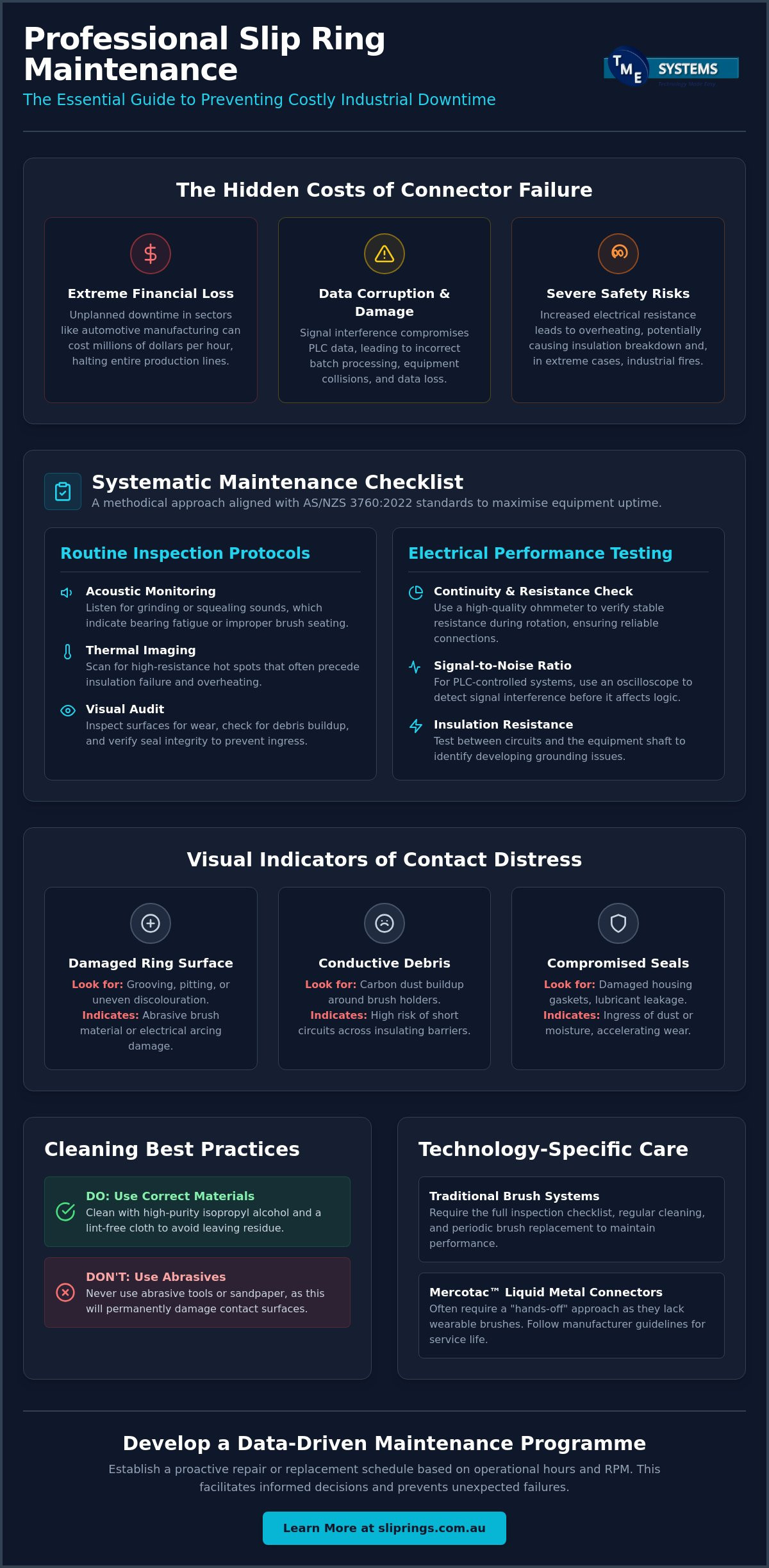
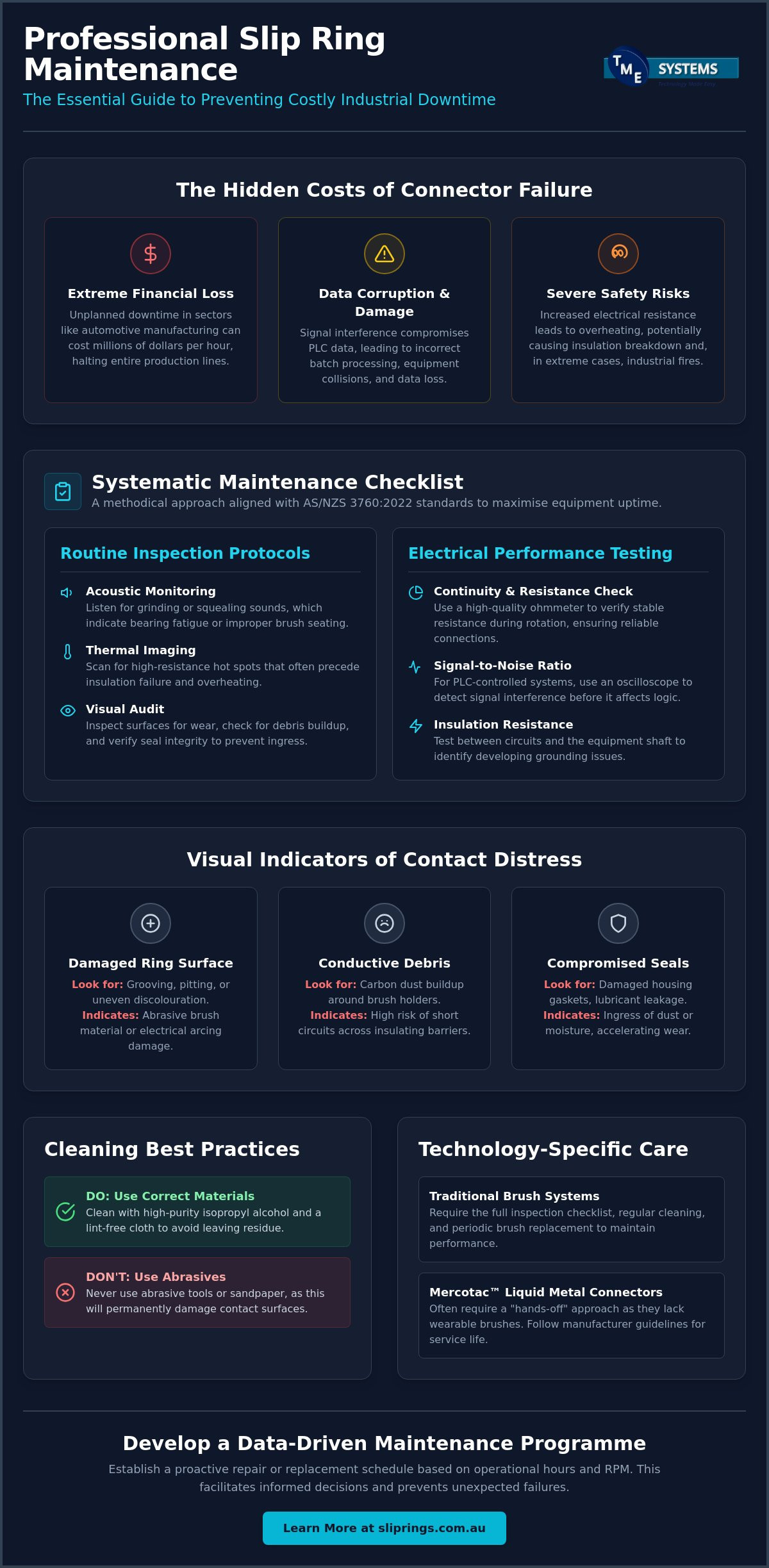
In high-volume Australian production environments, the financial impact of a single failed connector is substantial. Beyond the immediate loss of throughput, reactive repairs often involve premium freight costs for replacement parts and after-hours labour rates. Data corruption is another critical factor. If a sensor-grade circuit fails due to poor contact, it can lead to incorrect batch processing or equipment collisions. Localised overheating is perhaps the most severe risk. As resistance climbs, thermal energy builds up, potentially causing insulation breakdown or, in extreme cases, industrial fires.
Understanding Wear Mechanisms
Technicians must distinguish between mechanical friction and electrical arcing. Mechanical wear is a predictable byproduct of physical contact, while arcing usually indicates improper brush tension or excessive current density. Environmental stressors like the fine dust found in Australian mining operations or the high humidity of coastal manufacturing sites accelerate these processes. It's also vital to recognise the difference between a healthy patina, which is a thin, protective film that aids conductivity, and harmful contact oxidation. A proper slip ring maintenance checklist helps teams identify these patterns before they escalate into total hardware failure.
Routine Inspection Protocols for Australian Industrial Sites
Operating across Australia's diverse industrial environments presents unique challenges for rotary connectors. High ambient temperatures and abrasive particulate matter can accelerate component degradation significantly faster than in controlled environments. A robust slip ring maintenance checklist must therefore start with frequent, systematic walk-throughs to identify early warning signs of failure before they impact production.
Acoustic monitoring is a highly effective, non-invasive diagnostic tool. Technicians should listen for grinding or high-pitched squealing; these sounds often indicate bearing fatigue or improper brush seating. Combining this with thermal imaging allows teams to detect high-resistance hot spots in real-time. These hot spots often precede catastrophic insulation failure. Following established EPRI generator maintenance guidelines provides a technical baseline for these inspections, ensuring your facility's protocols meet global engineering standards.
Visual Indicators of Contact Distress
Visual audits should focus on the ring surface. Grooving or pitting suggests that the brush material is too abrasive or that electrical arcing is occurring. In Australian mining and manufacturing, conductive dust accumulation is a major risk. If left unchecked, this dust can create tracking paths, leading to short circuits across the insulating barriers. During your audit, ensure you check the following:
- Surface finish: Look for uneven wear or discolouration.
- Debris: Check for carbon dust buildup around the brush holders.
- Seals: Inspect housing gaskets for signs of ingress or lubricant leakage.
Electrical Performance Testing
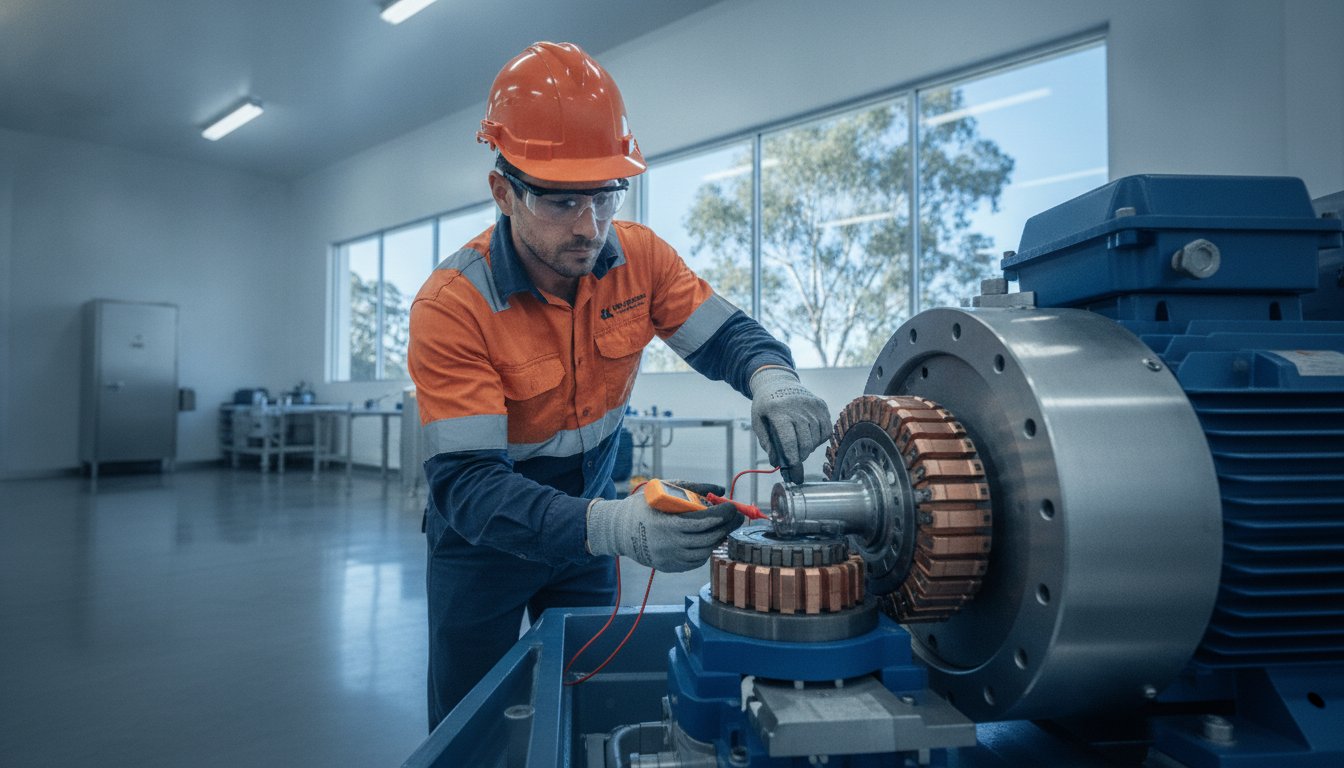
Quantitative data is essential for a reliable slip ring maintenance checklist. Use a high-quality ohmmeter to verify circuit continuity and ensure resistance remains stable during rotation. For data-sensitive applications, monitoring signal-to-noise ratios with an oscilloscope is necessary to detect interference before it affects PLC logic. You should also test insulation resistance between circuits and the equipment shaft to ensure no grounding issues are developing. If your current systems are showing persistent electrical noise despite regular cleaning, consulting with an application specialist can help identify if a technology upgrade is required.
Cleaning and Lubrication Best Practices
Executing a thorough slip ring maintenance checklist requires a disciplined approach to chemical selection and mechanical handling. High-purity isopropyl alcohol (99% or higher) is the preferred solvent because it removes contaminants without leaving a film that might attract abrasive Australian dust. Technicians should never use sandpaper or burnishing tools on precision rings. These abrasives destroy the fine surface finish and the essential patina, leading to increased electrical noise and premature failure.
Managing internal debris is critical for enclosed designs like Prosper Rotation capsule slip rings. Because the housing is compact, carbon dust from brush wear can settle in narrow gaps, potentially causing insulation breakdown. Technicians should use low-pressure, oil-free compressed air to clear these areas before applying any liquid cleaners. This prevents the formation of a conductive "sludge" that can be difficult to remove once it enters the bearing races or internal insulation layers.
Step-by-Step Cleaning Procedure
Safety is the primary consideration before any physical intervention. Technicians must isolate all power sources and ensure the system is mechanically locked out (LOTO) according to site safety protocols. Once the system is secure, follow these steps:
- Remove loose debris and carbon dust using a dedicated industrial vacuum or dry, oil-free compressed air.
- Apply the solvent to a lint-free cloth rather than spraying the ring directly. Direct spraying can saturate internal insulation or wash factory-applied grease out of the bearings.
- Gently wipe the contact surfaces in the direction of rotation to remove stubborn films or oxidation.
- Inspect the cloth for signs of excessive wear material, which may indicate the need for a brush tension adjustment.
Lubrication Strategy for Rotating Systems
Lubrication requirements vary significantly between hardware designs. Many modern units are designed to be maintenance-free, featuring sealed bearings that do not require additional grease. Over-lubrication is a common error that leads to catastrophic failure; excess grease acts as a magnet for contaminants and can eventually foul the electrical contact path. When maintaining Meridian Laboratory slip rings or other high-precision units, always verify the specific lubricant grade required for your operating RPM and temperature range. Using an incompatible grease can cause the lubricant to thin and leak at high speeds, or thicken and increase mechanical drag in colder environments.
Technology-Specific Care: Liquid Metal vs. Traditional Brushes
The maintenance requirements for a rotary connector depend entirely on its internal architecture. Traditional carbon or precious metal brush systems, such as those manufactured by BGB Innovation, are engineered for heavy-duty power transfer and industrial durability. These systems require a regular slip ring maintenance checklist that focuses on physical wear monitoring and debris management. Conversely, liquid metal technologies represent a fundamental shift in operational care. Because these units use a conductive liquid medium instead of sliding contacts, they eliminate the primary source of mechanical wear.
While traditional units require periodic brush replacement and surface cleaning, Mercotac slip rings are considered virtually maintenance-free. There are no brushes to adjust and no carbon dust to clear. This makes them ideal for high-speed data transmission where signal noise must be kept to an absolute minimum. However, "maintenance-free" does not mean "install and ignore." The focus simply shifts from internal cleaning to external environmental and mechanical monitoring to ensure the integrity of the housing and seals remains intact over millions of revolutions.
Maintaining Liquid Metal Rotary Connectors
The longevity of a liquid metal connector is dictated by its installation environment. Mounting alignment is the most critical factor; even slight eccentricities can cause internal seals to fail over time, leading to fluid leakage. Thermal management is equally important for high-current applications. Technicians should ensure adequate airflow or heat sinking to prevent the internal medium from exceeding its rated temperature. When storing these units, keep them in their original orientation to prevent internal oxidation. If your application involves high-speed data where traditional brushes are failing, you can request a technical consultation to determine if a liquid metal upgrade is viable for your specific environment.
Advanced Care for Modular and Capsule Designs
Modular systems in automated production lines require a specialised approach. These units often carry a mix of high-power and sensitive signal circuits in a single housing. Maintaining signal integrity in compact capsule designs requires meticulous attention to the brush blocks. When a slip ring maintenance checklist indicates that a brush has reached its wear limit, the entire block should be replaced to ensure factory-set spring tension and contact alignment are maintained. Improperly seated brushes can cause micro-arcing, which quickly degrades the precious metal plating on the rings and introduces data errors into the PLC stream. Regular checks of the contact pressure ensure that vibration does not lead to intermittent signal loss in high-speed robotic applications.
Developing a Professional Maintenance Programme
Transitioning from reactive repairs to a structured asset management strategy is essential for long-term operational stability. A professional slip ring maintenance checklist should be integrated into a broader programme that balances calendar-based intervals with usage-based data. While a monthly visual check is a good baseline, maintenance frequency must ultimately be dictated by the total number of revolutions and the duty cycle of the machinery. High-speed applications or those operating in abrasive environments require more frequent interventions than low-speed, intermittent systems.
Organising a comprehensive spare parts inventory is a critical component of this programme, especially for remote Australian sites where lead times can be significant. Technicians should maintain a stock of brush blocks, seal kits, and dedicated cleaning solvents to ensure that routine maintenance doesn't turn into an extended stoppage. Documenting every intervention is equally vital. Detailed records of resistance measurements and wear patterns help in identifying recurring issues and provide the necessary evidence for warranty claims or regulatory compliance under AS/NZS standards.
The Replacement Checklist
Determining whether a component can be serviced or requires a full replacement is a key decision for any engineering team. Cleaning and lubrication can resolve many performance issues, but they cannot fix fundamental mechanical degradation. You should consider a slip ring beyond its service life if it meets any of the following criteria:
- Terminal wear limits: The ring surface shows deep grooving or pitting that exceeds the manufacturer's resurfacing specifications.
- Persistent signal noise: Electrical interference continues to disrupt PLC communication even after professional cleaning and brush replacement.
- Mechanical failure signs: There is noticeable play in the bearings, visible cracks in the housing, or evidence of seal degradation that allows internal contamination.
- Insulation breakdown: Resistance testing shows a permanent drop in insulation quality between circuits or to the ground.
Consulting the Technical Experts
When recurring failures occur despite following a slip ring maintenance checklist, the root cause is often an incorrect initial specification rather than poor maintenance. In these instances, seeking technical application consulting is the most pragmatic path forward. Identifying environmental stressors like excessive vibration or thermal expansion requires a specialised engineering perspective to adjust hardware selection. By leveraging the expertise of TME Systems Pty Ltd, facility managers can ensure their rotary connectors are perfectly matched to their specific industrial requirements. Prioritising reliability through correct specification remains the most effective way to eliminate the high costs of unscheduled downtime and ensure the longevity of your rotating equipment.
Securing Long-Term Operational Reliability
Adopting a proactive approach to rotary connector care is the most effective way to eliminate the high costs of unscheduled production halts. By implementing a technology-specific slip ring maintenance checklist, your organisation can maintain precise signal integrity and avoid the thermal damage associated with contact degradation. Success depends on a methodical inspection routine and an informed decision-making framework for component replacement, ensuring your rotating systems perform reliably under the most demanding conditions.
If your operations face persistent signal interference or premature wear in harsh environments, expert guidance is available. TME Systems Pty Ltd is the authorised Australian distributor for Mercotac and Meridian Laboratory, providing specialised technical consulting tailored to the unique challenges of the local mining and manufacturing sectors. We offer national supply and support across Australia to ensure your systems remain operational and efficient through every revolution.
Contact TME Systems Pty Ltd for expert slip ring technical support today to optimise your rotating equipment's performance and secure your facility's uptime.
Frequently Asked Questions
How often should I clean my industrial slip rings?
Cleaning frequency depends on your specific operating environment and rotational duty cycle. While a monthly visual inspection is a standard baseline, high-speed applications or those in dusty Australian mining sites often require weekly attention. You should base your cleaning schedule on the accumulation of carbon dust and the stability of your electrical signals. Consistently monitoring these factors ensures you maintain the intervals specified in your slip ring maintenance checklist.
What is the best cleaning solvent for electrical rotary connectors?
High-purity isopropyl alcohol, specifically 99% or higher, is the industry standard for cleaning electrical rotary connectors. It effectively dissolves oils and removes carbon dust without leaving a conductive residue that could cause tracking or short circuits. You should avoid commercial cleaners containing lubricants or additives. These substances can attract abrasive particles and lead to a rapid increase in contact resistance and signal interference.
Can I use WD-40 to lubricate my slip ring contacts?
You shouldn't use WD-40 or similar penetrating oils on slip ring contacts. These products are designed for moisture displacement and loosening rusted parts, not for maintaining electrical interfaces. They leave a sticky film that attracts abrasive dust and carbon particles, which quickly turns into a conductive sludge. This sludge causes erratic electrical noise and can lead to permanent damage of the ring's precious metal plating.
How do I know if my slip ring brushes need replacing?
Brushes require replacement when they reach the wear limit marked by the manufacturer, typically when they've worn down by 50% to 60% of their original length. You should also check for a loss of spring tension or uneven wear patterns across the brush face. If the brush can no longer maintain consistent contact pressure during rotation, it'll cause micro-arcing and degrade the ring surface, necessitating a full assembly replacement.
Why is my slip ring producing electrical noise despite being clean?
Persistent electrical noise often indicates mechanical issues rather than simple contamination. If the surfaces are clean, the noise might stem from bearing vibration, shaft misalignment, or pitting caused by previous electrical arcing. These physical defects disrupt the smooth sliding of the brushes, causing millisecond-long contact breaks. In such cases, cleaning is no longer effective, and you may need to resurface the rings or replace the unit entirely.
Do Mercotac liquid metal connectors require any internal maintenance?
Mercotac liquid metal connectors are sealed units and don't require any internal maintenance or cleaning. Because they don't use sliding brushes, there's no carbon dust to remove or contact surfaces to lubricate. Your maintenance efforts should focus on ensuring proper mounting alignment and thermal management. If the internal liquid medium is kept within its rated temperature and the seals remain intact, these units provide millions of maintenance-free revolutions.
What are the signs that a slip ring is overheating?
Visual discolouration of the ring surface and the smell of burnt insulation are primary indicators of overheating. You might also notice melted plastic components or a sudden increase in electrical resistance. Using thermal imaging during operation is the most reliable way to detect localised hot spots. These temperature spikes often suggest that the current density is too high or that the brush contact pressure is insufficient for the load.
How does dust affect slip ring performance in Australian mining environments?
Abrasive iron ore and silica dust in Australian mining environments accelerate mechanical wear on both brushes and rings. This fine particulate matter can infiltrate the housing and settle on insulating barriers, creating tracking paths that lead to circuit-to-ground shorts. Dust also increases electrical noise by physically lifting the brush off the ring. Including dust-seal inspections in your slip ring maintenance checklist is essential for preventing these common failures.