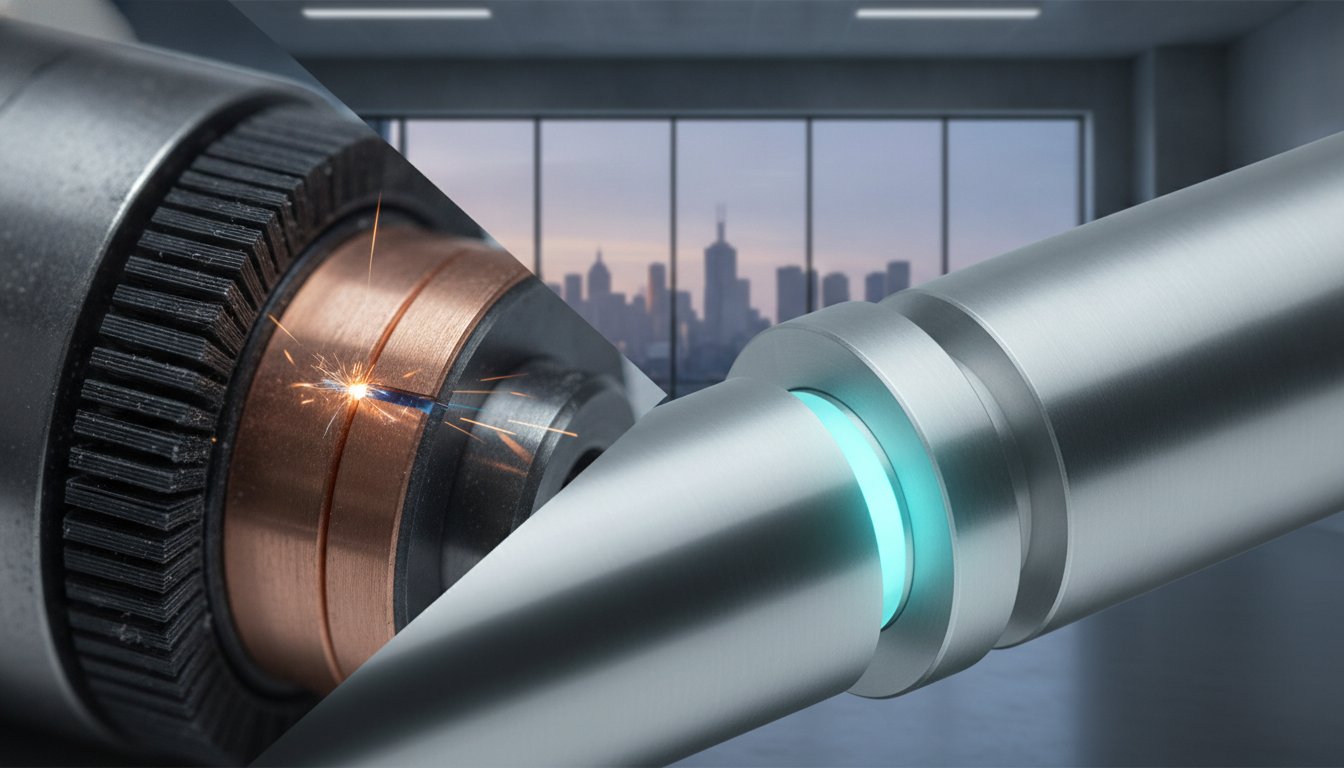
The standard carbon brush might be the most common component in your rotary assemblies, but it's often the single greatest contributor to unplanned system failure. You've likely spent too many hours cleaning carbon dust or troubleshooting signal interference caused by contact bounce and electrical noise. It's a frustrating reality for Australian engineers managing high-speed data or sensitive instrumentation in harsh industrial environments. Evaluating liquid metal vs brush slip rings is no longer just a matter of upfront cost; it's about matching mechanical architecture to the specific operational demands of your project.
This technical evaluation provides the data required to select the optimal rotary connector, focusing on reduced maintenance intervals and signal integrity. We'll examine the performance differences between modern gallium-based alloys and traditional gold-based brush materials. We also consider how the latest standards, such as AS/NZS 61439.1:2026, influence the selection of assemblies for power and data. By the end of this guide, you'll understand which technology offers the best reliability for your specific rotational speed and environmental constraints.
Key Technical Insights
- Understand the mechanical distinctions between traditional carbon brush contacts and the conductive fluid interface used in liquid metal systems.
- Evaluate the performance trade-offs of liquid metal vs brush slip rings regarding electrical noise, rotational speed limits, and signal integrity.
- Analyse how liquid metal technology manages extreme thermal loads and material expansion without the performance degradation common in solid contacts.
- Identify the specific operational thresholds where high RPM or data sensitivity makes brushless technology the only viable choice for long-term reliability.
- Learn how to source specialised Mercotac and Meridian Laboratory components through TME Systems to support your local engineering requirements.
Understanding Rotary Electrical Connectors: Liquid Metal vs Traditional Brushes
A slip ring is a fundamental electromechanical device designed to allow the transmission of power and electrical signals from a stationary structure to a rotating one. Without this interface, continuous 360-degree rotation would lead to tangled cables and mechanical failure. In Australian industrial sectors, from mineral processing to automated packaging, the reliability of this connection determines the overall uptime of the system. Choosing between liquid metal vs brush slip rings represents a fundamental engineering decision: whether to rely on mechanical friction or fluid continuity for electrical conduction.
How Traditional Brush Slip Rings Work
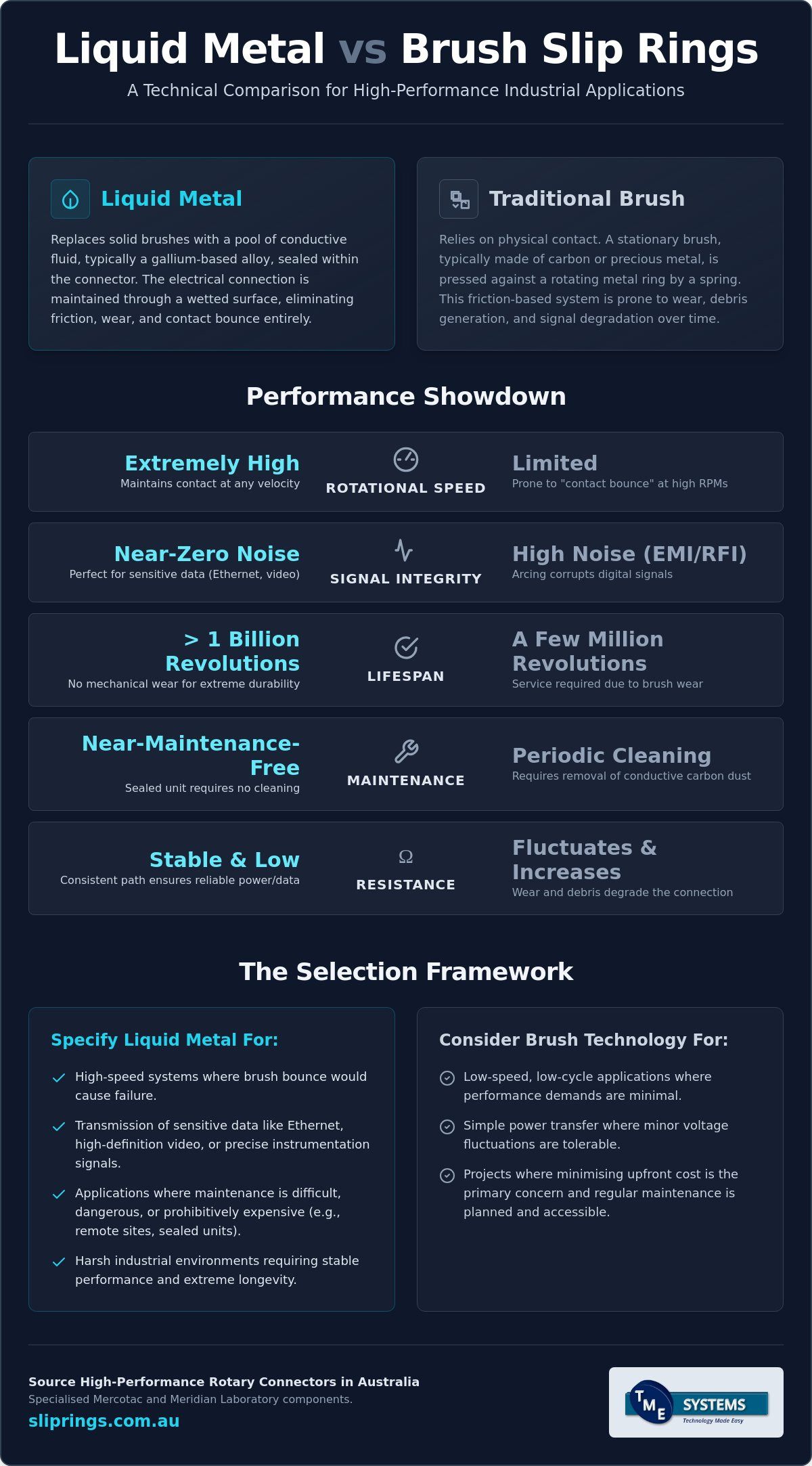
Traditional technology relies on physical contact between a stationary brush and a rotating metal ring. These brushes are typically composed of carbon graphite or precious metal alloys. To ensure a consistent electrical path, a spring-loaded mechanism applies constant pressure. While effective, this mechanical friction creates a point contact susceptible to wear. Over time, this interaction generates debris that increases electrical resistance and causes intermittent signal loss, leading to electrical noise in sensitive data streams.
The Mechanism of Liquid Metal Rotary Connectors
Liquid metal connectors replace the solid brush with a pool of conductive fluid contained within a sealed chamber. Instead of friction, the rotating part is wetted by the liquid, creating a larger surface area for conduction. Because there's no mechanical rubbing, there's no wear debris or friction-induced heat. The sealed design prevents oxidation, ensuring the conductive path remains stable at high speeds. This fluid interface virtually eliminates the maintenance cycles required for traditional brush systems.
For Australian site managers, the distinction between these two technologies is often measured in maintenance intervals and signal quality. Traditional brushes require periodic inspection and cleaning to prevent the buildup of conductive dust. In contrast, liquid metal options like Mercotac slip rings offer a near-maintenance-free alternative for applications where downtime is prohibitively expensive. Understanding the fundamental shift from friction-based contact to fluid-based continuity is the first step in diagnosing why a current system might be underperforming and identifying the appropriate upgrade path for your specific application.
Performance Metrics: Comparing Speed, Signal Noise, and Maintenance
The performance ceiling of any rotary system is often dictated by the electrical interface. When evaluating liquid metal vs brush slip rings, rotational speed (RPM) is the primary differentiator. Traditional brushes are physically constrained by the spring tension required to maintain contact. At high speeds, centrifugal forces and mechanical vibrations cause the brush to "bounce" off the ring surface. This creates micro-interruptions and arcing. Liquid metal units don't face these mechanical hurdles because the conductive fluid remains in constant contact regardless of velocity.
Stability in electrical resistance is another critical metric. In a brush-based system, resistance fluctuates as the contact surface wears and debris accumulates. This variability is problematic for sensitive control signals. Conversely, a liquid interface provides a stable, low-resistance path. Research into liquid metal wetted fiber brushes and similar fluid contacts confirms that these systems maintain consistent conductivity over millions of cycles. While a traditional brush might last for a few million revolutions before requiring service, liquid metal units can often exceed a billion revolutions without performance degradation.
Signal Integrity and EMI/RFI Considerations
Maintaining signal integrity is vital for modern industrial protocols like Ethernet or high-definition CCTV feeds. Brush arcing and the resulting electromagnetic interference (EMI) can easily corrupt digital packets. Liquid metal connectors are the preferred choice here because they offer near-zero electrical noise. Signal-to-noise ratio is the measure of how much a desired signal stands out against background electrical interference. By eliminating the friction and arcing inherent in solid contacts, liquid metal ensures the highest possible ratio for clean data transmission.
Maintenance Cycles and Operational Downtime
For engineers at remote Australian mining or processing sites, maintenance is a significant logistical burden. Brushes require regular inspection for wear and the removal of conductive carbon dust to prevent short circuits. Signs of failure include increased operating temperatures and intermittent signal drop-outs. Liquid metal units are generally considered "fit and forget" components. They are typically replaced as complete modules at the end of their service life rather than being repaired on-site. If your application demands maximum uptime without scheduled manual intervention, exploring Meridian Laboratory brushless solutions can significantly reduce your operational overhead.
Thermal Management and Environmental Resilience in Industrial Use
Industrial environments in Australia, particularly in the Pilbara or on offshore rigs, subject hardware to extreme thermal cycling. When comparing liquid metal vs brush slip rings, thermal management is a decisive factor. Traditional brushes rely on lubricants and spring tension that can fail when temperatures exceed 200°C. In contrast, liquid metal interfaces naturally accommodate the thermal expansion of housing materials. The fluid contact maintains continuity even as internal components expand or contract, preventing the mechanical binding often seen in solid-contact assemblies.
Environmental sealing is equally critical. In the dusty conditions of Australian mining or the corrosive salt air of marine sectors, a high Ingress Protection (IP) rating is mandatory. Most high-performance liquid metal units are hermetically sealed, often reaching IP65 or IP67 standards. This prevents the ingress of fine particulate matter that would otherwise contaminate the contact surface of a brush-based system. Academic research into the performance of conductive slip rings highlights that environmental contaminants are a primary driver of friction and wear in traditional systems, a problem effectively bypassed by sealed fluid chambers.
High-Temperature Applications
Heavy manufacturing and aerospace applications often push rotary connectors to their physical limits. Traditional brush slip rings face significant challenges here; high heat can cause lubricants to evaporate or springs to lose their temper, leading to immediate contact failure. Advanced liquid metal units often incorporate specialised cooling fins or heat-dissipating housings to maintain operational stability. For engineers managing these extreme loads, Meridian Laboratory brushless solutions provide a robust alternative that remains stable where solid-contact components would degrade.
Safety, Toxicity, and Mercury-Free Alternatives
While mercury was once the industry standard for liquid metal contacts, its toxicity has led to tighter regulations. Australian safety standards, including work health and safety (WHS) regulations, dictate strict protocols for the handling and disposal of mercury-containing equipment. To meet these requirements without sacrificing performance, modern designs have shifted toward gallium-based alloys. These non-toxic alternatives provide the same near-zero electrical noise as mercury but are safe for use in food processing and medical environments. If your project has strict environmental or safety compliance mandates, specifying gallium-based Mercotac slip rings ensures you remain compliant while benefiting from superior fluid-contact technology.
The Selection Framework: When to Specify Liquid Metal or Brush Technology
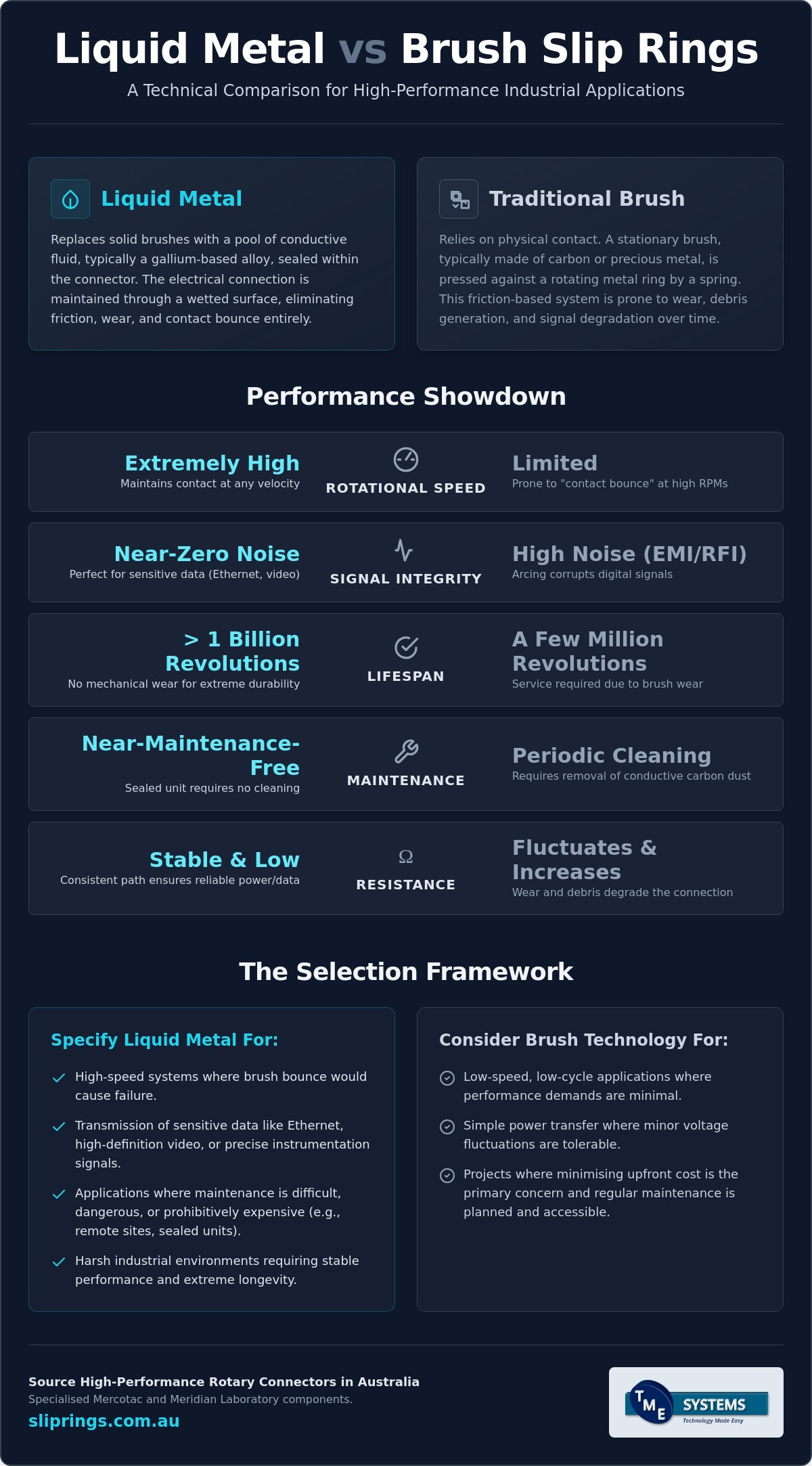
Selecting the right interface between liquid metal vs brush slip rings requires a pragmatic assessment of your system's mechanical and electrical constraints. If your application involves sensitive instrumentation or high-speed data protocols like Ethernet, the electrical noise from mechanical brushes can lead to packet loss and system errors. Conversely, for high-current power transfer in heavy machinery, the simplicity and scale of traditional brush systems remain highly effective. The choice isn't merely about current capacity; it's about the sensitivity of the signals being transmitted across the rotating axis.
Rotational speed is the most common technical deal-breaker. In applications exceeding 500 RPM, the mechanical stability of a brush contact begins to degrade. Centrifugal forces and surface irregularities cause the brush to lose contact momentarily, leading to arcing and accelerated wear. Liquid metal connectors bypass this limitation entirely, providing a stable path at high velocities. You should also evaluate the total cost of ownership. While a brush-based unit has a lower initial price, the cumulative costs of maintenance, cleaning, and replacement in remote Australian industrial sites often exceed the higher upfront investment of a "fit and forget" liquid metal unit.
Application-Specific Recommendations
We recommend specifying liquid metal technology for high-precision robotics, medical imaging equipment, and high-speed packaging machinery where signal clarity is paramount. Traditional brush technology is better suited for low-speed, high-power applications such as wind turbines, port cranes, and heavy-duty winches. For projects requiring a combination of massive power and sensitive data, we often supply BGB Innovation slip rings that can be configured to balance these competing demands.
Technical Specification Checklist
Before requesting a quote from an Australian supplier, ensure you have defined these five critical parameters. This data allows our engineers to match the hardware to your specific environmental and mechanical load:
- Circuit Count: Total number of power and signal channels required.
- Electrical Load: Maximum voltage and current per circuit, ensuring compliance with AS/NZS 61439.1:2026 for power assemblies.
- Operating Speed: The sustained and peak RPM of the rotation.
- Mounting Configuration: Whether you require a through-bore for a shaft or a compact capsule design.
- Environmental Rating: Required IP rating for dust, moisture, or chemical exposure.
Consulting with a specialist early in the design phase prevents over-specification and ensures the selected unit matches the expected service life of your machinery. If you're managing heavy-duty power requirements, exploring the Prosper Rotation slip rings range provides a baseline for robust, high-current performance in industrial environments.
Sourcing High-Performance Rotary Connectors in Australia
Sourcing the correct hardware for the Australian industrial landscape requires a partner who understands the nuances of local standards and environmental stressors. TME Systems Pty Ltd operates as the specialist distributor for leading global manufacturers, ensuring that engineers have access to the most advanced rotary interfaces available. When weighing the benefits of liquid metal vs brush slip rings, the decision often hinges on the specific operational environment of a local site. We provide direct access to Mercotac liquid metal connectors for those requiring zero-maintenance signal transmission. For applications where traditional contact is more appropriate, we offer the robust versatility of BGB Innovation and Prosper Rotation assemblies.
Why Technical Expertise Matters
Technical application consulting is a core component of our service. TME Systems Pty Ltd doesn't just supply parts; we help you bridge the gap between a manufacturer's laboratory specifications and the physical realities of your facility. Our team assists in determining precise circuit counts, voltage ratings, and current capacities to ensure long-term reliability in the field. This consultative process is essential for avoiding common pitfalls like signal degradation or premature wear. This methodical approach clarifies the trade-offs between liquid metal vs brush slip rings for your specific environmental constraints and ensures your system complies with relevant Australian standards.
National Supply and Support
Procuring specialised industrial components shouldn't be a logistical hurdle for Australian firms. By sourcing through a local distributor with deep industry knowledge, you benefit from national technical support and a streamlined supply chain. We understand the urgency of industrial projects and the necessity for accurate technical data before procurement. Our commitment to technical excellence means we prioritise the success of your project over a quick sale. Whether you need a standard unit or a custom configuration for a unique environment, we provide the stability and precision required for critical infrastructure. If you require a custom configuration or a technical audit of your current rotary interfaces, contact TME Systems Pty Ltd for expert slip ring selection advice to secure the optimal solution for your application.
Optimising Your Rotary System Reliability
Selecting the correct rotary interface is a critical decision that impacts the long-term uptime of your industrial machinery. While traditional brushes remain a staple for high-current power, the demands of modern data transmission and high-speed rotation often necessitate a shift toward brushless technology. The technical evaluation of liquid metal vs brush slip rings demonstrates that the fluid interface provides superior signal integrity and thermal resilience, effectively eliminating the maintenance burden associated with wear debris.
As an authorised distributor for Mercotac, Meridian Laboratory, and BGB Innovation, TME Systems provides the expert technical assistance required to navigate these complex specifications. We understand the unique challenges of the Australian engineering sector and offer national delivery to keep your projects on schedule. Ensuring your system operates at peak efficiency requires more than just a part number; it requires a deep understanding of your specific rotational environment and mechanical loads.
Consult with our technical team to find your ideal rotary connector and ensure your next project benefits from the highest standards of reliability and performance. We look forward to helping you solve your most difficult rotational challenges with precision and expertise.
Frequently Asked Questions
Is liquid metal more expensive than brush slip rings?
Liquid metal units typically involve a higher initial procurement price than basic brush assemblies. However, the total cost of ownership is often lower because they eliminate the need for periodic cleaning and brush replacement. In high-speed applications, the reduction in unplanned downtime and maintenance labour quickly compensates for the higher upfront investment.
Can I use a mercury-based slip ring in food processing applications?
No, mercury-based connectors are not suitable for food processing or medical environments due to the risk of toxic contamination. Australian safety standards and WHS regulations generally prohibit their use in these sensitive sectors to prevent environmental hazards. You should specify gallium-based alloys for these applications to ensure compliance while maintaining high electrical performance.
How do I know when my brush slip ring needs replacing?
Increased electrical noise and intermittent signal drop-outs are the primary indicators that a brush slip ring requires replacement. You should also monitor for the accumulation of conductive carbon dust or visible scoring on the ring surface during routine inspections. If the assembly begins to generate excessive heat, it's a sign that contact resistance has become unstable and failure is imminent.
Are there mercury-free liquid metal rotary connectors available?
Yes, modern manufacturers have developed gallium-based alloys that provide a completely mercury-free alternative. These non-toxic fluids are becoming the industry standard for liquid metal vs brush slip rings comparisons in sensitive environments. They offer the same low-noise performance and high-speed stability as mercury without the associated safety or disposal risks required by Australian regulations.
What is the maximum RPM for a standard brush slip ring?
Standard brush slip rings are generally limited to operating speeds between 500 and 2,000 RPM depending on the contact material. Beyond this threshold, mechanical "brush bounce" occurs, which leads to arcing and rapid performance degradation. If your application requires higher velocities, liquid metal or specialised brushless units are the only technically viable solutions for maintaining a stable connection.
Does liquid metal technology interfere with wireless signals?
No, liquid metal technology doesn't interfere with wireless signals; it actually provides a cleaner environment for co-located data transmission. Because fluid contacts eliminate the arcing and electromagnetic interference common in brush systems, they reduce the background noise that can disrupt sensitive electronics. This makes them ideal for precision robotics and medical imaging where signal clarity is paramount.
What happens if a liquid metal slip ring leaks?
A leak in a liquid metal slip ring typically results in immediate circuit failure and requires the replacement of the entire module. The conductive fluid is contained within a hermetically sealed chamber, but if a seal fails, the fluid will dissipate and potentially cause internal shorting. These specialised units are designed as "fit and forget" modules and are generally replaced rather than repaired on-site.
Which technology is better for high-vibration mining equipment?
Traditional brush technology is generally better suited for high-vibration mining equipment due to its mechanical robustness and adjustable contact pressure. While liquid metal excels in high-speed precision, the physical assembly of a heavy-duty brush system can be ruggedised to withstand the mechanical shocks found on a mine site. Brands like Prosper Rotation offer specialised brush configurations designed specifically for these harsh Australian conditions.