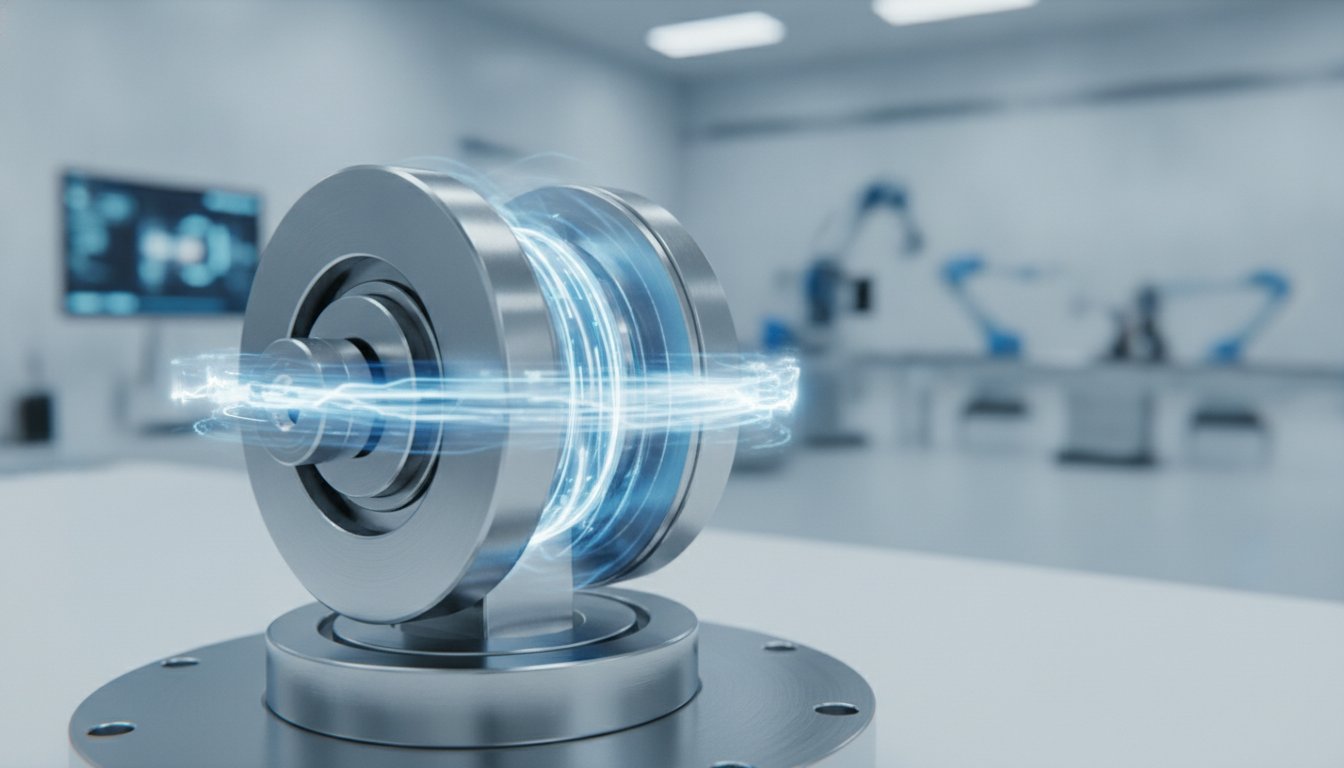
How much does a single millisecond of signal noise actually cost your production line when it triggers a false emergency stop? In high-speed industrial environments, the traditional brush-based rotary electrical joint often becomes a liability rather than a component, forcing engineers into a cycle of frequent maintenance and unpredictable data loss. You likely already know that standard connectors struggle with the dust and heat of Australian operations, where environmental ingress can degrade performance long before a part reaches its rated service life.
This guide provides the technical framework you need to specify a solution that ensures absolute signal integrity and power reliability. We'll examine how to achieve zero-maintenance operation and a superior signal-to-noise ratio even in 24/7 cycles. Our analysis moves through the critical differences between liquid metal, brushless, and traditional contact technologies to help you select hardware that thrives in harsh conditions without constant intervention.
Key Takeaways
- Learn the mechanical principles of a rotary electrical joint and how it eliminates cable fatigue in continuous 360-degree rotation systems.
- Compare the performance profiles of liquid metal, brushless, and traditional carbon brush technologies to balance signal integrity with operational costs.
- Identify the specific IP ratings and thermal management strategies required to ensure hardware longevity within harsh Australian industrial climates.
- Utilise a professional selection framework to accurately define circuit counts, voltage ratings, and current requirements before procurement.
- Implement advanced grounding and shielding techniques to maintain a clear signal-to-noise ratio and prevent data loss in sensitive automated machinery.
Understanding Continuous Rotation Electrical Connectors
A rotary electrical joint is a precision-engineered electromechanical device designed to maintain a consistent electrical connection between a stationary structure and a rotating assembly. It allows for the unrestricted 360-degree transfer of power, data, and signals without the physical limitations of fixed wiring. This technology, commonly referred to as a slip ring or rotary electrical interface, consists of two primary components: the stationary stator and the rotating rotor. While the rotor turns with the machinery, the stator remains fixed to the power source or control system, ensuring a continuous circuit through internal contact surfaces. These components are essential in any application where a part of the machine must spin indefinitely while requiring a reliable electrical feed.
Industry professionals often use terms such as rotary union or rotary electrical interface interchangeably depending on the specific sector. For instance, in heavy industrial applications, BGB Innovation Slip Rings are frequently specified for their robust construction. Regardless of the terminology, the fundamental goal remains the same: to bridge the gap between static and moving parts with minimal electrical resistance and maximum mechanical reliability. Understanding the mechanical interface between the stator and rotor is the first step in selecting a component that won't fail under operational stress.
The Problem with Standard Cables in Rotating Machinery
Standard electrical conductors aren't designed for continuous axial torsion. In rotating systems where a rotary electrical joint is absent, cables eventually "wind up" and experience extreme mechanical fatigue. This stress leads to conductor breakage, insulation failure, and intermittent signal loss. Many industrial operators attempt to manage this with "stop-start" rotation or limited-degree oscillators, but these methods reduce throughput and increase cycle times. In Australian manufacturing centres, tangled or strained cables also present significant safety risks, potentially leading to electrical fires or mechanical jams that cause expensive downtime. A dedicated rotary connector eliminates these risks by allowing the machinery to spin freely without putting any physical strain on the supply lines.
Primary Functions: Power vs. Signal Transfer
The selection of a joint depends heavily on the nature of the electrical load. Power transfer joints are engineered to handle high-current loads for motors, heaters, and heavy actuators. These require robust contact materials that can manage heat dissipation and maintain low resistance over millions of revolutions. Conversely, signal transfer joints must prioritise low electrical noise to protect the integrity of sensitive data. This is critical for modern Ethernet, PLC, and sensor outputs where even minor resistance fluctuations can corrupt data packets. High-performance options, such as Meridian Laboratory Slip Rings or Mercotac Slip Rings, provide the precision required for these sensitive applications. For complex machinery, hybrid assemblies allow for the simultaneous transfer of power, high-speed data, and even fluids within a single compact unit.
Contact Technologies: Liquid Metal, Brushless, and Traditional Brushes
The performance of any rotary electrical joint is fundamentally dictated by its internal contact technology. Choosing the wrong interface leads to signal degradation or premature mechanical failure. For high-power, low-speed industrial applications, traditional carbon brushes remain a common choice due to their cost-effectiveness and ability to handle high current. However, these components produce conductive wear debris and significant electrical noise. This makes them unsuitable for sensitive data transmission. Precious metal fibre brushes offer a significant improvement for signal-to-noise ratios. They utilise gold or silver alloys to ensure more reliable data transmission across rotating interfaces by providing multiple points of contact on each circuit.
Liquid metal technology represents a shift toward near-zero electrical noise. By using a mercury-wetted contact, the system maintains a constant, stable connection regardless of rotation speed. This is particularly relevant in engineering designs like a modern rotary electrical contact device, where maintaining low resistance and high signal integrity is paramount. These devices are often the only solution for high-precision instrumentation that cannot tolerate the intermittent contact spikes found in mechanical brush systems. They provide a level of electrical stability that solid-contact alternatives simply can't match.
Liquid Metal Connectors for Precision
Liquid metal provides a constant, wetted surface that eliminates the physical "bounce" associated with mechanical brushes. This stability is vital for high-frequency signals and sensitive sensor data where even micro-fluctuations cause data packet loss. Because the contact is liquid, it doesn't wear down like a solid brush. This ensures the electrical properties remain unchanged over the life of the unit. You can learn more about Mercotac Slip Rings to see how this technology applies to your specific signal requirements.
Brushless and Non-Contact Alternatives
For ultra-high-speed applications, brushless technology is the superior choice. Meridian Laboratory’s ROTOCON series utilises a molecularly bonded film of liquid metal. This allows for maintenance-free operation because there are no sliding parts to replace. These units can achieve speeds from 10,000 to 40,000 RPM without the signal degradation typical of friction-based systems. By eliminating physical brush wear, you significantly extend the service life of the rotary electrical joint in 24/7 manufacturing environments. Explore Meridian Laboratory Slip Rings to evaluate their performance in high-speed environments.
If you're unsure which contact technology suits your environmental variables, our team provides technical application consulting to ensure your specifications meet operational demands and Australian industrial standards.
Specifying for Australian Industrial Environments
Designing systems for the Australian landscape requires a focus on environmental resilience that standard offshore specifications often overlook. A rotary electrical joint installed in a demanding Australian industrial environment faces vastly different stressors than one in a climate-controlled European facility. Ingress protection, thermal management, and material compatibility must be prioritised to avoid premature failure in these demanding conditions. Selecting hardware based solely on electrical capacity without accounting for local environmental variables is a common cause of avoidable downtime.
Ingress Protection (IP) ratings define how well the internal contacts are shielded from external contaminants. IP65 provides a baseline for dust and moisture, but Australian industries frequently demand more. In the mining sector, fine dust can act as an abrasive, quickly destroying internal contact surfaces if the seal is insufficient. High-vibration environments, such as those found in mineral processing, also require mechanical stability to prevent contact bounce. Ensuring the internal rotor remains perfectly aligned under extreme mechanical shock is as vital as the electrical connection itself.
IP Ratings and Sealing Techniques
Sealing requirements vary significantly across different Australian sectors. For instance, IP67 is critical for washdown environments in food and beverage processing. These units must withstand high-pressure water jets and chemical cleaning agents without compromising the internal circuitry. In contrast, specialised seals for mining applications focus on excluding ultra-fine particulate matter. Specifying BGB Innovation Slip Rings for Heavy Industry provides the robust construction needed to survive these high-particulate environments where standard seals often fail.
Material Selection for Longevity
The choice of housing material directly impacts the service life of a rotary electrical joint. Anodised aluminium is often the preferred choice for weight-sensitive robotic arms and automated machinery due to its durability and low mass. However, Australian coastal regions or chemical processing sites require a different approach. In these areas, 316-grade stainless steel is essential to prevent salt-spray corrosion or chemical degradation. For a comprehensive look at these variables, refer to our guide on Industrial Slip Rings Australia: The Technical Procurement Reference. Matching the housing material to the specific corrosive profile of your site is the only way to ensure long-term reliability.
Temperature resilience is the final pillar of Australian specification. Ambient temperatures in many regions regularly exceed 40 degrees Celsius. When combined with the internal heat generated by high-current electrical loads, thermal management becomes critical. You must select a joint with sufficient heat dissipation properties to prevent insulation breakdown and maintain signal integrity during peak summer operation.
A Professional Framework for Selecting Your Rotary Joint
Selecting a rotary electrical joint requires a methodical audit of your system's operational parameters. Engineering failures often stem from a mismatch between the component's rated capacity and the actual mechanical stress it faces in the field. To avoid costly mis-specifications, procurement officers and engineers should follow a structured five-step evaluation process. This logical progression ensures that every variable, from electrical load to long-term maintenance cycles, is accounted for before hardware is integrated into the machine.
- Step 1: Determine Circuit Count and Type. Identify the total number of independent electrical paths required. You must distinguish between power circuits, low-voltage control signals, and high-speed data lines.
- Step 2: Define Electrical Requirements. Document the maximum voltage, continuous current, and frequency ratings for each circuit. Over-specifying current can lead to unnecessarily large units, while under-specifying risks thermal failure.
- Step 3: Establish Mechanical Constraints. Specify the operational RPM, available mounting space, and torque limits. High-speed applications require different bearing sets and contact physics than slow-turning heavy machinery.
- Step 4: Assess Environmental Factors. Factor in ambient temperature ranges, potential for chemical exposure, and the presence of vibration or mechanical shock.
- Step 5: Evaluate Lifecycle Costs. Compare the initial purchase price against the long-term costs of maintenance downtime and replacement parts.
Circuit and Signal Specification
Properly grouping circuits is essential to prevent electromagnetic interference (EMI), especially in joints that combine high-current power with sensitive data. High-speed joints must handle specialised signals like thermocouples, Ethernet, or USB without packet loss or signal degradation. If you're unsure how to categorise your requirements, you can read more about Understanding Slip Ring Circuit Count Selection to ensure your layout is optimised for performance.
Mounting and Physical Integration
The mechanical layout of your machinery dictates the required mounting style. Through-bore designs allow the joint to slide over an existing shaft, which is ideal for systems requiring a central passage for hydraulics or pneumatics. End-of-shaft mounting is more common for simpler rotations, while pancake designs provide a solution for height-restricted applications where vertical space is limited. We offer Prosper Rotation Slip Rings for Versatile Mounting that cater to these diverse mechanical configurations.
To ensure your hardware meets these technical benchmarks without compromise, contact our technical application consultants for a detailed review of your project specifications.
Optimising Performance and Reliability
Ensuring the longevity of a rotary electrical joint involves more than just selecting the right part number. Long-term performance is heavily influenced by installation precision and the management of electrical noise throughout the assembly's lifecycle. Even the most robust hardware can suffer from premature failure if mechanical misalignment or improper grounding techniques are introduced during the integration phase. Engineers must prioritise a clean electrical environment to maintain the clear signal-to-noise ratio required for modern automated systems. Proper shielding and the use of dedicated grounding paths prevent stray currents from interfering with sensitive data packets.
Installation best practices are the first line of defence against mechanical degradation. A slight axial or radial misalignment can lead to uneven contact wear and increased electrical resistance. Over time, this resistance generates localised heat, which further accelerates the breakdown of contact materials and lubricants. When integrating these components into rotating machinery, it's vital to ensure the mounting surfaces are perfectly square and the drive coupling allows for slight thermal expansion without putting stress on the internal bearings. This attention to detail during the initial setup significantly reduces the risk of unexpected industrial downtime.
Reducing Signal Noise in Data Transfer
Maintaining signal integrity is the primary challenge in high-speed data applications. Liquid metal and brushless technologies are inherently superior for these tasks because they eliminate the physical "chatter" and micro-sparking associated with traditional sliding contacts. To further enhance performance, using twisted pair wiring within the slip ring assembly helps cancel out electromagnetic interference. If you're experiencing intermittent data loss or corrupted sensor readings, you can find detailed strategies in our guide on Troubleshooting Signal Noise in Rotary Connections. These techniques ensure that your rotary electrical joint maintains a stable connection even in electrically noisy environments.
Long-Term Maintenance and Support
The maintenance profile of your system depends entirely on the contact technology selected. Traditional brush systems require periodic inspection to monitor brush length and remove conductive wear debris that can cause short circuits. In contrast, premium liquid metal and brushless connectors offer a "fit and forget" solution, requiring no internal maintenance over their rated service life. This reliability is essential for 24/7 manufacturing plants where every hour of maintenance-related stoppage carries a significant cost. TME Systems assists Australian businesses with technical selection and provides ongoing national support to ensure your rotating interfaces continue to operate within their design specifications. For projects with unique mechanical or electrical constraints, our technical application consulting can help develop custom configurations that meet your exact operational demands.
Precision Selection for Long-Term Operational Stability
Selecting the correct rotary electrical joint requires a pragmatic balance of electrical capacity, mechanical constraints, and environmental durability. We've examined how advanced liquid metal and brushless contact technologies effectively eliminate signal noise and maintenance requirements, setting a high standard for 24/7 industrial cycles. You've also seen why specifying appropriate IP ratings and corrosion-resistant materials for harsh Australian sites is non-negotiable for ensuring system longevity. These technical decisions directly impact your facility's throughput and long-term maintenance costs.
TME Systems brings over 20 years of technical application engineering experience to your projects. As the authorised Australian distributor for world-leading brands like Mercotac and Meridian Laboratory, we provide national supply and specialised support for diverse industrial sectors. Our team understands the complexities of engineering for local conditions and offers the precision hardware needed for sensitive data and high-power applications. Consult an Australian Specialist for Your Rotary Connector Needs to secure the reliability of your rotating machinery. We're ready to help you optimise your next installation for peak performance.
Frequently Asked Questions
What is the difference between a slip ring and a rotary electrical joint?
A rotary electrical joint is the formal engineering term for the entire assembly, whereas "slip ring" often refers specifically to the internal ring and brush components. In practice, these terms are used interchangeably across Australian industrial sectors. The choice of terminology usually depends on the specific application, but both describe a device that facilitates 360-degree power and signal transfer between static and rotating machinery parts.
Can a rotary electrical joint handle high-speed data like Gigabit Ethernet?
High-speed data like Gigabit Ethernet can be handled effectively, provided the joint is engineered with high-frequency shielding. Traditional carbon brushes often create too much interference for reliable data. For these requirements, liquid metal or brushless interfaces are the standard choice because they maintain the low electrical resistance and signal integrity necessary for packet-heavy transmissions like Ethernet or USB 3.0.
How long do continuous rotation electrical connectors typically last?
Service life varies significantly based on the internal contact technology and operational environment. Traditional brush-based systems may require maintenance every 50 million revolutions to ensure reliability. Conversely, premium liquid metal or brushless units are designed to operate for hundreds of millions of revolutions. Factors such as ambient temperature, vibration levels, and duty cycles within Australian processing plants will ultimately dictate the actual replacement intervals.
Are mercury-wetted rotary connectors safe for food-grade environments?
Mercury-wetted connectors are common in food processing due to their high reliability, but they must be hermetically sealed within robust housings. While the liquid metal is safely contained during normal operation, some Australian food and beverage facilities prefer brushless alternatives. These non-mercury options provide similar low-noise performance while eliminating the risk of heavy metal contamination should the machinery suffer a catastrophic mechanical failure.
What happens if a rotary joint is operated above its rated RPM?
Operating a joint above its rated RPM leads to excessive centrifugal forces and internal heat buildup. This often results in "contact bounce," where the electrical connection becomes intermittent as the brushes or contacts struggle to stay seated. Beyond signal loss, high speeds can cause rapid bearing wear and insulation breakdown, which may lead to a total electrical short or permanent mechanical seizure of the assembly.
Is it possible to combine electrical circuits with air or hydraulic lines in one joint?
Integrated assemblies allow you to combine electrical circuits with pneumatic or hydraulic passages in a single unit. These hybrid joints are designed with a central bore for fluid transfer, surrounded by the electrical rotor and stator. This configuration is particularly useful in robotic end-effectors or automated turntable systems where space is limited and multiple media types must pass through the same rotating axis.
How do I reduce electrical noise in my rotating connection?
Reducing noise requires a combination of high-quality contact materials and proper system integration. Switching to a liquid metal rotary electrical joint is the most effective way to eliminate mechanical contact noise. You should also use shielded twisted pair wiring for signal lines and ensure that the housing is correctly grounded to the machine's chassis to drain away any stray electromagnetic interference.
Do brushless rotary connectors require any regular maintenance?
Brushless rotary connectors are essentially maintenance-free because they eliminate the primary cause of failure: mechanical friction. Unlike traditional slip rings, there are no carbon brushes to wear down or conductive dust to clean out. This makes them an ideal "fit and forget" solution for high-speed or 24/7 industrial environments where stopping the production line for routine component cleaning is not a viable option.