How much does a single hour of unscheduled downtime actually cost your facility when a minor component fails? For many engineering teams, the search for reliable industrial slip rings Australia often begins only after a critical failure has already halted production. It's a common frustration to deal with signal noise interfering with sensitive data or to struggle with finding specialised components that include local technical support. You likely recognise that while many rotary connectors look similar on a spec sheet, their performance in harsh Australian conditions varies significantly.
This article provides a comprehensive technical reference for selecting and procuring high-performance rotary electrical connectors. You'll learn how to match specific technologies to your mechanical and electrical environment to ensure long-term reliability and reduced maintenance intervals. We will examine the distinct advantages of systems from Mercotac, Meridian Laboratory, BGB Innovation, and Prosper Rotation; providing the data points you need to eliminate signal interference and secure your power transfer requirements.
Key Takeaways
- Learn how precision rotary connectors eliminate cable strain and facilitate continuous 360-degree rotation in complex machinery.
- Identify the critical technical specifications for industrial slip rings Australia, including how to calculate circuit counts and electrical ratings to prevent arcing.
- Compare leading brands such as Mercotac, Meridian Laboratory, and BGB Innovation to match specific manufacturing philosophies with your mechanical requirements.
- Utilise a step-by-step selection framework to audit your electrical load and define mechanical interfaces like shaft size and mounting styles.
- Understand the role of technical application consulting in reducing design risk and ensuring compliance with Australian industrial standards.
Understanding Industrial Slip Ring Technologies in Australia
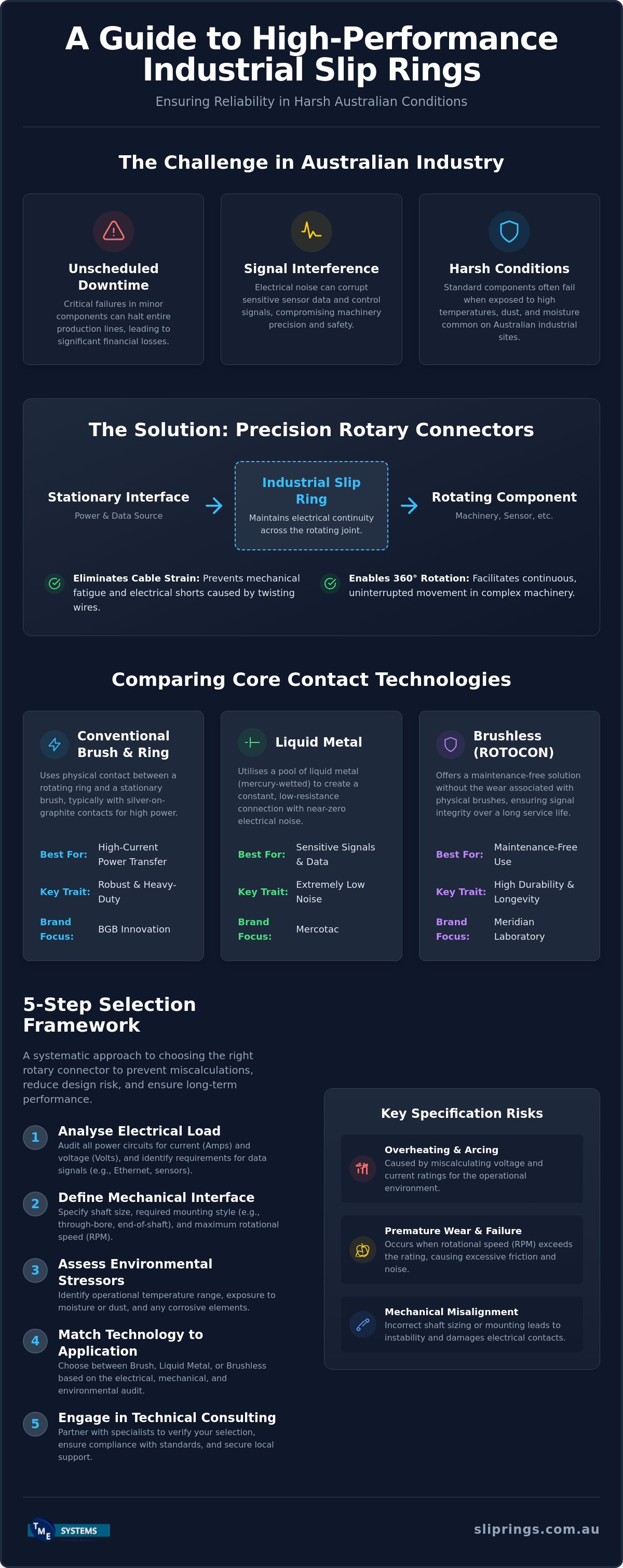
An industrial slip ring is a precision-engineered rotary electrical connector designed to bridge the gap between stationary and rotating interfaces. In Australian industrial sectors, these devices are essential for maintaining electrical continuity across rotating joints. Slip ring technology serves the critical function of eliminating cable strain, which otherwise leads to mechanical fatigue and electrical shorts. By allowing 360-degree continuous rotation, these components enable the operation of everything from wind turbines to automated packaging machinery.
Many procurement officers make the mistake of treating these as generic hardware. However, the requirements for high-current power transfer differ vastly from those of sensitive control signals or high-speed Ethernet data. Standard "off-the-shelf" components often fail when exposed to the high temperatures, dust, or moisture found on local sites. Selecting the correct industrial slip rings Australia requires a deep understanding of the contact interface and the specific environmental stressors present in your application.
The Three Main Contact Technologies
- Conventional Brush and Ring: These use physical contact between a rotating ring and a stationary brush. They're typically the preferred choice for heavy-duty, high-current applications where robust construction is paramount. BGB Innovation slip rings often utilise this technology to handle significant electrical loads in rugged environments.
- Liquid Metal (Mercury-Wetted): For applications requiring extremely low electrical noise and high-speed signal transfer, liquid metal contacts are superior. Mercotac slip rings use a pool of liquid metal to maintain a constant, low-resistance connection. This makes them ideal for sensitive sensors and data transmission.
- Brushless (ROTOCON): When maintenance-free operation is required in harsh zones, brushless technology is the benchmark. Meridian Laboratory slip rings, specifically the ROTOCON series, offer high durability without the wear associated with physical brushes, ensuring clean signals over a long service life.
Key Components of a Rotary Connection
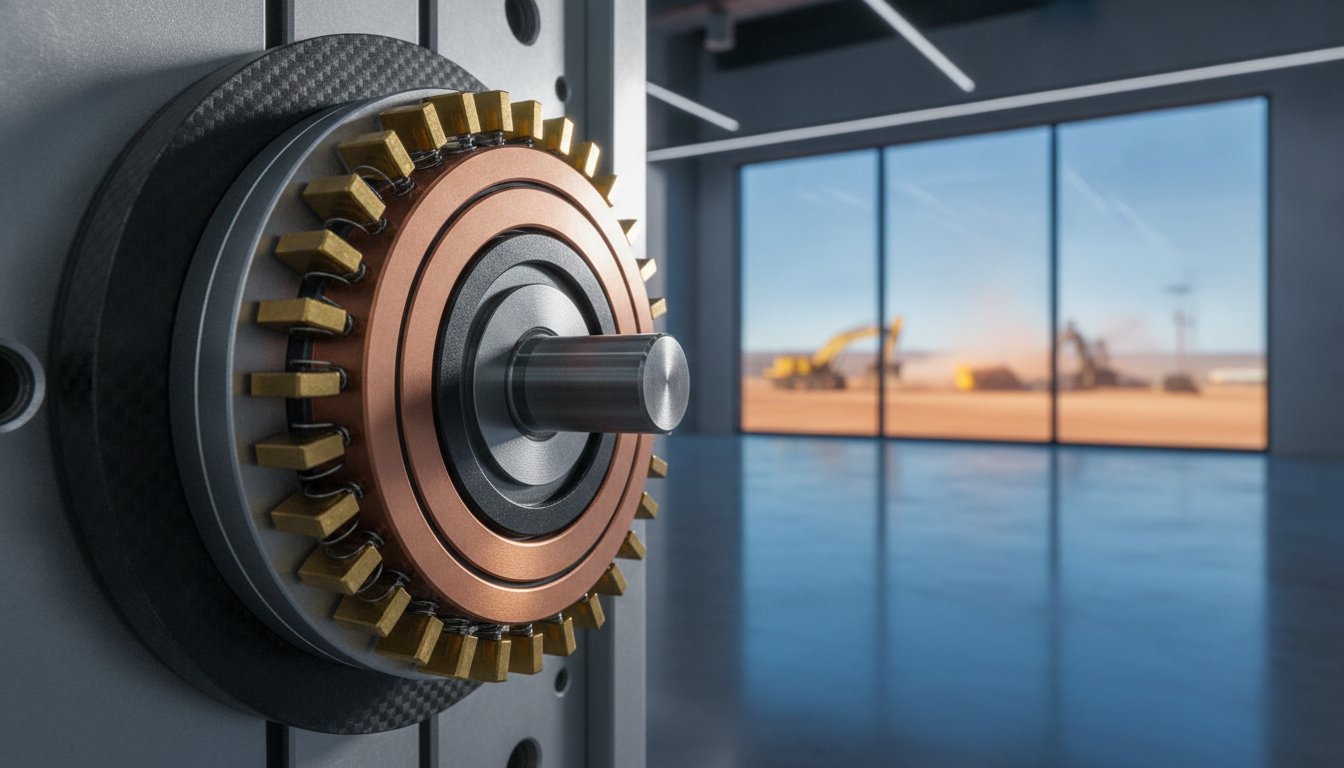
The mechanical life of a unit is often dictated by its housing and contact materials. Housing options range from lightweight plastics to durable aluminium or 316 stainless steel for corrosive environments. Contact materials are equally vital. Gold-on-gold interfaces provide superior corrosion resistance for low-voltage signals. Conversely, silver-on-graphite is better suited for high-power circuits. Bearing selection is also crucial. High-quality bearings ensure the rotational stability required for the contacts to maintain electrical integrity over millions of cycles. Without precise mechanical alignment, even the best electrical contacts will suffer from premature arcing and failure.
Technical Specifications for Australian Industrial Sites
Specifying industrial slip rings Australia requires a precise audit of both the electrical and mechanical load. It isn't just about the number of circuits; it's about the quality of the connection under operational stress. Overheating and arcing are the primary risks when voltage and current ratings are miscalculated. For instance, a slip ring rated for 10 amps may struggle in a high-ambient-temperature environment where heat dissipation is restricted. NASA's study on space mechanisms highlights the complexities of rotating interfaces in extreme environments, reinforcing that material choices and contact pressure are vital for long-term performance.
Rotational speed, measured in RPM, directly impacts the wear rate of the internal contacts. High-speed applications generate more friction and electrical noise, which can degrade signal integrity. When you're dealing with sensitive sensors, even millivolts of noise can lead to data corruption. You must ensure the chosen hardware is rated for your specific operational speed to avoid premature failure. If you're unsure which rating fits your project, our team provides technical application consulting to help match hardware to your specific mechanical constraints.
Electrical and Data Requirements
Managing signal-to-noise ratios is critical in modern industrial setups. If your machinery relies on high-speed data, you'll need a solution specifically designed for Ethernet slip rings. These units use specialised shielding to prevent crosstalk between power and data lines. Additionally, understanding slip ring current ratings is essential for safety. Overloading a circuit leads to thermal expansion, which can permanently damage the contact surfaces and cause unscheduled downtime.
Environmental Sealing and IP Ratings
Australian sites often present unique challenges like fine red dust or high humidity. An IP65 rating provides protection against dust and low-pressure water jets, which is sufficient for most indoor factory environments. However, for outdoor or wash-down areas, an IP67 rating is necessary to prevent moisture ingress. For marine or food processing applications, 316 stainless steel housings offer the best resistance to corrosion. In hazardous mining or oil and gas zones, you must specify explosion-proof (Ex) rated housings. These are designed to contain any internal sparks, preventing them from igniting the surrounding atmosphere.
Comparing Leading Industrial Slip Ring Brands
Selecting the right brand for industrial slip rings Australia involves more than comparing mechanical dimensions. Each manufacturer operates with a distinct philosophy that dictates the unit's performance in specific environments. While a lower initial procurement price might seem attractive, it often overlooks the total cost of ownership (TCO). A unit that requires frequent maintenance or causes signal interference can quickly become more expensive than a premium alternative. You should evaluate the mechanical configuration, whether through-bore or capsule, against the long-term reliability required for your specific site.
Manufacturer-backed warranties and local technical support are not just "added extras." They are essential components of a risk-mitigation strategy. When a component is critical to a production line, having a partner who understands the technical nuances of the hardware is invaluable. This ensures that the "correct answer" is found for your specific application, rather than just the most convenient one.
Mercotac and Meridian Laboratory: Precision and Speed
When your application demands near-zero electrical noise, Mercotac slip rings are the industry standard. Their mercury-wetted design provides a constant liquid metal connection, which is superior for sensitive sensors and high-speed data. If your facility must avoid mercury or requires a completely maintenance-free solution, Meridian Laboratory slip rings offer the ROTOCON series. These brushless units are engineered for high-speed operation without the signal degradation typically caused by mechanical wear. Prioritising signal integrity is essential for automated systems where precise feedback is non-negotiable.
BGB Innovation and Prosper Rotation: Power and Versatility
For heavy-duty applications like wind energy, water treatment, or large-scale cranes, BGB Innovation slip rings provide robust collector ring systems. These are designed to handle high current loads and survive in harsh, exposed environments. If your project requires a balance of versatility and cost-effectiveness, Prosper Rotation slip rings offer a wide range of through-bore and capsule designs. Through-bore models are particularly useful when you need to route hydraulic or pneumatic lines through the centre of the rotating shaft. Selecting these brands for high-current applications ensures that your power transfer remains stable under heavy mechanical stress.
A Step-by-Step Selection Framework for Engineers
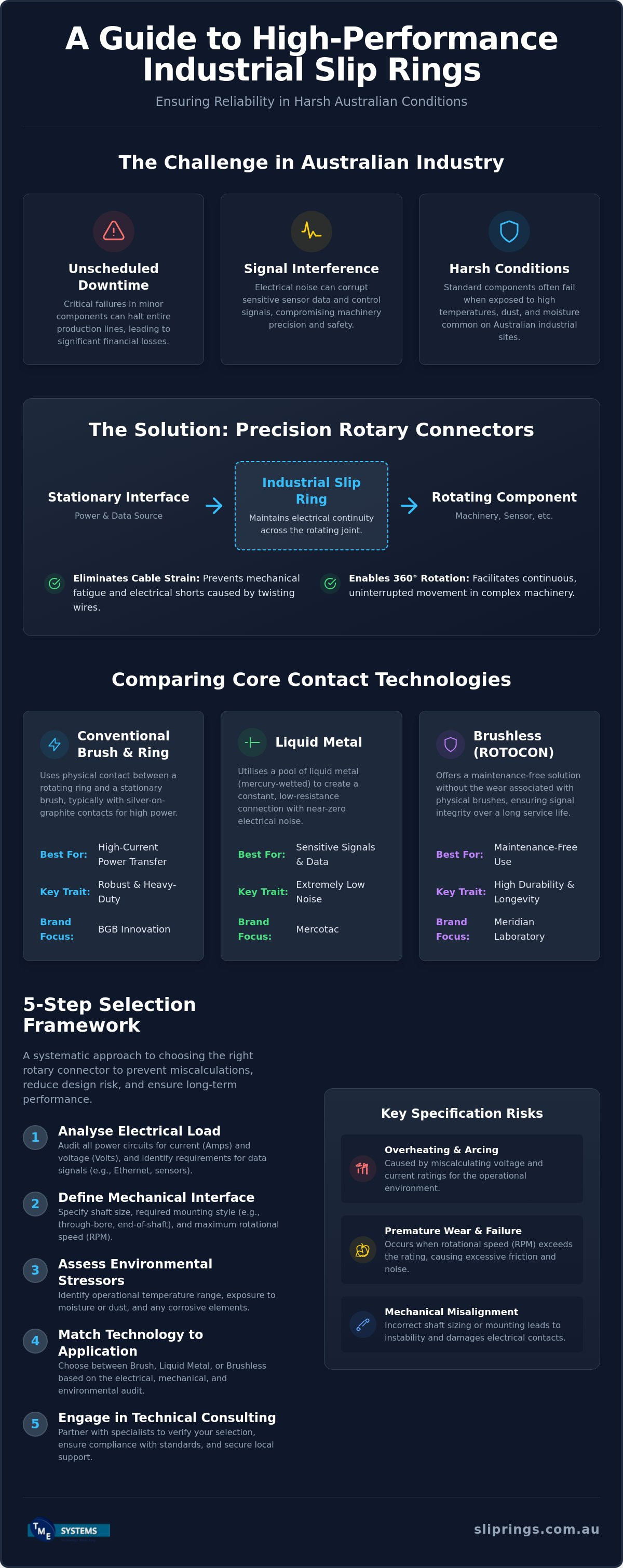
Engineering a reliable rotary system requires a methodical approach to hardware selection. When procuring industrial slip rings Australia, the goal is to eliminate variables that lead to premature failure. A structured self-audit ensures that the specified unit is compatible with both the electrical requirements and the physical constraints of the machinery. Following this framework helps avoid the trial-and-error approach that often results in costly unscheduled downtime.
- Step 1: Define the mechanical interface. Determine if the unit will mount on the end of a shaft or if it requires a through-bore to accommodate hydraulic or pneumatic lines.
- Step 2: Audit the electrical load. Distinguish between continuous current and peak surges. Miscalculating this leads to thermal expansion and contact degradation.
- Step 3: Evaluate data types. Identify if the connection must handle sensitive analog signals, digital pulses, or high-speed Ethernet protocols.
- Step 4: Assess the operational environment. When assessing the operational environment for industrial slip rings Australia, consider how rotational speed (RPM), vibration, and ambient temperature will affect the contact surfaces.
- Step 5: Review maintenance accessibility. If the unit is located in a restricted area, prioritising a maintenance-free brushless model will reduce long-term operational costs.
Mechanical Mounting and Integration
The mounting style significantly impacts machine design and assembly. Through-bore models allow for a hollow centre, which is ideal for routing secondary lines through the rotating axis. Conversely, end-of-shaft mounting is typically simpler but requires precise alignment to avoid bearing stress. When integrating slip rings into rotating tables, you must also manage lead wire exits and anti-rotation features. If the leads aren't properly secured, rotational torque can tear the wires from their terminals, causing immediate circuit failure.
Avoiding Common Specification Pitfalls
One frequent error is overspecifying current, operating under the "bigger is better" fallacy. Using a high-current slip ring for low-voltage signal circuits can lead to unreliable data transfer, as the contact pressure might not be optimised for low-resistance paths. Vibration is another often-overlooked factor that causes contact bounce, leading to arcing and signal noise. For sensitive circuits, maintaining low electrical resistance is paramount to ensuring the accuracy of the transmitted data. To ensure your specifications align with the best available technology, contact our team for specialised technical consulting.
Technical Consulting and Procurement in Australia
Procuring industrial slip rings Australia involves balancing complex technical requirements with supply chain reliability. Application engineering serves as a critical buffer between a conceptual design and a functional machine. By engaging in technical consulting early in the design phase, you reduce the risk of specifying hardware that might meet electrical needs but fail mechanically in the field. TME Systems acts as a specialised intermediary, ensuring that the components selected are not only high-performing but also aligned with the operational realities of Australian industrial sites.
Consistent supply is vital for critical infrastructure and ongoing production lines. Navigating international lead times requires a partner with established relationships with global manufacturers. Whether you're managing a large-scale mining project or a municipal water treatment facility, having a local point of contact for supply ensures that maintenance schedules aren't disrupted by logistics delays. When a standard "off-the-shelf" component doesn't meet the brief, custom solutions can be engineered to fit unique mounting constraints or extreme electrical loads, providing a pathway to a solution when standard hardware falls short.
Local Support for Global Technologies
Having an Australian-based technical point of contact simplifies the integration of global technologies into local projects. You gain direct access to manufacturer data sheets and specialised CAD drawings, which are essential for accurate machine modelling and design verification. This local presence streamlines the procurement process, particularly for large-scale projects where multiple stakeholders require technical validation before a purchase order is raised. It's about building trust through technical accuracy rather than marketing claims.
Next Steps for Your Rotation Project
To begin a technical assessment, you should prepare specific data points regarding your application. This includes the required circuit count, peak current, rotational speed, and the specific environmental conditions of the site. Providing this data allows for a precise match between your application and the hardware, ensuring long-term reliability. Whether you're requesting a quote for specialised Mercotac or BGB components, the goal is to find the "correct answer" for your specific engineering challenge.
Ready to specify the right hardware for your project? Consult with TME Systems on your industrial slip ring application to ensure your rotary connection meets the highest standards of performance and reliability.
Optimising Your Rotary Connections for Long-Term Reliability
Achieving peak performance in rotating machinery requires more than a standard component; it demands a precise match between the electrical load and the mechanical environment. You've seen that while various contact technologies exist, the "correct answer" depends on your specific circuit count, signal sensitivity, and site conditions. Implementing a structured selection framework ensures that issues like signal noise and thermal expansion are addressed before they lead to unscheduled maintenance. By prioritising technical accuracy over initial procurement costs, you secure the stability of your critical infrastructure.
TME Systems provides the expertise needed to navigate these complex specifications. As an authorised distributor for Mercotac, Meridian Laboratory, and BGB Innovation, we offer specialised technical consulting for the Australian industrial and defence sectors. Our team ensures that your industrial slip rings Australia are selected for durability and compliance with local standards. Contact TME Systems for expert technical assistance with industrial slip rings. We look forward to helping you solve your next rotation challenge with precision and confidence.
Frequently Asked Questions
What are the main differences between mercury-wetted and brushless slip rings?
Mercury-wetted units utilise a pool of liquid metal to provide a near-constant electrical connection with extremely low resistance and noise. Brushless units, such as those from Meridian Laboratory, use a different contact technology that eliminates the physical wear associated with traditional brushes. While mercury-wetted options are excellent for sensitive signals, brushless designs are often preferred for maintenance-free operation in environments where mercury is restricted.
How do I choose between a through-bore and a capsule slip ring?
Your choice depends on the mechanical integration of the unit within your machinery. A through-bore slip ring features a hollow centre, allowing it to be mounted over a drive shaft or used to route pneumatic and hydraulic lines. A capsule slip ring is a self-contained unit typically designed for end-of-shaft mounting where space is limited and a central passage isn't required.
Can industrial slip rings handle high-speed Ethernet data transfer?
Yes, specialised industrial slip rings Australia are engineered to support Ethernet and other high-speed Fieldbus protocols. These units incorporate advanced shielding and specific contact materials to maintain signal integrity and prevent data loss during continuous rotation. It's essential to specify the exact data protocol to ensure the hardware is correctly matched to the required bandwidth.
What maintenance is typically required for conventional industrial slip rings?
Conventional units with physical brushes require periodic inspections to monitor brush wear and remove conductive debris. Depending on the environment, you may need to clean the contact rings and replace brushes once they reach their minimum length. Choosing brushless or liquid metal technologies can significantly reduce or eliminate these maintenance requirements in critical applications.
Are there mercury-free alternatives for applications in the food and beverage industry?
Yes, there are several mercury-free options suitable for food-grade environments, including brushless and precious metal contact designs. These units provide the necessary reliability without the risk of contamination. Meridian Laboratory's brushless ROTOCON series is a frequent choice for these applications due to its high durability and lack of hazardous materials.
How does rotational speed (RPM) affect the lifespan of a slip ring?
Rotational speed directly influences the rate of mechanical wear and the generation of internal heat. Operating a unit beyond its rated RPM can lead to premature contact failure and increased electrical noise. For high-speed applications, you must select hardware designed to manage the friction and thermal loads associated with rapid rotation.
What IP rating is recommended for outdoor industrial use in Australia?
An IP65 rating is generally the minimum requirement for outdoor use to protect against dust ingress and low-pressure water. For sites exposed to heavy rain, washdown procedures, or coastal environments, an IP67 rating is recommended to ensure the internal electrical contacts remain dry and functional.
Can slip rings be customised for high-voltage or high-current requirements?
Yes, industrial slip rings Australia can be customised to handle specific electrical loads, including high-voltage and high-current circuits. Brands like BGB Innovation specialise in heavy-duty collector rings designed for wind turbines and large industrial machinery. These systems are tailored to manage the heat and arcing risks associated with high power transfer.