Relying solely on European ATEX certification for an Australian hazardous zone installation is a compliance risk that can halt a project during its final safety audit. While international hardware is often world-class, the Australian regulatory landscape requires a specific approach to ensure that ATEX certified slip rings Australia wide meet the rigorous AS/NZS 60079 standards. You likely understand the pressure of maintaining high-speed signal integrity while operating in volatile environments, where the overlap between international and local certifications often creates more questions than answers.
This technical reference serves as a definitive guide for engineers and procurement managers tasked with specifying rotary connectors for volatile sites. We will clarify the essential transition from European standards to Australian compliance, including the requirement for Conformity Assessment Documents (CADs). You will learn how to distinguish between Ex d and Ex i protection methods and identify durable hardware capable of withstanding Australia's unique coastal and desert conditions. By the end of this guide, you'll have a clear pathway to sourcing compliant, high-performance slip rings through an Australian technical specialist.
Key Takeaways
- Understand how flameproof slip rings contain internal thermal energy and sparks to prevent ignition in explosive gas or dust atmospheres.
- Learn why ATEX certified slip rings Australia wide require a Conformity Assessment Document (CAD) to ensure full compliance with AS/NZS 60079 standards.
- Identify the material specifications and thermal dissipation requirements, such as T-ratings, essential for hardware reliability in corrosive Australian coastal or desert environments.
- Establish precise selection criteria by balancing electrical circuit requirements with mechanical parameters like maximum RPM and heat generation.
- Discover how specialised technical consulting simplifies the procurement of certified rotary connectors for high-consequence industrial applications.
Understanding Hazardous Zones and the Role of Certified Slip Rings
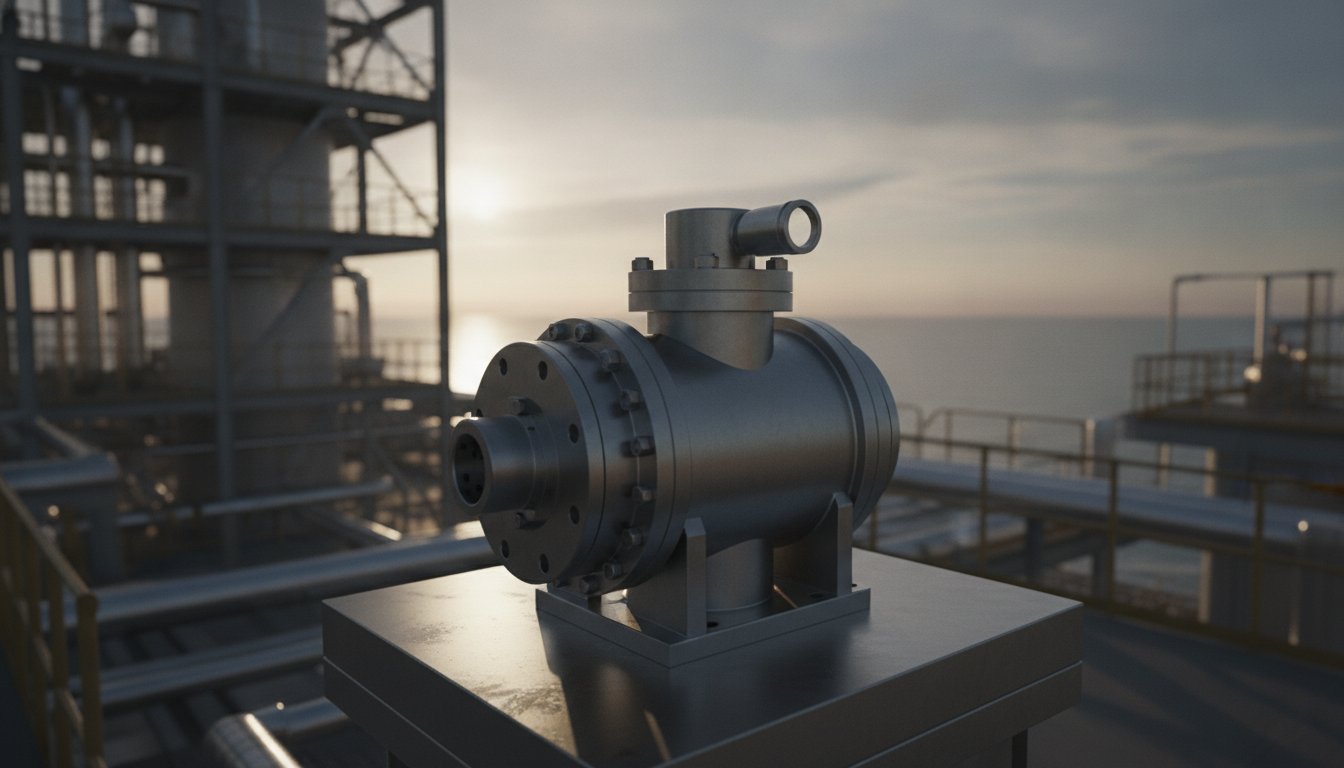
Explosion-proof slip rings are specialised rotary connectors engineered to operate safely in environments where flammable gases, vapours, or combustible dusts are present. Their primary role is to contain any internal sparks or thermal energy generated during operation. By doing so, they prevent the ignition of the surrounding atmosphere. Standard industrial slip rings are insufficient for these tasks. They often generate tiny arcs as brushes slide over rings, which acts as a ready ignition source in a volatile zone.
In the Australian context, these hazards are pervasive across key sectors. Underground coal mines deal with methane gas, while oil and gas facilities manage various hydrocarbons. Additionally, large-scale grain handling operations create significant risks from combustible dust. Specifying ATEX certified slip rings Australia wide ensures that these risks are mitigated through rigorous testing and design. Without these certifications, rotating equipment becomes a critical failure point in a site's safety dossier.
The Mechanics of Ignition Prevention in Rotary Joints
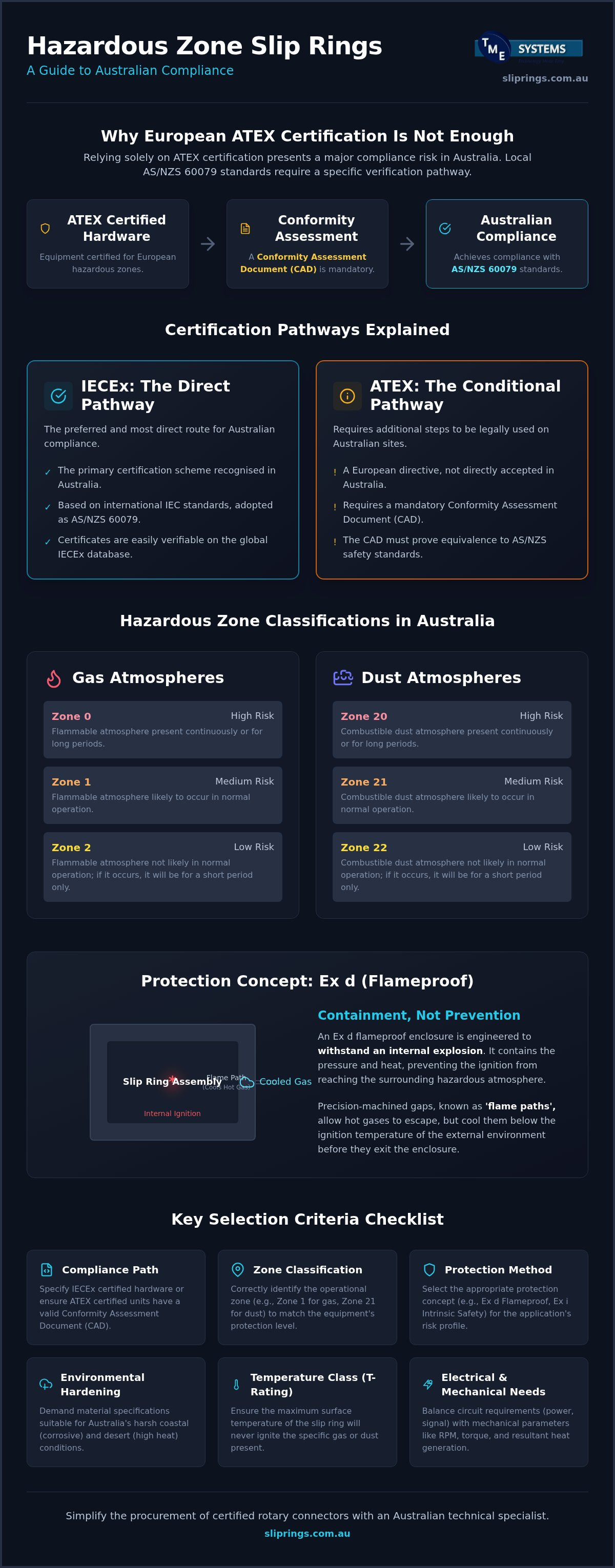
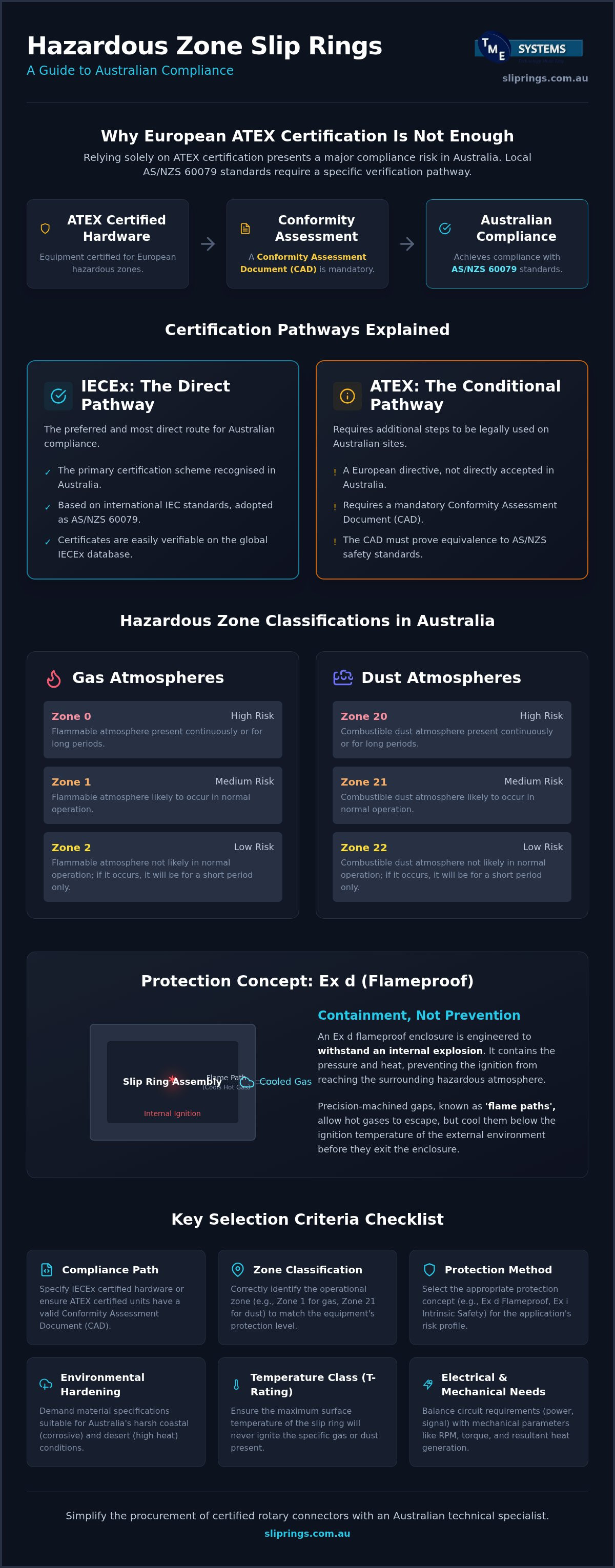
Sliding electrical contacts naturally generate friction and heat during rotation. Even at low speeds, the potential for electrical arcing exists. Certified enclosures are designed with precision-machined flame paths. These paths allow escaping gases from an internal ignition to cool down before reaching the external environment. A flameproof enclosure is defined as one that can withstand an internal explosion without transmitting the ignition to the exterior atmosphere. This mechanical containment is vital for protecting the integrity of the wider plant.
Hazardous Zone Classifications for Australian Industry
The Australian industry follows a specific classification system based on the frequency and duration of the explosive atmosphere. Gas environments are categorised into Zones 0, 1, and 2, while dust environments use Zones 20, 21, and 22. Correctly identifying the specific zone is the mandatory first step for any procurement process. This classification determines the level of protection required when sourcing ATEX certified slip rings Australia for high-risk sites. These standards align with the ATEX directives used globally to define equipment safety levels.
Common applications for these components include offshore oil rigs, chemical processing plants, and massive grain silos. In each case, the slip ring must maintain signal integrity for sensors or power for motors without compromising the site's explosion-proof integrity. Using high-quality hardware from brands like BGB Innovation ensures compliance and operational longevity in these high-risk settings. Identifying the correct zone ensures you don't over-specify for a Zone 2 area or, more dangerously, under-specify for a Zone 1 environment.
Protection Concepts and Certification: IECEx vs ATEX in Australia
Australia's regulatory framework for hazardous areas is governed by the AS/NZS 60079 series. This series is a direct adoption of international IEC standards, which establishes the IECEx system as the primary certification scheme for local industrial sites. While many procurement managers seek ATEX certified slip rings Australia wide due to the high quality of European manufacturing, it's vital to understand the local compliance pathway. ATEX is a European directive and is not directly accepted in Australia without additional verification. To use ATEX-only hardware, a Conformity Assessment Document (CAD) must be prepared to prove the equipment meets a safety level equivalent to Australian standards.
Verifying compliance begins with a thorough inspection of the component's nameplate. A compliant slip ring must display the "Ex" symbol followed by the specific protection concept, the gas or dust group, and the temperature class. For hardware sourced through specialists like BGB Innovation, the IECEx certificate number is clearly listed. This allows engineers to verify the hardware's credentials instantly via the international IECEx database, ensuring the equipment is fit for purpose before it arrives on site.
Ex d vs Ex i: Selecting the Correct Protection Concept
Selecting the right protection method depends on the electrical load and the designated zone. Flameproof (Ex d) protection relies on heavy-duty enclosures designed to contain an internal explosion. This is generally the preferred choice for high-power circuits where electrical arcing is a known risk. Intrinsic Safety (Ex i) takes a different approach by limiting electrical energy to levels insufficient to cause ignition. This method is ideal for low-power sensors and signal transfers. Depending on the specific industrial environment, you may also need to consider Increased Safety (Ex e) or Encapsulation (Ex m) for certain rotary components.
The Importance of Third-Party Testing
Self-certification is not an option for hazardous zone equipment in the Australian market. Every slip ring must undergo validation by accredited testing laboratories to ensure it can withstand the rigours of a volatile atmosphere. In Australia, this oversight is provided by Certifying Bodies such as TestSafe or SIMTARS. These organisations validate that the flame paths, material integrity, and thermal properties of the rotary connector align with AS/NZS 60079. Professional installation and routine audits are required to maintain the integrity of this certification over time. If you are beginning a new project, consulting with a technical specialist can ensure your hardware selection aligns with both operational needs and local safety mandates.
Engineering Features of Flameproof and Dust-Ignition Proof Slip Rings
Engineering for hazardous zones requires a focus on material science that extends beyond simple containment. In Australian industrial sites, hardware must withstand both the internal risks of electrical operation and the external pressures of the environment. Specifying 316-grade stainless steel or specialised marine-grade alloys is standard for coastal processing plants and inland mines to resist corrosion and physical impact. These materials ensure the enclosure maintains its structural integrity over a long service life, preventing the development of cracks or gaps that could compromise the safety rating.
Managing thermal dissipation is equally vital for compliance. The external surface temperature, known as the T-rating, must remain below the ignition point of the specific gas or dust hazard present on site. High-power applications naturally generate heat through electrical resistance, making the selection of ATEX certified slip rings Australia wide a critical decision for thermal safety. Additionally, Ingress Protection (IP) ratings such as IP66 or IP67 are often required. These ratings ensure that fine combustible dust or high-pressure water from washdown procedures cannot enter the enclosure and cause internal short circuits.
Flame Paths and Enclosure Integrity
The science of flame paths involves precision-engineered gaps between the mating surfaces of an enclosure. These paths are designed to allow hot gases from an internal ignition to expand and cool before they reach the outside atmosphere. Whether the application requires a through-bore or a capsule design, these gaps must be maintained within micron-level tolerances. Mechanical vibration from heavy rotating machinery can degrade enclosure seals or alter these tolerances over time. Regular audits are necessary to ensure that the "Ex" integrity of the unit remains intact despite the constant movement inherent in rotary joints.
Contact Material Science for Safety
Signal clarity and heat reduction are best achieved through the use of precious metal contacts. Gold-on-gold or silver contacts are preferred in hazardous zones because they offer low electrical resistance and minimal electrical noise. This is particularly important for high-speed data transfer where signal integrity cannot be sacrificed for safety. BGB Innovation slip rings are widely recognised for their robust, heavy-duty contact designs that manage these electrical loads efficiently. Contact wear is a significant factor in long-term safety; as brushes wear down, resistance can increase. This leads to higher heat generation, which may eventually affect the unit's thermal rating and overall certification status.
Selection Criteria for Specifying Rotary Connectors in High-Risk Sites
Engineers must begin with a precise electrical audit to avoid procurement errors that could compromise site safety. This audit should define the circuit count, peak voltage levels, and current ratings for both power and control signals. In hazardous zones, the relationship between rotation speed (RPM) and heat generation is a primary safety concern. High RPMs increase friction, which can elevate the surface temperature of the unit and potentially exceed the T-rating. When specifying ATEX certified slip rings Australia wide, it's essential to provide the manufacturer with the maximum continuous operating speed. This ensures the thermal design accounts for kinetic energy and maintains the required safety margin.
Australian industrial sites present harsh environmental stressors that rapidly degrade standard electrical components. Coastal installations face high salinity and humidity, while inland sites often deal with extreme ambient temperatures. These factors influence material selection and the necessary level of ingress protection. A slip ring that performs well in a temperature-controlled factory won't survive long on a remote Australian mine site or an offshore platform. For a detailed checklist on these parameters, refer to our guide on Industrial Slip Rings Australia: The Technical Procurement Reference.
Data Integrity and Signal Shielding
Transferring high-speed data like Ethernet or fieldbus signals through explosion-proof barriers is technically demanding. Thick flameproof enclosure walls can act as a source of signal attenuation or electromagnetic interference (EMI) if not correctly managed. Integrating Fibre Optic Rotary Joints (FORJs) is a highly effective solution for high-bandwidth transmission. They're inherently spark-free and immune to EMI, making them ideal for volatile zones. If your application requires traditional copper contacts, specialised shielding and twisted-pair configurations are necessary to maintain signal quality without compromising the "Ex" integrity of the housing.
Mechanical Integration and Mounting
The physical installation of the slip ring must align with the machine's existing mechanical constraints to ensure long-term reliability. You'll typically choose between flange mounting, where the unit is bolted directly to the shaft, and torque arm configurations that allow for slight misalignments. The mounting method must not introduce mechanical stress that could compromise the flameproof seals or flame paths. Ensuring the installation remains compliant with the overall hazardous area rating is the final, critical step in the procurement process. If you need assistance matching these specifications to your site requirements, you can request a technical consultation with our engineering team to review your drawings and electrical loads.
Sourcing and Technical Consulting for Hazardous Zone Applications
Sourcing ATEX certified slip rings Australia wide involves more than a simple transaction. It requires a deep understanding of the intersection between electrical performance and hazardous area compliance. Technical application consulting reduces procurement risk by ensuring that every variable, from circuit count to specific gas group requirements, is addressed before the order is placed. This consultative approach is essential for high-consequence environments where a specification error can lead to costly delays or safety failures. TME Systems Pty Ltd serves as the bridge between international manufacturing excellence and the practical realities of Australian industrial sites.
For applications requiring extreme precision or maintenance-free operation, brands like Meridian Laboratory provide advanced rotary solutions. These high-precision units are often integrated into complex systems where signal clarity is paramount. Initiating a technical audit for your rotating equipment's hazardous area requirements is the most effective way to ensure long-term safety. This process involves a step-by-step review of your electrical loads, mechanical constraints, and environmental hazards to identify the most compliant and durable hardware available.
Navigating Custom Configurations and Lead Times
Most explosion-proof applications require tailored engineering rather than off-the-shelf solutions. Standard units often fail to meet the exact T-rating or IP requirements of a specific Australian site, particularly in the mining and oil and gas sectors. To streamline the quoting and certification process, engineers should organise technical data sheets that specify voltage, current, RPM, and the designated hazardous zone. This data allows manufacturers to adjust flame path tolerances and housing materials to meet the specific safety mandate. Having local Australian technical support ensures that any maintenance queries or compliance updates are handled by specialists who understand the AS/NZS 60079 framework.
The TME Systems Pty Ltd Approach to Industrial Safety
TME Systems Pty Ltd prioritises long-term reliability and compliance for the Australian petrochemical and mining sectors. We focus on providing hardware that withstands the rigours of the field while maintaining the integrity of the hazardous area certification. By accessing global manufacturing expertise through a dedicated local distributor, Australian firms can secure hardware that is both world-class and locally compliant. Our team assists in matching complex specifications to certified hardware, ensuring your project meets its safety goals without compromising on performance. Contact TME Systems Pty Ltd for a technical consultation on explosion-proof rotary connectors to discuss your specific site requirements and begin the procurement process with confidence.
Securing Compliance and Performance in Volatile Environments
Specifying rotary connectors for hazardous areas requires a precise balance between electrical performance and regulatory compliance. You've seen that while ATEX certified slip rings Australia wide offer exceptional engineering, achieving full AS/NZS 60079 compliance often necessitates a local technical audit and the preparation of Conformity Assessment Documents. Success in these high-risk environments depends on selecting hardware that manages thermal dissipation through robust T-ratings while maintaining signal integrity via advanced contact material science.
TME Systems acts as your dependable partner in this process, bridging the gap between global manufacturers and Australian site requirements. As a specialist distributor for world-leading brands like BGB Innovation and Meridian Laboratory, we provide the technical support needed to navigate complex IECEx certifications and harsh environmental variables. Our focus remains on long-term reliability and ensuring your rotating equipment operates safely within its designated zone.
If you're ready to finalise your hardware specifications or require a detailed review of your site's hazardous area requirements, we invite you to Request a Technical Consultation for Your Hazardous Zone Application. Taking the time to verify these technical parameters now ensures a compliant and efficient installation for years to come.
Frequently Asked Questions
What is the difference between ATEX and IECEx for slip rings in Australia?
IECEx is the preferred certification pathway in Australia because it is directly accepted under the AS/NZS 60079 series. ATEX is a European directive that is not automatically recognised by Australian regulators. To use ATEX certified slip rings Australia wide, you must provide a Conformity Assessment Document (CAD). This document proves the hardware meets local safety requirements. Most engineers prioritise IECEx-certified components to simplify the site's hazardous area verification dossier and reduce administrative hurdles during safety audits.
Can a standard industrial slip ring be modified to be explosion-proof?
No, standard industrial slip rings cannot be modified to meet explosion-proof standards. These units lack the precision-machined flame paths and heavy-duty enclosures required to contain an internal explosion. Attempting to modify a standard unit would void any existing certifications and create a severe safety risk. Instead, you must specify hardware that is engineered from the ground up for hazardous zones. TME Systems provides technical consulting to help you select purpose-built rotary connectors for these high-consequence environments.
What maintenance is required to keep a slip ring's explosion-proof rating valid?
Maintenance focuses on protecting the physical integrity of the flame paths and the enclosure. You must conduct regular visual inspections to ensure no scratches, corrosion, or debris have compromised the precision gaps. It's also vital to monitor brush wear and electrical resistance, as excessive friction can increase the unit's operating temperature. If a seal is damaged or an enclosure is opened by unauthorised personnel, the explosion-proof rating is typically voided until a formal recertification or professional audit occurs.
Are mercury-free explosion-proof slip rings available for the Australian food industry?
Yes, mercury-free options are available and often preferred for sensitive sectors like the Australian food and beverage industry. While liquid metal connectors offer high conductivity, dry-contact technologies from brands like BGB Innovation provide a safe, compliant alternative in explosive atmospheres. These units use precious metal brushes to ensure signal clarity without the risk of contamination. TME Systems can assist in matching these mercury-free requirements with the necessary hazardous zone certifications for your specific production line.
How do IP ratings and explosion-proof certifications work together?
IP ratings and explosion-proof certifications address different environmental risks but are often used concurrently. An IP rating, such as IP66, defines the enclosure's ability to exclude dust and water. Conversely, an Ex certification defines the unit's ability to prevent an internal ignition from reaching the external atmosphere. In Australian grain silos or offshore rigs, a slip ring must typically meet both standards to ensure that combustible dust cannot enter the unit and that internal sparks stay contained.
Can explosion-proof slip rings handle high-speed data like Ethernet or Profibus?
Yes, modern explosion-proof slip rings are designed to handle high-speed data protocols including Ethernet, Profibus, and CANbus. Achieving this requires specialised internal shielding to prevent electromagnetic interference and maintain signal integrity through the flameproof enclosure. For extremely high bandwidths, Fibre Optic Rotary Joints (FORJs) can be integrated into the assembly. These provide a spark-free method for data transmission, making them an excellent choice for ATEX certified slip rings Australia used in advanced telemetry or control systems.
What Australian industries most commonly require Ex-rated rotary connectors?
The most common sectors include underground coal mining, offshore oil and gas production, and large-scale grain handling. Mining operations deal with methane gas risks, while petrochemical sites manage various hydrocarbon vapours. Grain handling is a significant sector in Australia where combustible dust creates a constant explosion risk. Each industry requires specific rotary connectors that align with their designated Zone 0, 1, or 2 classifications to ensure personnel safety and maintain operational continuity across the site.
How do I determine the correct temperature class (T-rating) for my slip ring?
Determining the T-rating requires identifying the lowest auto-ignition temperature of the gases or dusts present in your environment. The slip ring's external surface temperature must never exceed this value during operation. For example, a T4 rating limits the surface temperature to 135 degrees Celsius. When specifying hardware, you must account for both the ambient temperature of the Australian site and the heat generated by electrical resistance at maximum RPM. TME Systems helps engineers calculate these thermal loads during the selection process.