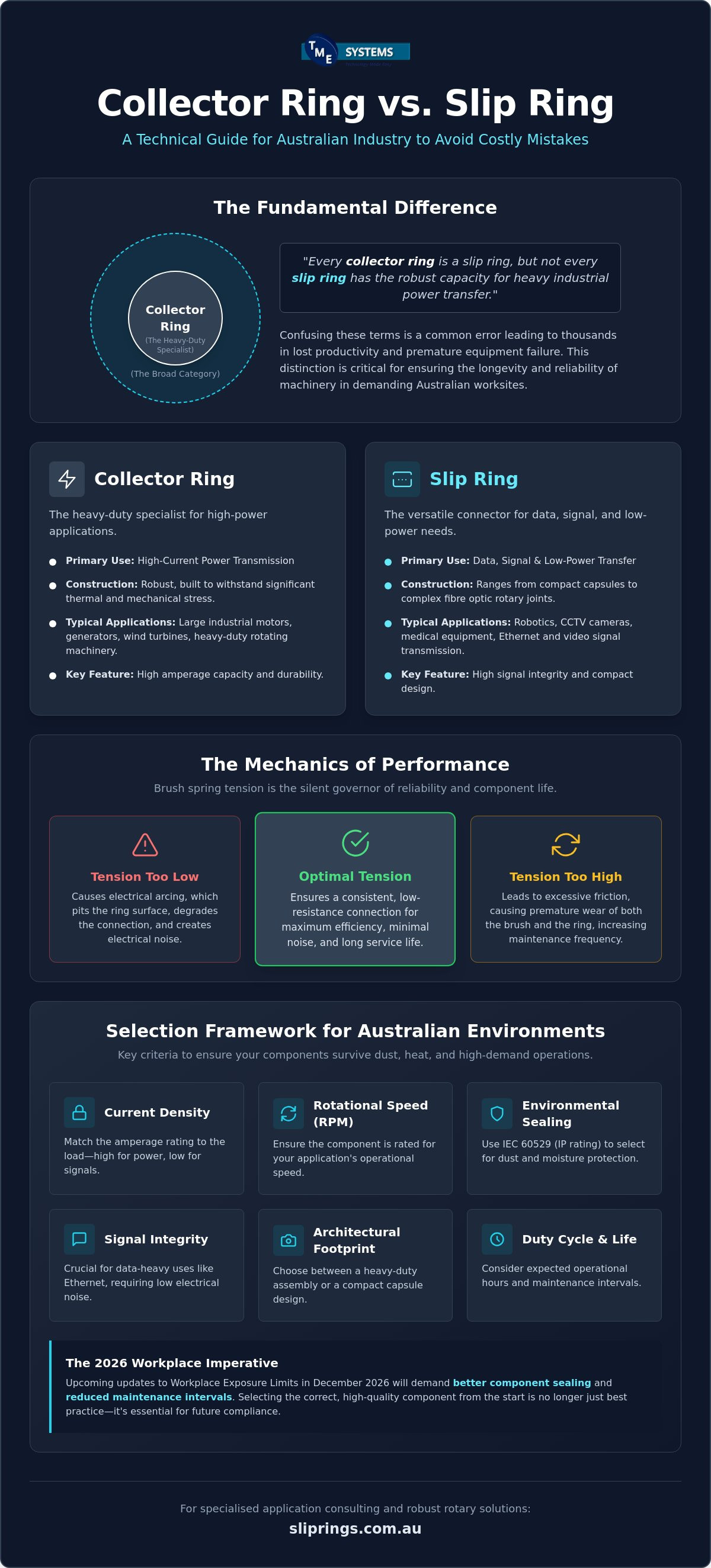
Ordering a collector ring when your application actually requires a high-speed slip ring is a technical error that often leads to thousands of dollars in lost productivity. It's a common frustration for procurement officers who find themselves caught between conflicting terminology in international manuals and local supplier catalogues. While many professionals use the terms interchangeably, the distinction is critical for the longevity of your equipment. This is especially true as we move toward the December 2026 update to Workplace Exposure Limits, which demands better component sealing and reduced maintenance intervals across Australian industrial sites.
We understand that selecting the right rotary interface is about more than just matching a part number. It's about managing signal noise and preventing premature wear in demanding environments. This article clears the confusion by providing a direct technical comparison between these components. You'll learn how to identify when a heavy-duty collector ring is necessary for power transmission and when a precision slip ring is required for data integrity. We also provide a selection framework based on IEC 60529 standards to ensure your hardware survives the dust and heat of the Australian landscape.
Key Takeaways
- Distinguish between a collector ring and a slip ring to avoid costly ordering errors and ensure your hardware matches the power requirements of large-scale industrial motors.
- Master the mechanical fundamentals of conductive rings and brush tension to extend component life and minimise electrical noise in sensitive machinery.
- Compare current density capabilities and architectural footprints to determine whether a heavy-duty assembly or a compact capsule design is the correct fit for your project.
- Utilise a technical specification framework based on IEC 60529 standards to select components that can endure the harsh dust and heat typical of Australian worksites.
- Learn why specialised application consulting is essential for integrating rotation solutions that balance electrical performance with long-term mechanical reliability.
Understanding the Collector Ring: Definition and Industrial Context
A collector ring is a specialised rotary electrical interface that enables the transfer of power or electrical signals from a stationary source to a rotating component. While the industry frequently treats the term as a synonym for a slip ring, its technical lineage is more specific. It's fundamentally tied to the development of AC induction motors and large-scale alternators. This collector ring definition highlights its primary role: maintaining an uninterrupted electrical connection through a full 360-degree rotation without the risk of tangled cables or mechanical failure. Essentially, it functions as a bridge that ensures mechanical movement doesn't compromise electrical continuity.
In the context of 2026 industrial procurement, nomenclature is more than just semantics. As Australian facilities move toward high-precision digital twin modelling and automated inventory management, using the correct technical terms prevents costly ordering errors. You shouldn't confuse these components with a commutator. While a commutator is used in DC machines to reverse current direction, these rings are designed for continuous AC transmission or signal relay. Getting this distinction right at the specification stage ensures that the hardware you receive is actually fit for purpose and compatible with your existing motor architecture.
Is there a technical difference between a collector ring and a slip ring?
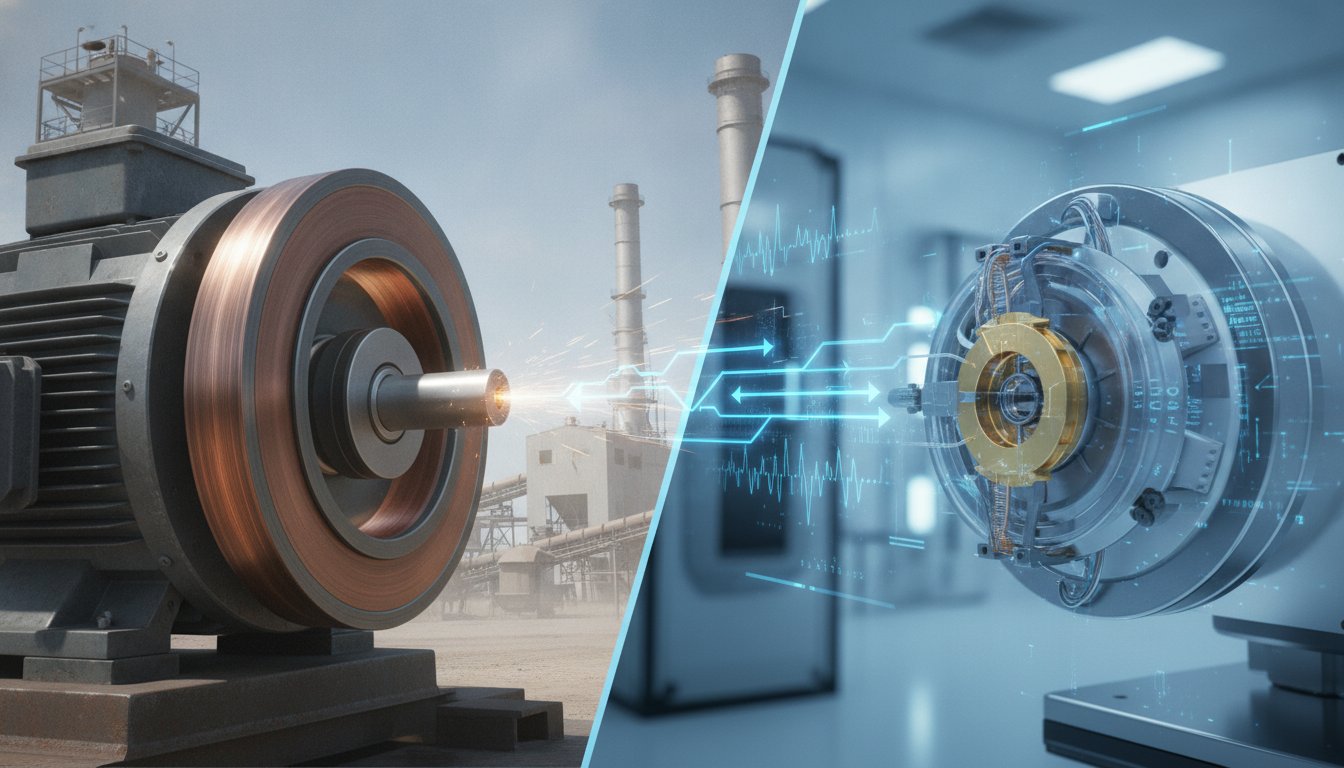
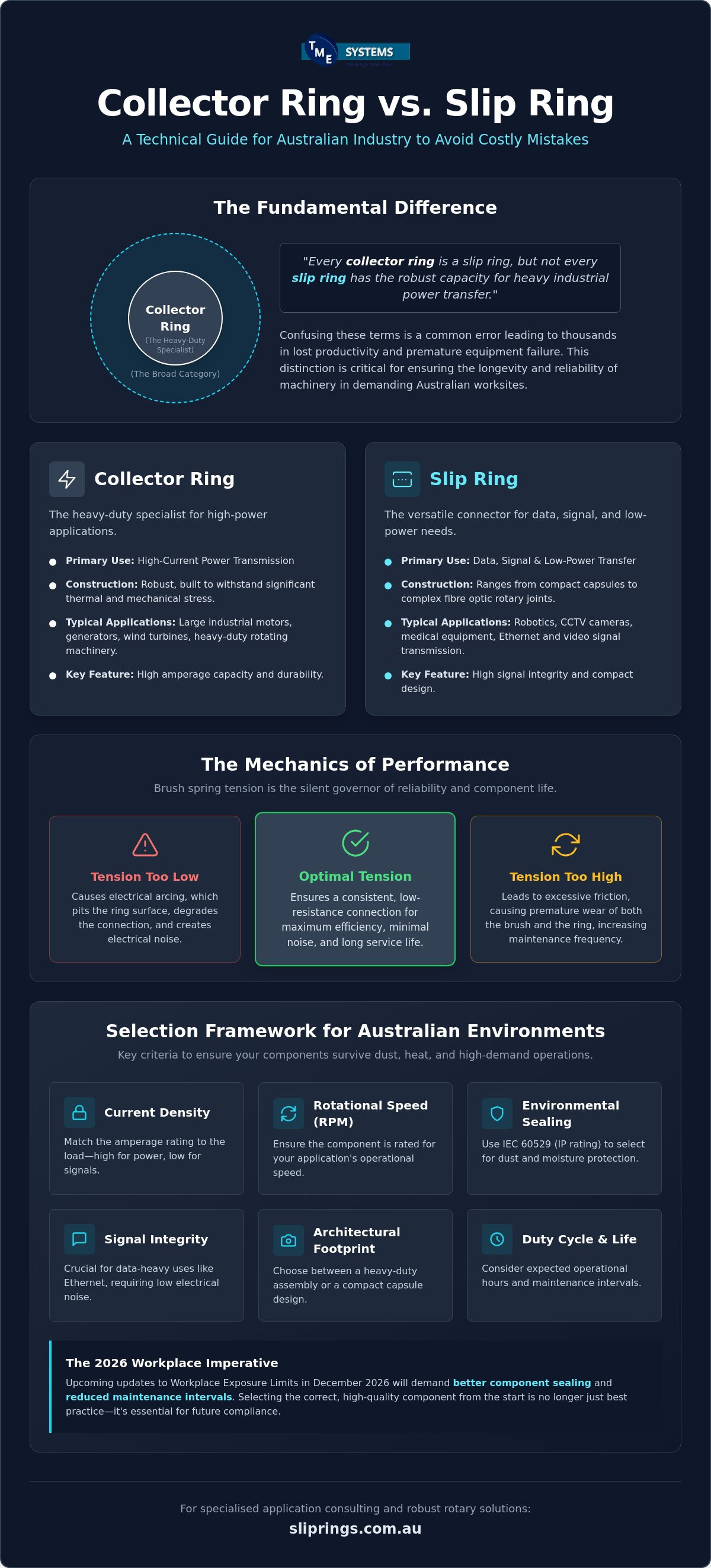
From an engineering perspective, the difference usually lies in the application's scale and intended load. A collector ring typically refers to high-power, high-current assemblies found in heavy machinery, such as generators or large industrial motors. These units are built to withstand significant thermal loads and mechanical stress over long operational cycles. Conversely, "slip ring" is the broader umbrella term. It covers everything from compact capsule units that transmit Ethernet data to sophisticated fibre optic rotary joints. A helpful rule for technical managers is that while every collector ring is a slip ring, not every slip ring possesses the robust current-carrying capacity required for heavy industrial power transfer.
Common industrial synonyms used in Australia
Within the Australian mining, energy, and manufacturing sectors, you'll encounter several synonyms for these components. These include rotary electrical joints, electrical swivels, and rotating connectors. However, the term "collector ring" remains the dominant choice in heavy-duty environments like the Pilbara's iron ore mines or the wind farms across the Victorian coast. This regional preference directly influences how procurement teams search for replacements. For example, sourcing BGB Innovation slip rings Australia often involves looking for heavy-duty assemblies specifically designed for the high-vibration and high-dust conditions of local worksites. Using precise terminology ensures you connect with consultants who understand these unique environmental variables and can provide hardware that meets IEC standards.
Engineering Mechanics: How Collector Rings Facilitate Power Transfer
The mechanical integrity of a collector ring relies on the constant physical contact between a stationary brush and a rotating conductive surface. This assembly is built around a central insulating core, typically made of high-grade dielectric materials, which supports the conductive rings. As the rotor turns, power from the stationary lead is transferred through the brush holder assembly into the rings. This simple yet robust design allows for the continuous delivery of high-amperage current without the risk of mechanical fatigue or cable twisting. For complex industrial slip ring applications, the precision of this interface determines the overall efficiency of the power system.
Spring tension is the silent governor of performance in these units. If the tension is too low, electrical arcing occurs, which pits the ring surface and degrades the connection. If it's too high, the resulting friction leads to premature wear of both the brush and the ring. Achieving the correct balance is essential for maintaining electrical continuity. Engineers must also account for concentricity. Even a minor deviation in the ring's roundness can cause the brushes to bounce at high RPM, leading to intermittent power loss and increased electrical noise. A superior surface finish on the rings is required to minimise this friction and extend the service intervals of the entire assembly.
Contact materials and conductive ring composition
The choice of contact material is the most significant factor in determining the lifespan of the unit. While traditional carbon brushes are common due to their self-lubricating properties, silver-graphite and precious metal wires are preferred for applications requiring higher conductivity and lower signal interference. Many heavy-duty BGB Innovation slip rings utilise high-performance copper alloys to manage the intense thermal loads found in industrial environments. Beyond traditional brushes, liquid metal interfaces using gallium alloys provide an alternative for ultra-low resistance, though they require specialised sealing. The chemical compatibility between the brush and the ring material directly influences the rate of oxidation and the total electrical noise produced during rotation.
Power transmission in generators and alternators
In the power generation sector, these rings are vital for providing the excitation current to the rotor. This current creates the magnetic field necessary for electricity production. Because these systems often operate at high current densities, thermal management becomes a primary engineering challenge. Heat must be dissipated effectively to prevent the insulating core from degrading. This reliability is equally important in the logistics sector, where a robust slip ring for material handling ensures that stackers and reclaimers can operate continuously in harsh conditions. If you're unsure which mechanical configuration suits your current load, technical application consulting can help specify the correct parameters for your site.
Collector Rings vs. Standard Slip Rings: A Comparative Performance Analysis
While a Slip ring is the general term for any rotary interface, the choice between a heavy-duty collector ring and a standard capsule design depends entirely on your power and data requirements. The architectural differences are stark. A collector ring typically features an open architecture or a large-diameter through-bore to accommodate the heavy copper busbars required for high current. In contrast, standard slip rings often use a compact capsule housing to protect sensitive signal circuits from external interference. This distinction is vital for Australian procurement officers who must balance the need for high current density with the physical space constraints of modern machinery.
Maintenance requirements also vary significantly between these two categories. Because a collector ring is designed for high-power transmission, it typically uses large carbon or silver-graphite brushes that generate carbon dust over time. This necessitates a planned maintenance schedule to monitor brush wear and ensure the insulating core remains clean. Standard signal-focused slip rings often use precious metal wire brushes or sealed contact technologies that are virtually maintenance-free for millions of rotations. If your application involves high-speed data transfer, such as Ethernet or Profibus, a collector ring is rarely suitable due to the electrical noise generated by high-current contacts.
High-current power vs. precision signal transfer
The design threshold for a dedicated collector ring usually begins when current requirements exceed 100 Amps or when dealing with high-voltage excitation in generators. These units prioritise current-carrying capacity and thermal dissipation. Conversely, signal slip rings require shielded circuits and gold-on-gold contacts to ensure signal integrity and prevent data loss. While a heavy-duty collector ring in a wharf crane or mining shovel can handle massive electrical loads, it lacks the precision contact geometry required for sensitive digital signals. Understanding this power threshold is the first step in avoiding signal interference and premature component failure.
Application-specific design differences
Physical configuration is another area where these components diverge. Through-bore designs are essential when the assembly must pass around a central rotating shaft or a hydraulic line. Prosper Rotation slip rings offer a modular solution for these challenges, allowing engineers to integrate high-power collector rings with precision signal channels in a single hybrid housing. For applications where vertical space is restricted, such as in some rotating platforms or turntables, pancake rings provide a flat, disc-like alternative. While pancake designs solve height issues, they often have higher capacitance and crosstalk compared to the cylindrical architecture found in standard industrial units.
Technical Selection Criteria for Australian Industrial Environments
Specifying a collector ring for the Australian market requires a rigorous audit of the intended operating environment. You must first define the total number of circuits, the peak operating voltage, and the continuous current load. While a standard catalogue unit might appear sufficient, these figures often change under the stress of local industrial cycles. Technical managers should also consider the mechanical mounting style, such as flange or through-bore, to ensure the assembly integrates seamlessly with the existing drive shaft. Precise data at this stage prevents the common error of selecting a component that meets electrical specs but fails due to mechanical misalignment.
Rotational speed is a critical variable that dictates both brush wear and electrical noise levels. High-RPM systems increase the friction at the contact interface, which can lead to "brush bounce" and intermittent signal loss. This mechanical vibration is particularly problematic in precision machinery where signal integrity is non-negotiable. As the speed increases, the rate of carbon dust accumulation also rises. This requires more frequent maintenance intervals to prevent tracking and potential short circuits. Selecting a unit with a higher RPM rating than your actual operational speed provides a necessary safety margin for long-term reliability.
The Australian landscape presents unique challenges, including extreme ambient temperatures and high dust loads. In regions like the Pilbara or Central Queensland, temperatures often exceed 40 degrees Celsius, which can accelerate the degradation of the insulating core. Airborne particulates from mining and agricultural operations can also infiltrate open-architecture rings, causing abrasive wear on the conductive surfaces. From 1 December 2026, new Workplace Exposure Limits (WELs) will enforce stricter controls on airborne contaminants in Australia. This makes the containment of carbon brush dust a regulatory priority as well as a mechanical necessity for site safety.
Environmental sealing and IP ratings for harsh sites
Selecting the correct Ingress Protection (IP) rating is essential for survival in harsh environments. An IP65 rating is generally sufficient for protecting against dust and low-pressure water jets in standard manufacturing sheds. However, marine and heavy mining sites often require IP67-rated enclosures to prevent ingress during high-pressure wash-downs or temporary immersion. For precision applications that cannot tolerate any contaminant interference, Meridian Laboratory slip rings provide superior sealing technologies. These specialised enclosures ensure that sensitive internal components remain isolated from the corrosive effects of salt spray and fine mineral dust.
Managing heat and friction in high-RPM systems
Rotational speed directly influences the contact surface temperature through friction. If the heat is not dissipated effectively, the conductive rings can warp, leading to total system failure. Many modern facilities are turning to liquid metal technology, which replaces traditional brushes with a conductive fluid to virtually eliminate friction and electrical noise. This is particularly effective in high-speed data transmission where traditional carbon brushes would fail. In 2026, over-specifying your current capacity by a minimum of 20% is a pragmatic strategy to prevent thermal failure during the extreme heatwaves common across the Australian interior. To ensure your hardware is matched to these environmental variables, you should engage in technical application consulting before finalising your procurement order.
Optimising Rotary Connections with Professional Application Consulting
Off-the-shelf components often fall short when integrated into complex Australian industrial frameworks. While a standard collector ring might suffice in a controlled laboratory, it rarely accounts for the specific mechanical vibrations and environmental variables found on local worksites. A component designed for a temperate climate will struggle when exposed to the high ambient heat of a Queensland sugar mill or the abrasive dust of a Pilbara iron ore reclaimer. This gap between generic specifications and real-world operational demands is where professional application consulting becomes a critical part of the procurement process.
The consultative approach involves a methodical audit of the entire rotary system. We don't just verify part numbers; we evaluate the interaction between electrical loads, rotational speeds, and physical mounting constraints. This process ensures that every specification, from the base material of the rings to the spring tension of the brushes, is optimised for your specific duty cycle. By addressing these variables before the purchase order is finalised, you significantly reduce the risk of unplanned downtime and extend the operational life of your machinery. TME Systems Pty Ltd serves as the essential bridge between global manufacturing capabilities and the rigorous engineering demands of the Australian landscape.
Expert technical consulting for hardware procurement
During a technical consultation, circuit count and voltage ratings are rigorously verified against your actual field data. This step is vital because over-specifying can lead to unnecessary capital expenditure, while under-specifying leads to catastrophic thermal failure. Application engineering adds value by focusing on the total cost of ownership rather than just the initial purchase price. For applications requiring ultra-low electrical noise and maintenance-free operation, consulting with Mercotac distributors Australia provides access to liquid metal technology that eliminates the debris and friction associated with traditional brushes. This level of technical oversight ensures that the hardware you install today will remain compliant with the updated 2026 workplace safety standards.
Premium brands for Australian industry
Selecting the right brand is as important as the technical specification itself. BGB Innovation is the preferred choice for heavy industry and wind energy due to their robust construction and ability to handle high-current loads in punishing conditions. Conversely, the precision engineering of Meridian Laboratory hardware is the gold standard for high-speed signal integrity where data loss is not an option. Each brand in our portfolio has been selected for its proven reliability and performance in demanding sectors. To ensure your rotary connections are fit for purpose, we encourage readers to contact TME Systems Pty Ltd for a comprehensive technical audit of their specific requirements. Our team provides the local expertise needed to navigate complex procurement challenges and ensure long-term mechanical success.
Securing Your Rotary Infrastructure for 2026
Navigating the technical divide between high-current power transmission and precision signal integrity is essential for maintaining operational uptime. By 2026, the demand for hardware that can withstand the Australian climate while meeting stricter environmental safety standards will only increase. Choosing the correct collector ring is about more than matching a part number; it's about ensuring your assembly handles the thermal and mechanical loads of your specific site without premature failure. Technical clarity at the procurement stage prevents the costly downtime associated with incorrect part selection and signal interference.
TME Systems Pty Ltd provides the technical bridge between global engineering excellence and local industrial requirements. As the authorised Australian distributor for premium brands like Mercotac and BGB Innovation, we bring over 20 years of application expertise to the national mining and energy sectors. Our team understands the nuances of rotary connections and the impact of environmental variables on component longevity. Consult with our technical team for expert collector ring selection to ensure your next project is built on a foundation of reliability and precision. We look forward to helping you solve your most complex rotation challenges.
Frequently Asked Questions
What is the primary function of a collector ring in an industrial motor?
The primary function of a collector ring is to provide a continuous electrical connection to the rotating part of an AC motor or generator. It's specifically used to supply excitation current to the rotor windings. This allows the machine to create the magnetic field necessary for operation while rotating at high speeds. Without this interface, the motor would require complex wiring that would eventually twist and fail under mechanical stress.
Is there a difference between a collector ring and a slip ring?
While the terms are often used interchangeably, a collector ring usually refers to a heavy-duty assembly designed for high-power transmission in motors and alternators. Slip rings are a broader category that includes smaller capsule designs used for precision data and video signals. If your equipment requires high current density for power transfer, you're likely looking for a collector ring. If you need to transmit Ethernet or sensor data, a precision slip ring is the correct choice.
How do I know if my application requires a collector ring or a commutator?
You require a collector ring for AC applications where a continuous, steady connection is needed without changing the current direction. Commutators are found in DC motors and are designed to reverse the current flow between the rotor and the external circuit. If your motor manual specifies AC induction or synchronous operation, you'll need the ring assembly. Commutators are easily identified by their segmented copper bars, whereas rings are solid, continuous conductive paths.
What are the most common causes of failure in industrial collector rings?
Failure is most commonly caused by incorrect spring tension in the brush holder or the accumulation of conductive dust. If the tension is too low, electrical arcing occurs, which pits the ring surface and leads to catastrophic failure. Environmental contamination from dust and moisture also accelerates abrasive wear. Regular monitoring of brush length and cleaning the insulating core are essential practices to prevent unplanned downtime and extend the life of the conductive interface.
Can a collector ring handle both high voltage and sensitive data signals?
It's technically possible to handle both in a single hybrid assembly, but it's not recommended to use a standard collector ring for sensitive data. High-voltage power transfer generates significant electrical noise that can corrupt digital signals like Ethernet. For these hybrid requirements, we recommend specialised designs that feature shielded signal channels isolated from the power rings. This prevents crosstalk and ensures that your data integrity isn't compromised by the magnetic fields generated by high-current circuits.
What maintenance is required for brush-based collector rings in dusty environments?
Maintenance in dusty environments requires a strict schedule of vacuuming carbon and mineral debris from the assembly. You must regularly inspect the brush length to ensure they haven't worn past their service limit. It's also vital to check that the brushes move freely in their holders and that spring tension remains within the manufacturer's specified range. Neglecting these checks in high-dust Australian sites leads to rapid surface degradation and increased electrical resistance.
How do IP ratings affect the selection of a collector ring for Australian outdoor use?
IP ratings determine the level of protection against the ingress of dust and water, which is critical for the Australian climate. For outdoor industrial use, we recommend a minimum of IP65 to prevent fine dust from entering the conductive chamber. If the equipment is subject to high-pressure wash-downs or coastal salt spray, an IP67 rating provides the necessary seal. Choosing an insufficient rating leads to corrosion and short circuits, especially during extreme weather events.
Are there mercury-free alternatives for collector rings in Australia?
Yes, there are several high-performance mercury-free alternatives available for Australian industries. While mercury-wetted contacts offer low noise, modern silver-graphite brushes and gold-on-gold wire contacts provide exceptional reliability without environmental risks. For ultra-low noise requirements, gallium-based liquid metal connectors offer a high-conductivity, mercury-free solution. These alternatives are increasingly preferred due to their compliance with modern safety regulations and their suitability for sensitive food processing and pharmaceutical environments.