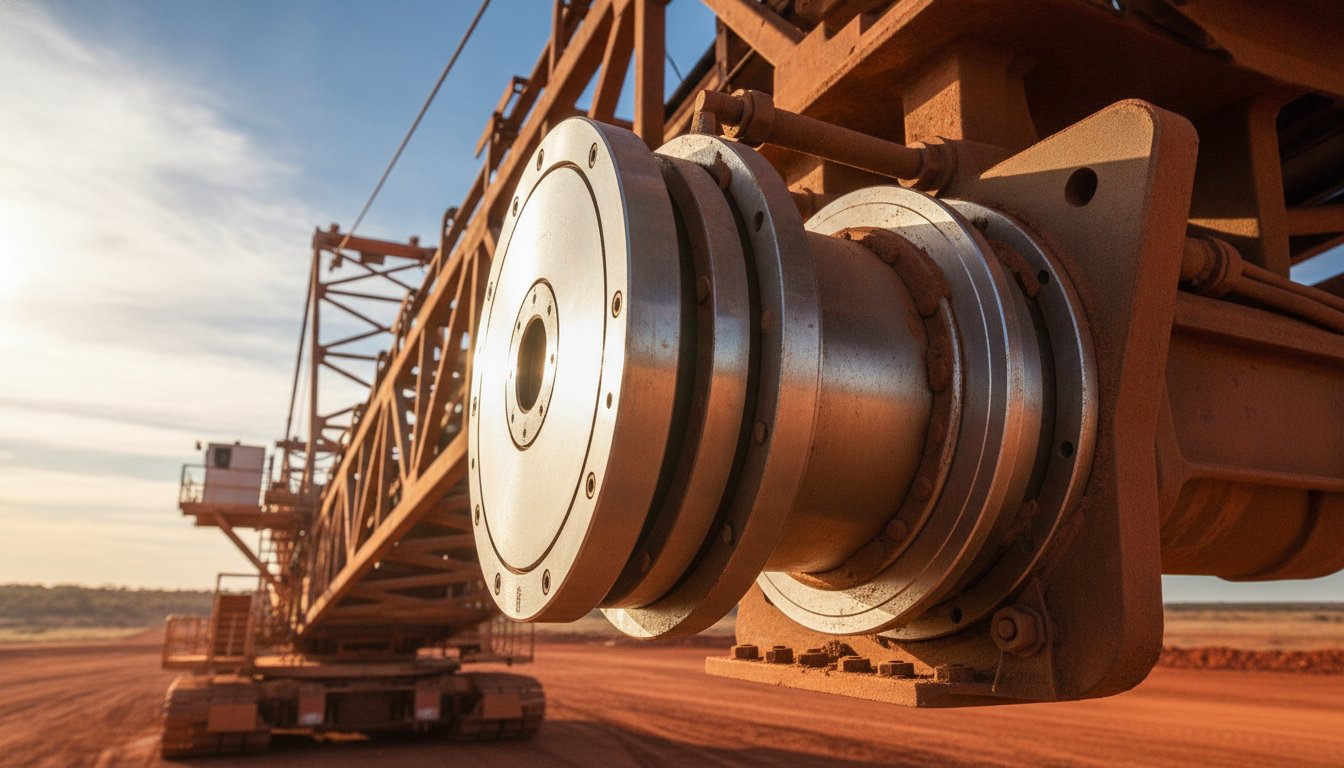
In Australian mining, slip ring failure is rarely a matter of electrical capacity and almost always a result of environmental sealing and contact material synergy. Selecting a reliable slip ring for material handling requires a focus on resilience against the abrasive dust and intense vibration found in the Pilbara or the Hunter Valley. You've likely experienced the high costs of unplanned downtime when signal noise disrupts PLC data or when carbon brushes wear prematurely in harsh pits. It's a common engineering challenge that demands a pragmatic solution rather than a standard off-the-shelf component.
This technical guide details how to select and specify rotary technology that remains compliant with AS/NZS 5368:2025 while withstanding the most demanding environments. You'll learn to identify the most durable contact technologies, from traditional brushes to advanced contactless systems, while examining IP ratings for dust ingress and the value of local technical support. By the end of this article, you'll have a clear framework for optimising your machinery's electrical throughput and mechanical longevity.
Key Takeaways
- Identify why standard rotary connectors fail in mining and how to match contact technology to the specific mechanical demands of heavy rotation.
- Evaluate the performance trade-offs between carbon brushes and liquid metal connectors to ensure you select the most reliable slip ring for material handling.
- Master the engineering checklist for environmental sealing, moving beyond basic IP65 ratings to survive the abrasive conditions of Australian pits.
- Align component specifications with machine-specific needs, from high-current excavator requirements to the continuous operation of stacker-reclaimers.
- Understand the value of local technical consulting in navigating AS/NZS 5368:2025 compliance and securing long-term operational reliability.
The Role of Slip Rings in Modern Mining Operations
A Slip ring serves as the vital electromechanical bridge between stationary and rotating structures. In the mining sector, this component is the critical interface that allows massive machinery to maintain 360-degree continuous rotation without tangling power cables or interrupting data feeds. Whether it's the primary swing motor of a dragline or the slewing mechanism of a stacker-reclaimer, the slip ring ensures that power and control signals flow reliably across the rotating axis. As mining operations move toward increased automation, the role of these connectors has shifted from simple power transfer to the high-speed transmission of PLC data, Ethernet, and high-definition video signals.
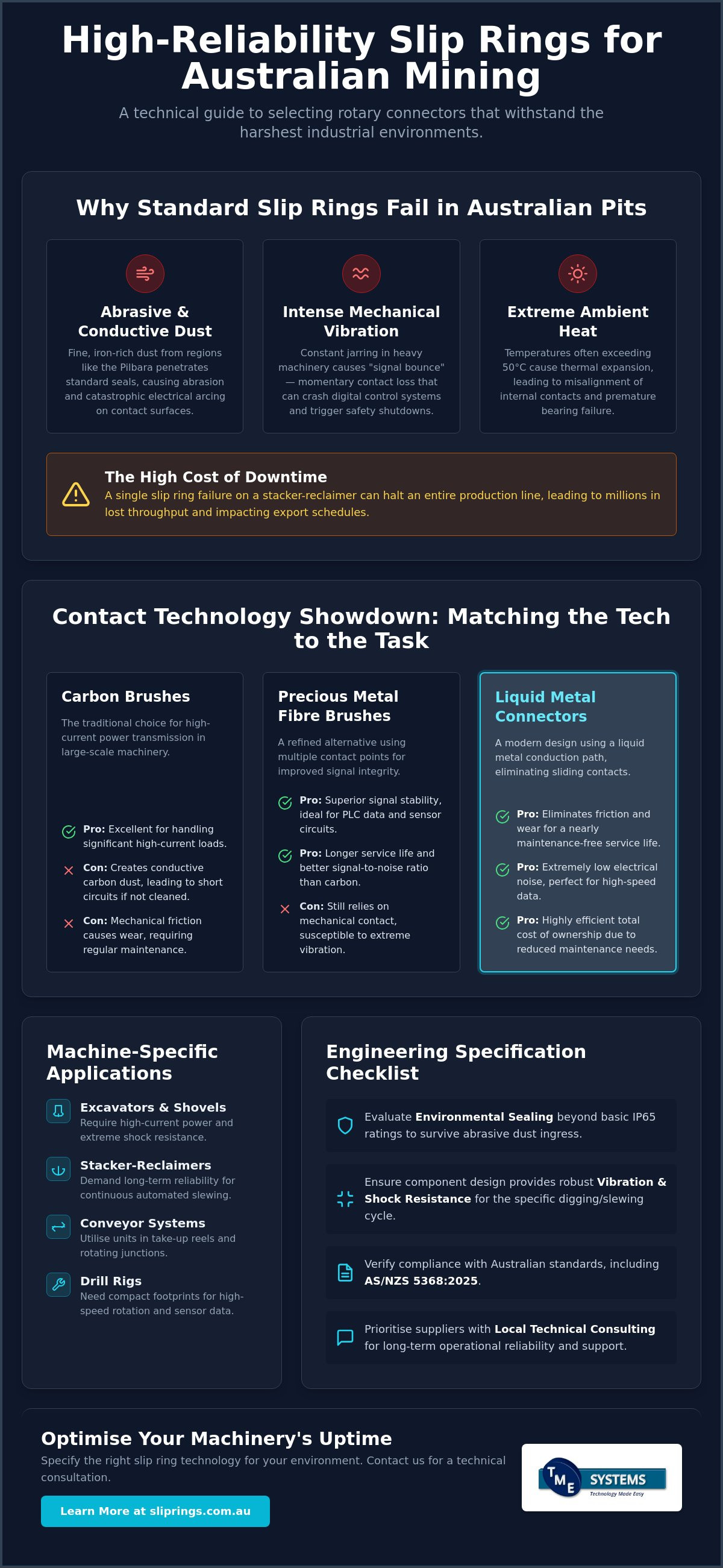
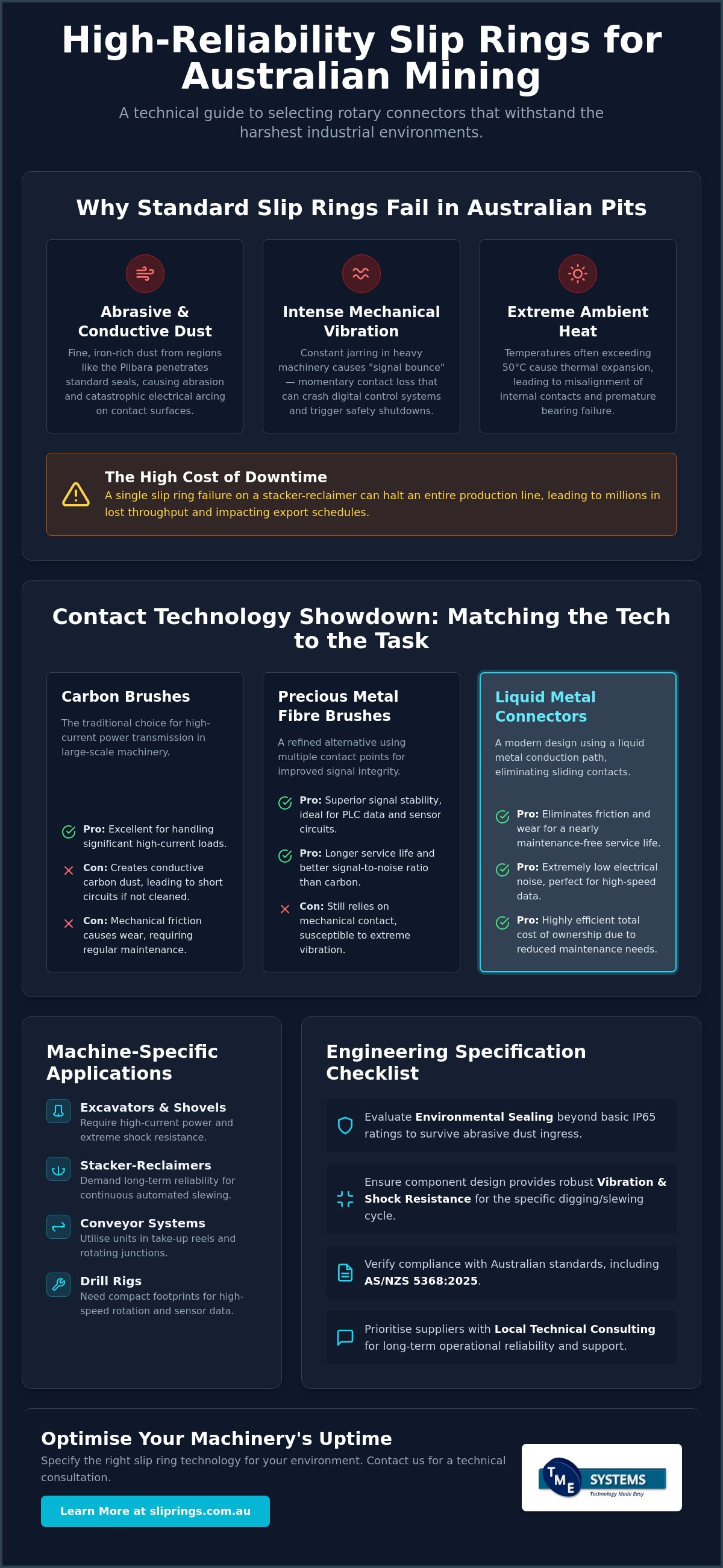
The Australian mining environment represents the ultimate test for any rotary connector. Equipment operates in conditions characterized by extreme vibration, abrasive dust, and intense heat. A slip ring for material handling must be engineered to withstand these variables while maintaining electrical integrity. Key machinery relying on this technology includes:
- Excavators and Shovels: Requiring high-current power for drive motors and shock resistance for digging cycles.
- Stacker-Reclaimers: Demanding long-term reliability for continuous automated slewing and data feedback.
- Conveyor Systems: Utilising slip rings in take-up reels and rotating junctions to manage tension and material flow.
- Drill Rigs: Where compact footprints must handle high-speed rotation and sensor data transmission.
Why Standard Industrial Slip Rings Fail in Mining
Standard industrial components often lack the robust sealing required for the Australian landscape. The fine, iron-rich dust found in regions like the Pilbara is not just abrasive; it's often conductive. When these particulates penetrate a housing, they settle on the contact surfaces, increasing electrical resistance and leading to catastrophic arcing. Mechanical vibration is another common failure point. In a heavy-duty slip ring for material handling, constant jarring can cause "signal bounce," where the brush momentarily loses contact with the ring. This micro-interruption is enough to crash a digital control system or trigger a safety shutdown. High ambient temperatures, often exceeding 50°C, exacerbate these issues by causing thermal expansion that can misalign internal contacts or lead to premature bearing failure.
The Cost of Rotary Connection Downtime
A single slip ring failure on a stacker-reclaimer can halt an entire production line, creating a ripple effect that impacts port schedules and export targets. The financial burden isn't limited to the cost of the replacement part. It includes emergency labour, specialised lifting equipment, and the millions in lost throughput during the outage. Choosing a component based on technical suitability rather than the lowest initial price demonstrates the quiet competence required to prevent these massive revenue losses and ensure the machinery survives its full service interval. Proactive specification focuses on environmental resilience, ensuring that the rotary interface remains the most reliable link in the mechanical chain.
Comparing Contact Technologies for Heavy-Duty Rotation
Selecting the right slip ring for material handling requires a thorough assessment of how the contact technology interacts with the machine's duty cycle. Carbon brushes remain the primary choice for high-current power transmission in large-scale excavators and drills. While they handle significant loads, their reliance on mechanical friction creates conductive carbon dust. This debris can accumulate within the housing, leading to tracking or short circuits if not regularly cleaned. Precious metal fibre brushes provide a more refined alternative, using multiple points of contact to ensure signal stability even under moderate vibration. These fibre systems typically offer a longer service life and better signal-to-noise ratios than traditional carbon blocks, making them suitable for control and sensor circuits.
Liquid Metal vs. Traditional Brush Systems
Mercotac slip rings represent a shift away from sliding contacts by using a liquid metal conduction path. This design eliminates the friction and wear associated with brushes, resulting in a connector that is essentially maintenance-free for the duration of its service life. In terms of total cost of ownership, liquid metal units are highly efficient as they remove the need for periodic brush tensioning and contact surface cleaning. Engineers should be aware that liquid metal systems have specific mounting and orientation requirements. They are also less suited to machinery that experiences extreme, repetitive shock loads, which can displace the liquid metal pool. In such cases, a robust mechanical contact system is usually the more pragmatic choice.
Maintaining Signal Integrity in High-Noise Environments
High-speed data transmission in a mining environment is often compromised by electrical noise from nearby high-voltage drives. Ensuring reliable electrical connections for mining demands components that maintain low and stable contact resistance. Meridian Laboratory slip rings specialise in high-speed data integrity, providing the stability required for Ethernet, Profinet, and high-definition video. These units use a patented brushless design to eliminate the signal "noise" caused by brush bounce, which is critical for the reliable operation of autonomous hauling systems and remote-controlled equipment. Selecting a unit with high signal-to-noise performance prevents the intermittent data loss that often plagues older, brush-based rotary joints.
To ensure your equipment maintains peak performance, you can review our range of heavy-duty rotation solutions to find a match for your specific RPM and current requirements.
Machine-Specific Slip Ring Applications
While the fundamental physics of rotation remains constant, the mechanical integration of a slip ring varies significantly across the pit. Different machines impose unique loads, speeds, and mounting constraints that dictate the internal architecture of the connector. In drill rigs, for instance, vertical mounting presents a specific challenge; gravity affects seal performance and lubrication distribution. These units must be engineered to prevent slurry and mud ingress from the top down, ensuring that the electrical contacts remain isolated from the drilling environment. Similarly, conveyor pulleys require compact designs that can be integrated into tensioning systems to monitor belt health and motorisation without adding significant bulk to the assembly.
Stacker-reclaimers represent another critical application where a slip ring for material handling must facilitate continuous, automated slewing. These machines often operate 24/7 in high-dust environments, meaning any interruption to the data or power feed can stop the entire port or stockpile operation. Reliability in these machines is achieved through redundant contact points and robust housings that can withstand the constant, slow-speed rotation and the associated mechanical stresses of the heavy boom.
High-Current Solutions for Large Excavators
Large electric shovels and excavators require thousands of amps to power their primary swing and hoist motors. Specifying a BGB Innovation slip ring ensures the assembly can manage these massive current loads without excessive heat buildup. In these high-power applications, cooling and ventilation are often integrated into the housing to maintain stable operating temperatures during intensive digging cycles. The design prioritises massive contact surfaces and heavy-duty brush gear to minimise resistance and prevent the arcing that can occur under peak electrical loads. This level of engineering is essential for machines where the rotating base is the heart of the entire operation.
Compact Solutions for Automation and Sensors
As mining equipment becomes more data-driven, the need for compact, high-performance connectors has increased. Prosper Rotation slip rings offer versatile capsule and through-bore designs that fit into space-constrained sensor housings and small-scale machinery. Through-bore units are particularly useful when you need to pass hydraulic or pneumatic lines through the centre of the electrical assembly, creating a streamlined integration point for complex automation. For those seeking more information on how these robust designs are implemented in the field, our detailed article on BGB Innovation slip rings in Australia provides further technical insights into heavy-duty rotation solutions.
Engineering Checklist: Specifying for the Australian Environment
Specifying a slip ring for material handling in an Australian mining context requires a checklist that goes beyond standard industrial data sheets. Performance in a controlled factory environment rarely translates to the reality of a remote site where ambient temperatures frequently hit 50°C. Engineers must account for this base temperature plus the internal heat rise generated by electrical resistance at the contact surfaces. If the total operating temperature exceeds the rating of the internal lubricants or insulation, the unit will fail prematurely. Housing materials also demand careful selection; while anodised aluminium offers a lightweight solution for many sites, 316-grade stainless steel is the pragmatic choice for coastal operations or environments with high corrosive runoff.
The Dust and Moisture Factor
Standard IP65 sealing is often insufficient for the "fines" found in iron ore and coal operations. These microscopic particulates can bypass basic gaskets, leading to internal contamination. For high-reliability applications, moving to IP67 or IP68 ratings provides the necessary barrier against both dust and temporary submersion. Labyrinth seals are frequently superior to simple contact seals in these settings, as they create a complex path that particulates cannot easily navigate without the friction and wear associated with tight rubber seals. Specialised sealing configurations can extend the service life of a rotary connector by up to 300% compared to standard industrial alternatives. This level of protection also prevents the "breathing" phenomenon, where diurnal temperature swings create a vacuum that sucks moist, dusty air into the housing during the cooling cycle.
Electrical and Mechanical Parameters
Circuit mapping must prioritise the separation of power and sensitive data paths to prevent electromagnetic interference. Grounding paths require dedicated, low-resistance circuits to ensure compliance with AS/NZS 5368:2025 and maintain site safety. When calculating voltage drop, engineers should consider the cumulative resistance of the rotating interface, especially in high-current shovel applications. Mechanical mounting also plays a critical role in longevity. While shaft-mount designs are common for compact sensors, flange-mount configurations often provide better stability for larger assemblies subjected to the intense vibration of a primary crusher or shaker screen. High RPM limits are rarely the goal in mining; instead, the focus should be on high torque capacity and the ability to maintain contact integrity during low-speed, high-vibration slewing.
If you are currently drafting specifications for a new project, you can consult with our technical team to ensure your rotary connectors are engineered for the specific demands of your site.
Technical Support and Procurement in Australia
Procuring a slip ring for material handling requires a level of technical due diligence that generic online marketplaces cannot provide. Mining engineers and procurement officers often face the challenge of sourcing components for legacy machinery where original specifications may be incomplete or outdated. In these instances, the advantage of local technical consulting becomes clear. Rather than risking a mismatch that leads to signal noise or premature wear, working with an Australian-based specialist ensures that every mechanical and electrical parameter is verified before the order is placed.
TME Systems Pty Ltd assists in this engineering selection process by evaluating the specific duty cycles and environmental stresses of your application. Whether you're retrofitting a stacker-reclaimer or specifying a new assembly for a drill rig, customisation options are available to match existing shaft diameters and mounting footprints. This bespoke approach reduces the need for extensive on-site modifications and ensures the new component integrates seamlessly with your existing infrastructure. Local availability of critical mining spares also helps mitigate the risk of extended downtime, providing a reliable supply chain for high-wear items that must be kept in stock.
Consultative Selection Process
To identify the most suitable technology, we look at several critical data points: peak current loads, operating voltage, maximum RPM, and the specific environmental hazards of the site. This thorough audit prevents the common error of over-specifying or under-specifying a component. As a specialised intermediary, TME Systems Pty Ltd bridges the gap between international manufacturing standards and the practical requirements of Australian mining operations. For those specifically interested in liquid metal solutions, our Mercotac Distributors Australia guide provides a detailed technical overview of these low-noise connectors.
Maximising Equipment Lifecycle
The operational life of a slip ring for material handling is heavily influenced by the quality of its installation. It's essential to prevent mechanical run-out, as even minor shaft eccentricity can cause uneven brush wear or compromise internal seals. Routine inspection protocols should be established based on the contact technology in use; brush-based systems require periodic debris removal and tension checks, while liquid metal units benefit from regular housing integrity audits. Following these pragmatic maintenance steps ensures that the rotary interface achieves its full rated service life, even in the most abrasive conditions.
If you're looking to improve the reliability of your rotary connections, Contact TME Systems Pty Ltd for a technical consultation on your mining slip ring requirements.
Securing Long-Term Operational Uptime
Selecting the right slip ring for material handling is a decision that impacts the entire lifecycle of your mining machinery. Success in the pit depends on moving beyond standard industrial components to specialised rotary solutions that survive abrasive dust and extreme thermal loads. By prioritising precise environmental sealing and matching contact technology to your specific duty cycles, you can significantly reduce the risk of signal noise and the high costs of unplanned downtime.
TME Systems Pty Ltd provides the technical application consulting required to bridge the gap between complex engineering demands and reliable field performance. As an authorised distributor for Mercotac, BGB, and Meridian Laboratory, we offer a portfolio of proven solutions designed specifically for harsh mining environments. Our team is based in Australia, ensuring you have access to expert support and critical spares when they're needed most. This local expertise is vital for maintaining compliance and ensuring your equipment remains operational throughout its service interval.
If you're ready to improve the resilience of your equipment, you can Consult with an Australian Slip Ring Expert at TME Systems Pty Ltd. We'll work with you to specify a solution that delivers consistent performance in the most demanding Australian pits.
Frequently Asked Questions
What is the best slip ring contact material for high-vibration mining equipment?
Precious metal fibre brushes are generally the most reliable choice for high-vibration mining equipment. Unlike single-point carbon blocks, these multi-filament brushes maintain electrical contact even when subjected to intense mechanical jarring. This design prevents the signal "bounce" that often leads to PLC errors or safety system trips in mobile machinery.
How do I prevent signal noise in my dragline’s rotary connection?
Reducing signal noise in a dragline requires the use of high-performance contact materials and effective circuit shielding. Selecting a slip ring for material handling that features silver-on-silver contacts or liquid metal paths provides the low electrical resistance necessary for clean data. It is also essential to physically isolate high-voltage power lines from sensitive sensor cables within the rotating assembly.
Can I use a liquid metal slip ring in a vertical orientation on a drill rig?
Liquid metal slip rings can be used in vertical orientations, but only if the specific model is engineered for that configuration. Most Mercotac units have strict mounting requirements to keep the liquid metal pool in contact with the rotating internal components. You must specify the intended mounting angle during the technical consulting phase to ensure the internal seals and reservoirs are correctly aligned.
What IP rating is required for slip rings used in Australian open-cut mines?
An IP67 rating is the pragmatic benchmark for slip rings in Australian open-cut mines. While IP65 protects against basic water splashes, the fine, conductive dust in iron ore and coal pits demands a higher level of ingress protection. IP67 ensures the housing is completely dust-tight and can withstand temporary immersion during heavy rain or high-pressure equipment washdowns.
How often do mining slip rings need maintenance or brush replacement?
Maintenance intervals vary significantly based on the contact technology and the site environment. Traditional carbon brush systems typically require inspection and cleaning every 1,000 to 2,000 operating hours to manage dust buildup and brush wear. In contrast, brushless liquid metal connectors are designed to be maintenance-free, operating until they reach their mechanical bearing life.
Can slip rings transfer high-speed Ethernet data for autonomous mining trucks?
Specialised rotary connectors are capable of transferring high-speed Ethernet and Profinet data for autonomous mining operations. These units use high-bandwidth contact materials or fibre-optic joints to maintain signal integrity at speeds up to 1 Gbps. This technology is critical for the real-time telemetry and video feeds required by remote-controlled and autonomous hauling fleets.
What are the main causes of slip ring failure in dusty environments?
Abrasive wear and conductive tracking are the primary causes of failure in dusty environments. When fine particulates enter the housing, they act as an abrasive that grinds down contact surfaces and bearings. If the dust is conductive, it can also create electrical paths between circuits, leading to short circuits or catastrophic arcing within the assembly.
How do I choose between a through-bore and a capsule slip ring for my conveyor?
Choose a through-bore slip ring for material handling if your conveyor design requires a central shaft, hydraulic lines, or pneumatic pipes to pass through the connector. If the unit is being mounted at the end of a shaft where space is limited, a compact capsule design is usually the more efficient choice. Both styles can be ruggedised for harsh mining conditions.