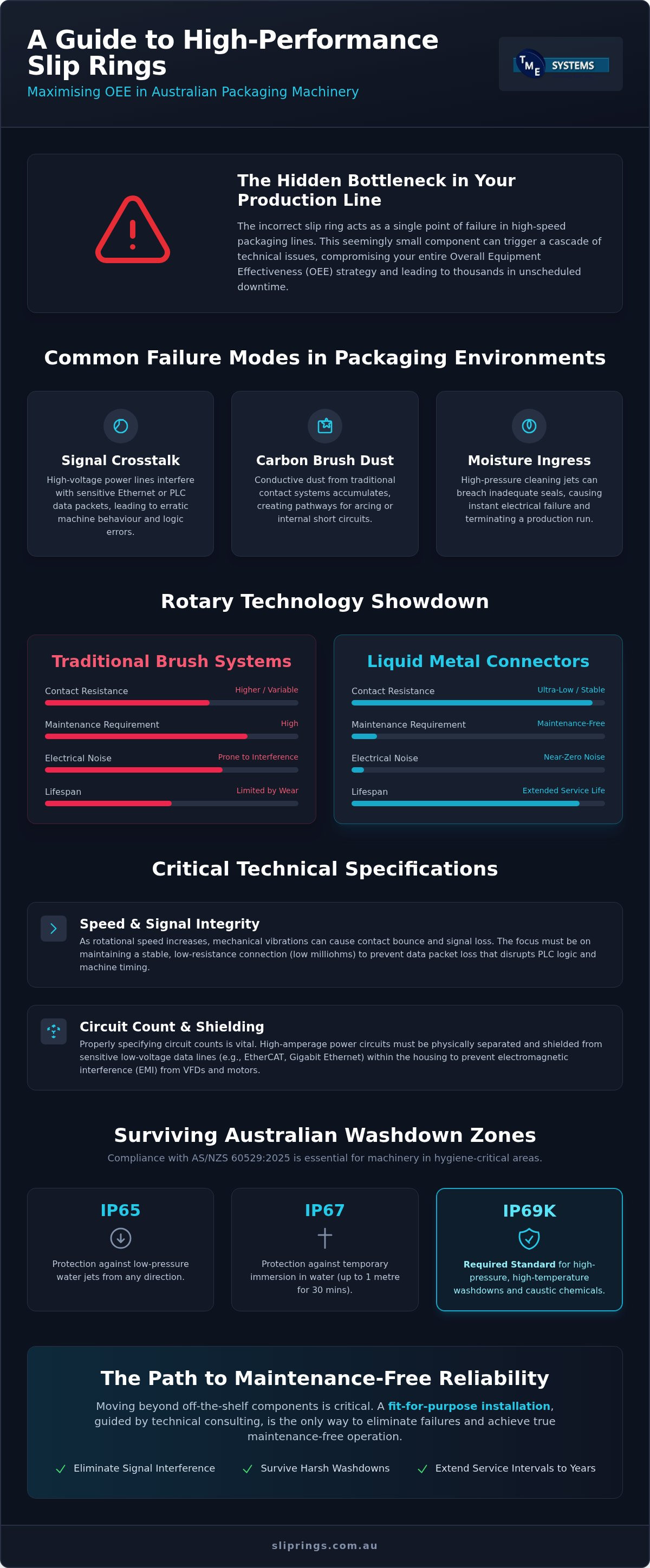
What if the primary bottleneck in your high-speed production line isn't the motor or the PLC, but a component the size of a coffee mug? In many Australian facilities, selecting the incorrect slip ring for packaging machinery leads to a cascade of technical failures, costing thousands in unscheduled downtime when signal noise disrupts critical Ethernet data or PLC logic. When a rotation solution fails to handle the electrical load or the environment, your entire OEE strategy is compromised.
It is a frustrating reality that premature wear in washdown zones often forces maintenance teams into a cycle of reactive repairs. This 2026 engineering guide is designed to help you master the technical requirements for specifying slip rings that eliminate signal interference and survive the most demanding hygiene protocols. We will examine the latest AS/NZS 60529:2025 compliance standards and provide a clear pathway to selecting maintenance-free components that ensure your high-speed lines remain operational and efficient.
Key Takeaways
- Understand the direct link between rotary connector reliability and Overall Equipment Effectiveness (OEE) in high-speed automation lines.
- Learn how to specify circuit counts that maintain signal integrity for sensitive PLC and Ethernet data while preventing electrical noise.
- Compare the low-resistance performance of liquid metal connectors against the durability and maintenance requirements of traditional brush systems.
- Identify the specific IP ratings necessary to protect a slip ring for packaging machinery from high-pressure washdowns and caustic chemicals used in Australian facilities.
- Recognise why technical consulting is essential for moving beyond off-the-shelf components to achieve a maintenance-free, fit-for-purpose installation.
The Critical Role of Slip Rings in Packaging Automation and OEE
In the architecture of a high-speed production line, the slip ring for packaging machinery functions as the critical nervous system. It enables the seamless transfer of power and data between stationary control panels and rotating carousels. While often overlooked, the reliability of this single component has a direct, measurable correlation with Overall Equipment Effectiveness (OEE). When a slip ring fails to maintain signal integrity, the resulting unplanned downtime erodes availability, while intermittent signal noise reduces performance by forcing slower cycle speeds to maintain accuracy.
Common failure modes in Australian packaging facilities often stem from three specific issues: signal crosstalk, carbon brush dust, and moisture ingress. Signal crosstalk occurs when high-voltage power lines interfere with sensitive Ethernet or PLC data packets, leading to erratic machine behaviour. Brush dust, a byproduct of traditional contact systems, can lead to arcing or internal short circuits. Finally, moisture ingress from high-pressure cleaning can instantly terminate a production run. For engineers managing high-volume output, "near enough" is never good enough; a component that is only 99% reliable will eventually cause a catastrophic failure during peak production periods.
Rotary Fillers and Labellers: The High-Speed Challenge
Modern rotary fillers and labellers require continuous 360-degree rotation to maintain throughput. Without a robust slip ring for packaging machinery, cables would quickly suffer from mechanical strain and fatigue. Even a micro-second signal drop can cause a PLC to miscalculate the position of a bottle, resulting in misaligned labels or wasted product. Mechanical wear is the primary enemy here; as speeds increase, the friction and heat generated at the contact point can degrade signal quality and lead to physical degradation of the conductive surfaces.
Reducing Unplanned Maintenance on the Factory Floor
The true cost of a slip ring is not the purchase price, but the cost of the downtime required to service it. Traditional brush systems often require monthly inspections and periodic cleaning to remove conductive dust that can cause short circuits. By contrast, specialised connectors, such as those from BGB Innovation or Mercotac, can extend service intervals from months to years. Maintenance teams should monitor for early warning signs of degradation, such as increased electrical noise on data lines or rising operating temperatures, to prevent a total line stoppage before it occurs.
Technical Specifications: Speed, Signal Integrity, and Circuit Count
Selecting a slip ring for packaging machinery requires more than matching a shaft diameter or a mounting pattern. It involves a precise audit of rotational speed, electrical load requirements, and the specific data protocols in use. While standard industrial units often claim operational speeds up to 1000 RPM, the critical factor for packaging automation is the relationship between speed and electrical noise. As rotational velocity increases, mechanical vibrations can cause contact bounce, leading to intermittent signal loss that disrupts PLC logic.
Circuit count selection is equally vital. You must balance high-amperage power circuits with sensitive low-voltage data lines within the same housing. Mixing these signals without adequate physical separation or internal shielding often results in electromagnetic interference (EMI). For safe operation under peak industrial loads, voltage and current ratings must be specified with a safety margin that accounts for the heat generated during continuous 24/7 production cycles.
Digital control signals, such as EtherCAT or Gigabit Ethernet, demand extremely low contact resistance. Any fluctuation in milliohms during rotation can degrade packet delivery, leading to machine timing errors and reduced throughput. Ensuring a stable, low-resistance connection is the only way to maintain the high-speed precision required for modern labelling and filling lines.
Managing Electrical Noise in Data Transmission
The signal-to-noise ratio (SNR) is a fundamental metric for any automated system. In a packaging environment, heavy-duty motors and Variable Frequency Drives (VFDs) create significant background noise. Premium contact materials are essential for reducing milliohm resistance and maintaining a clean signal path. By utilising advanced shielding techniques in multi-circuit configurations, you can prevent EMI from corrupting sensitive data packets, ensuring that your control system receives accurate information at every degree of rotation.
Physical Configurations: Through-Bore vs. Capsule Designs
Physical mounting requirements vary significantly based on the machine architecture. A through-bore slip ring is the preferred choice for mounting directly onto a central drive shaft. This configuration allows for the passage of pneumatic lines or cooling pipes through the hollow centre, which is often necessary for complex rotary actuators. Conversely, capsule designs are better suited for compact packaging machinery where installation space is restricted. Custom mounting flanges can be engineered to ensure these units integrate seamlessly into existing Australian-made equipment, reducing the need for extensive mechanical modifications. If you are unsure about the best configuration for your specific torque or circuit requirements, you can consult with a technical specialist to ensure a fit-for-purpose selection.
Comparing Rotary Technologies: Liquid Metal vs. Traditional Brush Systems
Selecting the correct contact technology is a pivot point for long-term line reliability. Traditional carbon brush systems have long been the industrial standard for power transfer, but the rise of high-speed digital sensors in packaging has exposed their inherent limitations. Mechanical brushes rely on physical friction, which inevitably generates heat and conductive wear debris. This dust can lead to signal degradation and intermittent "noise," making it difficult to maintain the signal-to-noise ratio required for modern PLC and Ethernet-controlled systems.
When specifying a slip ring for packaging machinery, engineers must weigh the ruggedness of traditional brushes against the superior signal clarity of liquid metal interfaces. Traditional collector rings are robust and capable of handling significant electrical surges, yet they require periodic maintenance to prevent arcing and contact failure. In contrast, liquid metal connectors provide a constant, low-resistance path that remains virtually immune to the vibration-induced noise that often plagues mechanical contacts at high rotational speeds.
Mercotac Technology for Zero-Loss Signal Transfer
Mercotac liquid metal connectors utilise a unique conductive liquid pool to maintain electrical continuity between stationary and rotating components. This design eliminates the "contact bounce" associated with mechanical brushes, providing a near-perfect signal path for sensitive digital protocols like EtherCAT or Profinet. These units are essentially maintenance-free because there are no brushes to wear down or replace. For high-speed lines where unplanned downtime is measured in thousands of dollars per hour, the shift to liquid metal is a logical engineering decision. While mercury is the traditional conductive medium, modern mercury-free alternatives are available to meet the stringent hygiene and safety demands of the Australian food and beverage sector.
BGB Innovation: Heavy-Duty Reliability
There are specific scenarios where BGB slip rings and traditional brush systems remain the superior choice. High-power applications, such as those found in heavy-duty palletisers or large-scale rotary wrappers, often require the high current-carrying capacity that only a robust collector ring can safely provide. BGB Innovation specialises in engineering these systems for harsh industrial environments where vibration and temperature fluctuations are extreme. These systems offer extensive customisation options, allowing Australian manufacturers to specify exact circuit counts and housing dimensions to fit unique machine footprints. This flexibility ensures that even the most specialised packaging equipment can be outfitted with a reliable, fit-for-purpose rotary interface.
Engineering for the Australian Environment: IP Ratings and Washdown Zones
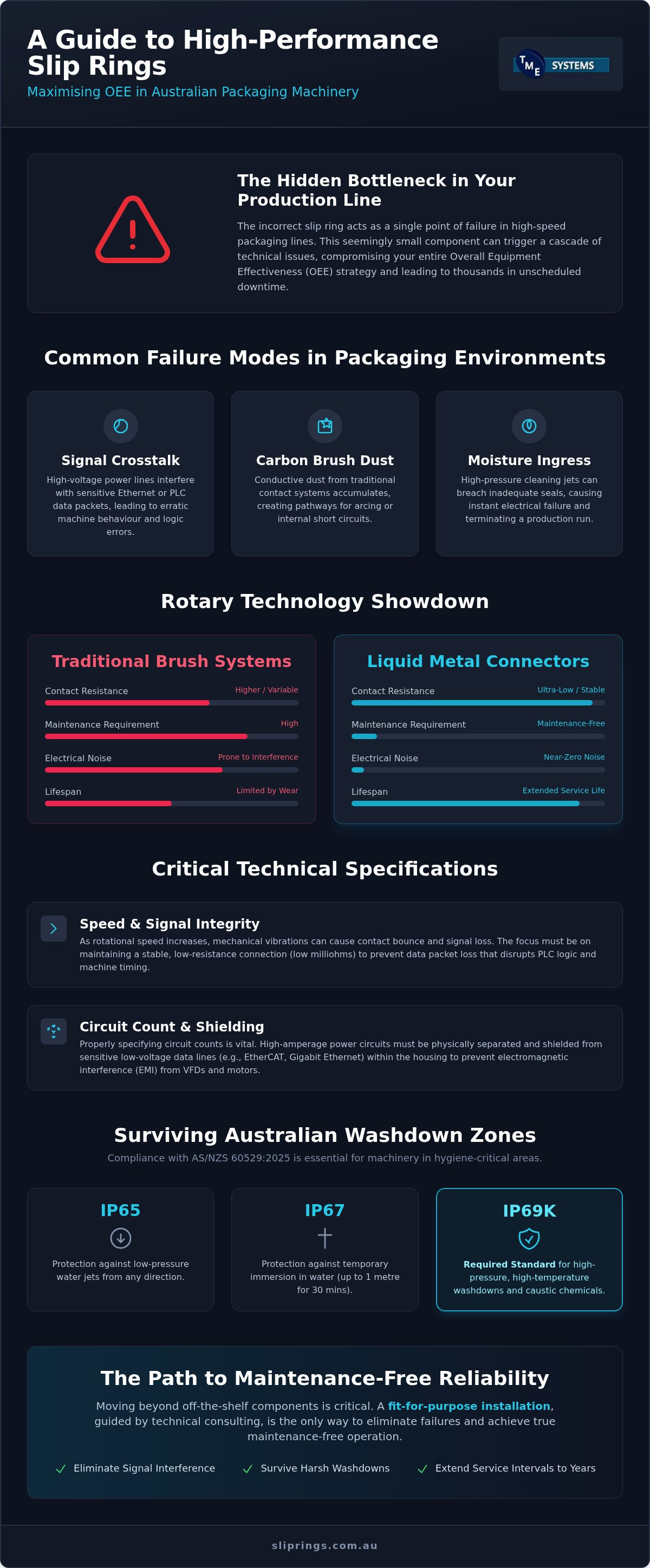
Australian production facilities present a unique set of environmental challenges that standard off-the-shelf components often fail to meet. In many local plants, a slip ring for packaging machinery must do more than simply rotate; it must survive the daily rigours of aggressive sanitisation protocols. While some suppliers suggest that IP65 is a sufficient baseline, this rating only covers low-pressure water jets. For food and beverage lines subjected to high-pressure, high-temperature cleaning, the engineering standard must be elevated to IP69K. This ensures that internal conductive paths remain dry even when exposed to 80°C water at 100 bar pressure.
Moisture ingress is the leading cause of premature failure in rotating equipment. Caustic cleaning agents, mandated to meet Food Standards Australia New Zealand (FSANZ) requirements, can quickly degrade standard gaskets and O-rings. Once a seal is breached, the resulting internal corrosion leads to signal noise and eventually a total electrical short. Compliance with local hygiene standards is a prerequisite for operational longevity in any Australian "wet zone" environment.
Washdown Protocols and Connector Longevity
Material selection is the first line of defence against corrosive failure. 316-grade stainless steel is the preferred choice for its superior resistance to chemicals and oxidation, though high-grade polymers can be utilised in less aggressive zones. A critical, often overlooked factor is how temperature fluctuations affect seal integrity. When hot washdown water hits a cold machine frame, the resulting pressure differential can "suck" moisture past a standard seal. Specifying seals with a broad thermal operating range is essential for maintaining a dry internal environment during rapid cleaning cycles.
Managing Heat and Dust in Regional Facilities
In regional Australian facilities, ambient temperatures frequently exceed 40°C, which can necessitate the de-rating of electrical components. High heat increases electrical resistance and can reduce the effective current-carrying capacity of the slip ring circuits. Conversely, in dry-goods packaging lines, such as those for flour or sugar, fine particulate ingress is the primary threat. Under the current Australian standard AS/NZS 60529:2025, an IP67 rating signifies that the enclosure is completely dust-tight and protected against the effects of temporary immersion in water up to one metre deep for 30 minutes. To ensure your equipment meets these rigorous environmental demands, you should review your IP requirements with a technical consultant before installation.
Selecting a Fit-for-Purpose Slip Ring with Technical Consulting
Procuring a slip ring for packaging machinery through a generic industrial catalogue often leads to integration failures. While a component might meet the basic mechanical dimensions, it may lack the specific electrical properties required to handle high-speed data protocols or the environmental resilience to survive Australian washdown zones. Technical consulting is not a luxury; it's a necessary step to ensure that the hardware matches the specific circuit requirements and duty cycles of your automation line. Relying on off-the-shelf parts without a technical audit frequently results in signal degradation that is difficult to diagnose once the machine is back in service.
Leveraging local expertise allows for a more nuanced assessment of your facility's needs. By working with a specialist who understands the Australian regulatory environment and the logistical challenges of local manufacturing, you can significantly reduce lead times and avoid the risks associated with unverified international suppliers. This collaborative approach ensures that the solution provided is both fit-for-purpose and sustainable for long-term operation, ultimately protecting your investment in high-speed packaging assets.
Collaborating with TME Systems for Custom Solutions
Risk mitigation is the core objective of our technical application consulting. We act as a bridge between global manufacturing excellence and local engineering requirements, providing access to world-leading brands such as Meridian Laboratory. This relationship allows us to streamline the replacement process for legacy packaging machinery, ensuring that even older equipment can benefit from modern, high-performance rotary technology without requiring a complete system overhaul. Our focus is on providing a stable, low-maintenance connection that aligns with your specific OEE targets.
Next Steps: Auditing Your Rotary Connections
A proactive audit of your existing rotary interfaces is the best way to prevent unplanned downtime. Identify high-risk units by monitoring for excessive heat, audible vibration, or intermittent signal drops in your PLC logs. To receive an accurate technical quote for a slip ring for packaging machinery, you should gather the following data points:
- Maximum and operational RPM.
- Peak and continuous amperage per circuit.
- Voltage requirements (AC or DC) and specific signal types, such as Ethernet or EtherCAT.
- Physical mounting constraints and environmental factors, including required IP ratings.
Contacting TME Systems for a no-nonsense technical assessment will provide you with a clear roadmap for optimising your rotary connections and improving overall line reliability. We prioritise technical accuracy over marketing claims, ensuring your packaging line remains operational through 2026 and beyond.
Optimising Your Rotary Infrastructure for 2026
Achieving peak OEE in modern automation requires a shift from reactive maintenance to precise component specification. The choice of a slip ring for packaging machinery determines whether a line suffers from chronic signal noise or operates with maintenance-free reliability. Ensuring your hardware meets the latest AS/NZS 60529:2025 standards for washdown protection is just as critical as selecting the correct contact technology for your high-speed data protocols.
TME Systems serves as the authorised Australian distributor for Mercotac and BGB, providing the technical bridge between global innovation and local engineering needs. We specialise in solutions for high-speed data and signal integrity, backed by expert support based right here in Australia. Moving beyond off-the-shelf procurement and focusing on fit-for-purpose engineering allows you to eliminate unplanned downtime and protect your production targets.
Request a technical consultation for your packaging machinery today to ensure your facility is equipped for the demands of the coming year. We look forward to helping you solve your most complex rotation challenges.
Frequently Asked Questions
How do I choose the right slip ring for high-speed packaging machinery?
You must evaluate the maximum rotational speed alongside the required signal-to-noise ratio for your specific application. High-speed lines often require liquid metal or specialised low-noise brush systems to prevent data packet loss during continuous operation. Technical consulting ensures that the mechanical mounting and electrical specifications align perfectly with your machine's architecture.
Can I use a liquid metal slip ring in food packaging applications?
Yes, liquid metal connectors are suitable for food packaging when specified with mercury-free conductive media. These units meet the rigorous hygiene requirements of the Australian food and beverage sector while providing a maintenance-free alternative to traditional brushes. They eliminate the risk of conductive dust that can compromise food safety protocols in sensitive production zones.
What IP rating is required for a slip ring in a washdown zone?
A minimum rating of IP67 is required for standard washdown zones, while IP69K is necessary for high-pressure, high-temperature cleaning. Under the AS/NZS 60529:2025 standard, these ratings ensure the slip ring for packaging machinery remains protected against moisture ingress. Selecting the correct rating prevents internal corrosion and electrical shorts during daily sanitisation cycles.
How does signal noise in a slip ring affect my PLC system?
Signal noise creates millisecond interruptions that a PLC interprets as timing errors or lost data packets. This often leads to erratic machine behaviour, misaligned labelling, or complete system shutdowns that erode your OEE. Maintaining a stable, low-resistance connection is the only way to ensure the control system receives accurate data at every degree of rotation.
Are Mercotac slip rings available for immediate delivery in Australia?
TME Systems is the authorised Australian distributor and maintains local stock of common Mercotac configurations for faster procurement. This local availability reduces the downtime associated with international shipping and customs delays. For specialised or custom configurations, we provide technical support to manage lead times and ensure the hardware arrives ready for immediate installation.
What is the typical lifespan of a slip ring in a continuous 24/7 packaging line?
Lifespan varies by technology, but liquid metal connectors typically offer a significantly longer operational life than traditional brush systems. In a 24/7 environment, a high-quality slip ring for packaging machinery can operate for years without requiring internal maintenance. Conversely, brush-based systems may require monthly inspections and periodic replacement to manage mechanical wear and conductive debris.
Can a slip ring handle both power and high-speed data like Ethernet simultaneously?
Modern rotary connectors are engineered to transmit high-amperage power and sensitive digital data like Gigabit Ethernet through separate, shielded circuits. This configuration prevents electromagnetic interference from corrupting the data stream during rotation. Successful simultaneous transmission relies on internal physical separation and high-quality shielding within the housing to maintain signal integrity.
How do I reduce electrical interference in a multi-circuit rotary connector?
Reducing interference requires the use of low-resistance contact materials and robust internal shielding between power and signal circuits. You should also ensure that high-voltage lines are physically separated from sensitive data paths within the slip ring assembly. Utilising high-quality connectors with superior signal-to-noise ratios prevents EMI from disrupting sensitive PLC or sensor signals in complex automation environments.