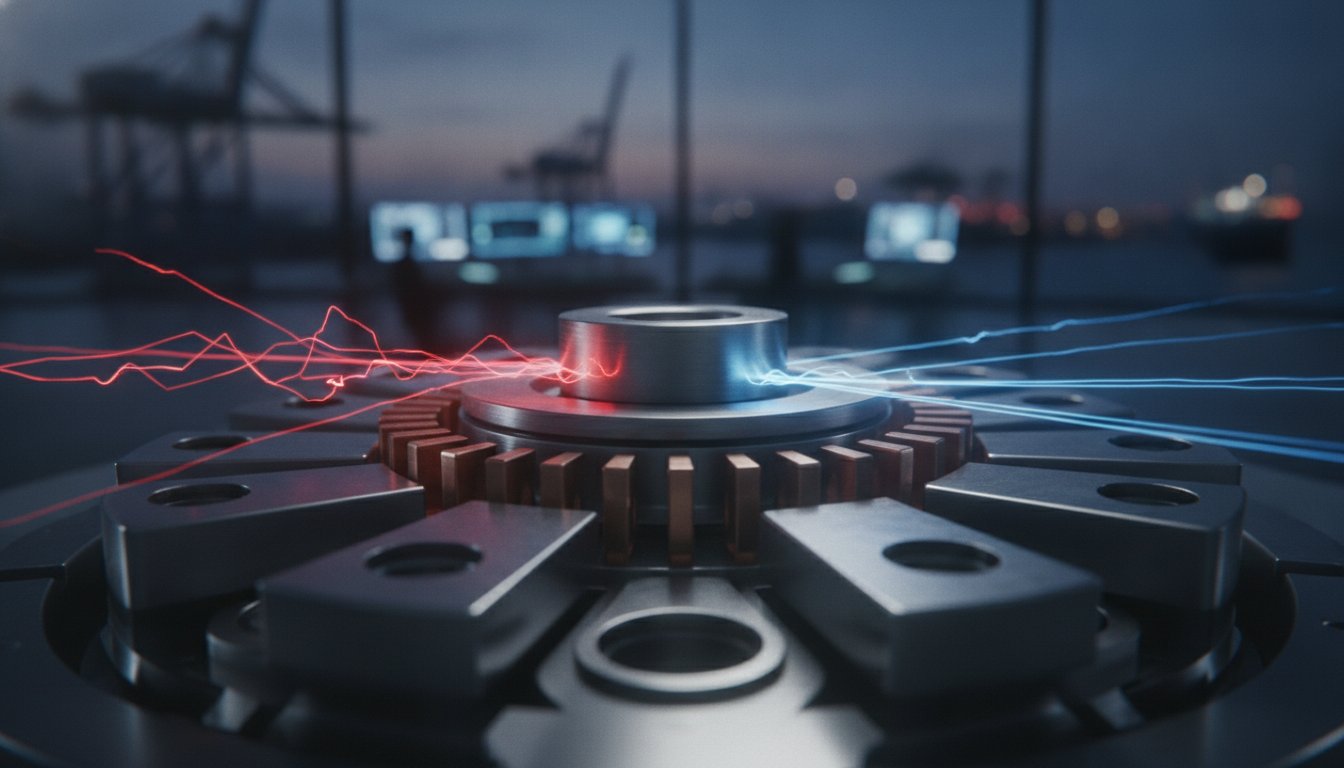
Is your PLC system reporting intermittent data loss that mysteriously vanishes the moment the machinery stops spinning? You've likely spent hours trying to differentiate between physical mechanical wear and complex electrical interference, only to have "noisy" rotary interfaces cause unexpected downtime. For engineers prioritising slip ring signal noise reduction, these "ghost" faults are often the result of a mismatch between hardware specifications and the environmental variables of a modern Australian industrial facility.
This guide establishes a pragmatic framework to help you identify, troubleshoot, and eliminate the electrical noise compromising your rotary connections. We'll explore why moving beyond static resistance tests is essential for optimising the dynamic interface and how to select hardware that ensures reliable power transmission. You'll learn about the performance advantages of liquid metal connectors for near-zero noise and how to choose components that handle the 230/400 V nominal supply mandated by AS IEC 60038:2022. By the end of this article, you'll be equipped to reduce maintenance intervals and secure stable signal transmission for your most sensitive industrial data, even at high RPM.
Key Takeaways
- Understand how Dynamic Contact Resistance (DCR) acts as the primary driver of signal degradation and intermittent data loss in rotating interfaces.
- Evaluate the performance differences between carbon brushes and liquid metal technologies to achieve superior slip ring signal noise reduction in high-speed data applications.
- Identify how mechanical factors like shaft eccentricity and bearing quality impact the stability of the electrical path and increase maintenance intervals.
- Implement effective shielding and grounding strategies, such as Faraday cages and separate signal channels, to protect sensitive transmissions from external electromagnetic interference.
- Utilise a consultative approach to match hardware specifications with specific environmental requirements, ensuring long-term reliability for sensitive PLC and Ethernet signals.
Understanding Slip Ring Signal Noise: Why Rotary Connections Fail
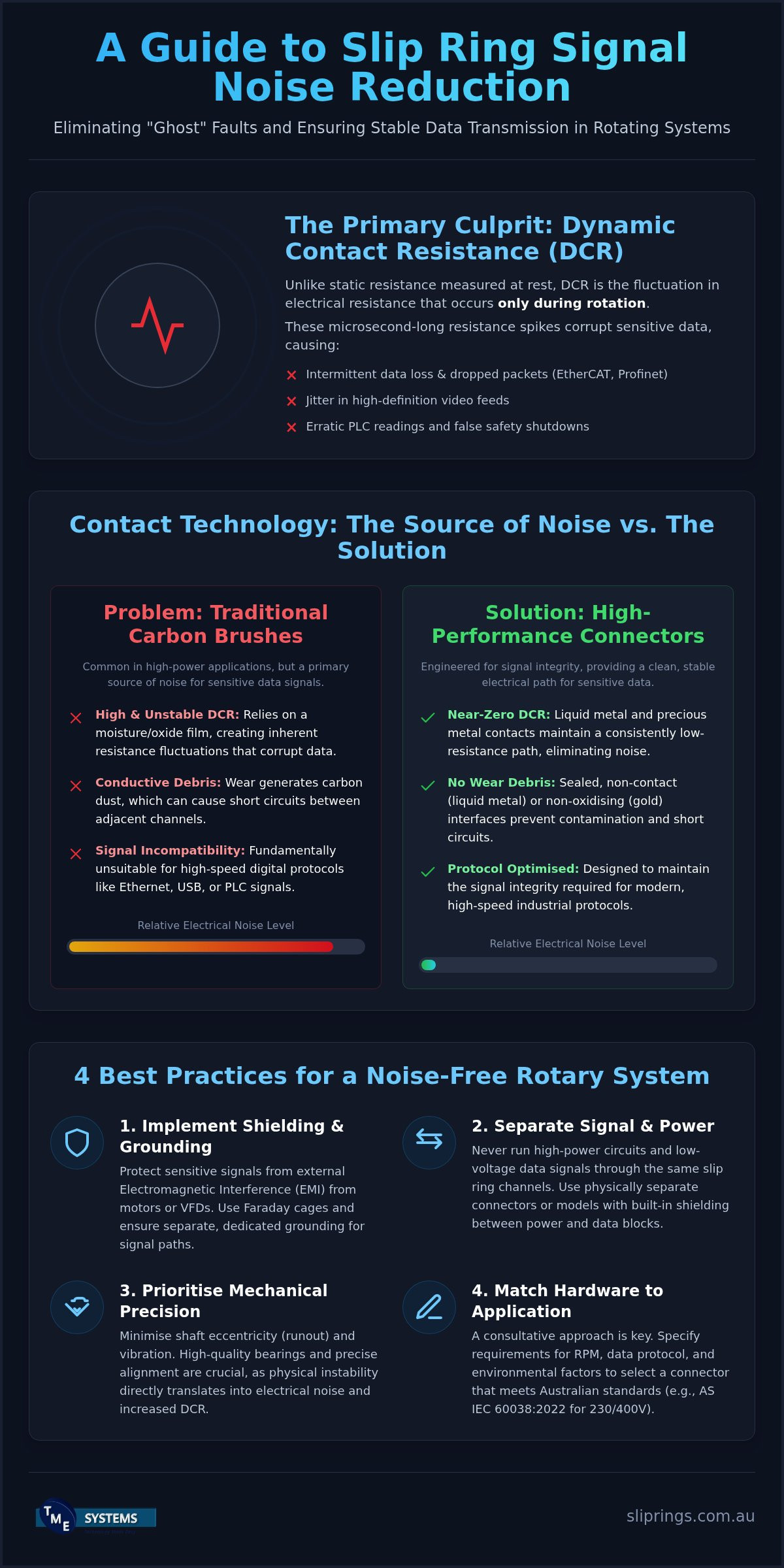
Electrical noise in a rotary interface is characterised by unwanted fluctuations in signal voltage during rotation. While a standard slip ring is designed to maintain a continuous electrical path, the physical reality of sliding contacts often introduces interference. This interference is not always a constant hum; it often manifests as transient spikes that disrupt sensitive data packets. Identifying the root cause requires engineers to distinguish between mechanical vibration and true electrical noise. Vibration involves physical movement of the assembly, whereas electrical noise is an internal phenomenon generated specifically at the contact interface.
The Mechanism of Electrical Noise
Noise generation is tied to the physical topography of the contact surfaces. Even precision-machined rings possess microscopic irregularities. As the brush tracks across these surfaces, tiny variations in contact pressure occur, leading to micro-arcing or sudden resistance spikes. These events are highly dependent on rotation speed. Higher RPMs typically exacerbate the issue because the brush has less time to settle into the ring's surface profile, causing the contact to skip across the peaks of the metal.
DCR is the variation in resistance across 360 degrees of rotation.
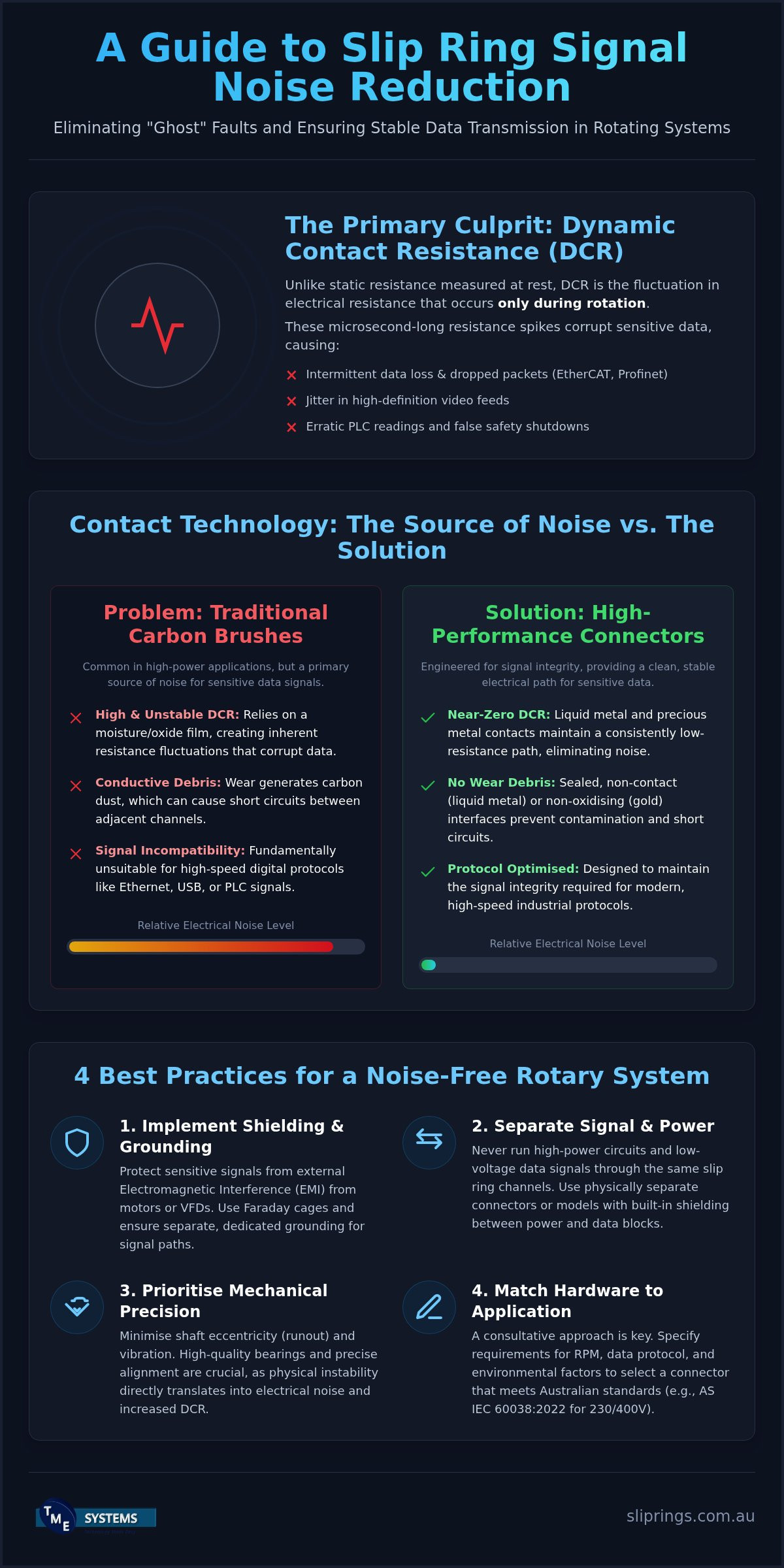
Central to this problem is Dynamic Contact Resistance (DCR). Unlike static resistance, which you can measure while the unit is stationary, DCR only appears during operation. This variability creates voltage drops that fluctuate in real-time, directly injecting noise into the signal path. For engineers focused on slip ring signal noise reduction, managing DCR is the primary technical objective.
Impact on Modern Industrial Protocols
Modern Australian manufacturing relies heavily on high-speed digital protocols like EtherCAT, Profinet, and USB. These signals are particularly vulnerable to noise. Where a power circuit might tolerate a 100-milliohm spike, a digital signal might interpret that same spike as a bit error. This leads to dropped packets, jitter in high-definition video feeds, or erratic PLC readings that trigger safety shutdowns. The distinction between power circuit noise and low-level analog interference is critical, as the latter requires much tighter tolerances to maintain signal integrity.
Detecting these issues is a common hurdle for maintenance teams. Traditional multimeters are insufficient for effective diagnostics because they average resistance over time. They cannot capture the microsecond-long resistance spikes that crash a Profinet network. To resolve these failures, engineers often turn to high-performance hardware like Meridian Laboratory Slip Rings or Mercotac Slip Rings, which are engineered to maintain near-zero DCR. By prioritising hardware with superior contact technology, you can eliminate the "ghost" errors that plague complex rotary systems.
Contact Technology and Material Selection for Noise Reduction
Material choice is the fundamental determinant of the noise floor in any rotary connection. While mechanical alignment is vital, the physical interface between the stationary and rotating components dictates the baseline electrical stability. Factors such as contact pressure and surface finish are critical; insufficient pressure leads to signal dropouts, while excessive pressure accelerates wear and generates conductive debris that causes short circuits. Achieving effective slip ring signal noise reduction requires a precise match between the contact technology and the signal's sensitivity.
Precious Metal vs. Carbon Brushes
Traditional carbon-graphite brushes are reliable for high-current power transmission but are generally problematic for sensitive data. Carbon brushes rely on a thin film of moisture and oxide to function, which inherently creates high and unstable Dynamic Contact Resistance (DCR). This variability is the primary source of noise in digital circuits. In contrast, precious metal wire contacts, particularly gold-on-gold interfaces, offer a significant advantage. Gold does not oxidise, ensuring a consistently low-resistance path that is essential for maintaining the integrity of micro-volt signals.
For precision applications where signal clarity is paramount, Meridian Laboratory slip rings utilise advanced metal-on-metal configurations. These systems are designed to Reduce Electrical Noise by providing a stable, low-friction interface that maintains contact integrity even at high rotational speeds. This makes them a superior choice for protocols like EtherCAT or high-definition video where packet loss cannot be tolerated.
The Liquid Metal Advantage
Liquid metal rotary connectors represent the "gold standard" for low-noise performance. Unlike dry brush systems that rely on mechanical sliding, liquid metal creates a continuous molecular bond between the rotating and stationary parts. This eliminates the "skip" and micro-arcing associated with solid contacts, resulting in near-zero electrical noise. These units are the ideal solution for high-speed data transmission, sensitive thermocouples, and medical imaging systems where even minor fluctuations can corrupt results.
Because there is no physical wear between solid surfaces, these connectors are virtually maintenance-free. For circuits that are highly sensitive to interference, Mercotac slip rings provide a brushless alternative that delivers a stable, high-clarity electrical path. If your application involves high-speed data or low-level analog signals, selecting a liquid metal interface is often the most efficient way to ensure long-term reliability. If you are unsure which technology suits your specific RPM and environmental requirements, our team provides technical application consulting to help you match hardware to your signal needs.
Mechanical Precision and Dynamic Contact Resistance (DCR)
Mechanical stability is the physical foundation of electrical performance. While material selection is critical, even the most advanced contacts will fail if the mechanical interface is unstable. Inconsistent contact pressure, often caused by poor alignment or external vibration, creates fluctuations in Dynamic Contact Resistance (DCR). This variability is a primary hurdle in achieving effective slip ring signal noise reduction. High quality internal bearings and precision machined housings are essential to maintain a stable electrical path, ensuring that the brushes remain in constant, uniform contact with the rings during every rotation.
Eccentricity and Runout Management
Total Indicator Runout (TIR) measures the deviation of the rotating surface from a perfect circle. High TIR indicates eccentricity or "wobble", which forces the brushes to move rapidly to maintain contact. At high RPMs, this mechanical movement leads to "brush bounce", where the contact momentarily lifts off the ring, causing catastrophic signal interruption and data loss. Precision machined housings are designed to minimise this eccentricity, providing a concentric rotation that protects signal integrity. Engineers should check shaft alignment before condemning the slip ring, as external mounting errors often mimic internal hardware failure.
Environmental Factors: Dust, Moisture, and Heat
Australian industrial environments present unique challenges for rotary connections. Dust and airborne particulates can infiltrate the assembly, settling on the contact surfaces and creating erratic resistance spikes. Similarly, high humidity or moisture ingress can lead to oxidation or short circuiting between adjacent rings. To mitigate these risks, hardware must be selected based on its IP rating to ensure the internal contacts remain isolated from contaminants.
- IP65 Sealing: Protects against dust ingress and low pressure water jets, suitable for most indoor factory settings.
- IP67 Sealing: Offers full protection against dust and temporary immersion, which is necessary for outdoor or wash down environments.
Temperature fluctuations also play a significant role. In regions with extreme heat, thermal expansion can alter the tension of the contact springs or change the viscosity of lubricants. This shifting geometry directly impacts DCR and can lead to unexpected noise. Selecting hardware from established brands like BGB Innovation or Prosper Rotation ensures that the unit is engineered to withstand these thermal and mechanical stresses. These components maintain a clear signal path in harsh conditions, reducing the need for frequent intervention or troubleshooting.
Best Practices for Shielding and Grounding in Rotating Systems
Achieving reliable performance in a rotating system requires more than just high-quality contacts. It demands a holistic approach to electromagnetic compatibility (EMC). While previous sections addressed the physical interface, the way you manage the surrounding electrical environment is equally critical. Effective slip ring signal noise reduction depends on isolating sensitive data from high-power circuits and ensuring that external interference cannot penetrate the signal path. This is especially important in Australian industrial facilities where large motors and variable speed drives (VSDs) often generate significant electromagnetic noise.
Internal and External Shielding Techniques
The first line of defence against external interference is the slip ring housing itself. Metal housings, typically made from aluminium or stainless steel, act as a Faraday cage, blocking electromagnetic and radio-frequency interference (EMI/RFI). Plastic housings, while lighter, offer no such protection and should be avoided for data-sensitive applications. Inside the assembly, internal barriers are necessary to prevent crosstalk. You should never run high-voltage power leads directly adjacent to low-level signal leads without physical separation or internal shielding. For complex setups, you can find detailed configurations in our guide to Slip Ring Application Engineering.
Grounding and Differential Signalling
Proper grounding is vital to prevent ground loops, which occur when multiple ground points have different electrical potentials. This creates a current that flows through the signal cable's shield, injecting noise directly into the data stream. To avoid this, ensure a continuous, low-impedance ground path exists from the stationary side to the rotating side. It's best practice to ground the shield at only one end, typically the controller side, to prevent circulating currents from moving through the rotary interface.
Differential signalling, such as RS422 or RS485, is another effective strategy. Because these protocols measure the voltage difference between two wires rather than the voltage relative to ground, they are naturally more resilient to the common-mode noise often found in slip ring interfaces. When wiring your system, keep signal leads as short as possible near the rotary joint. Using high-quality twisted-pair cabling for the signal circuits provides an additional layer of protection. If you are currently troubleshooting an interference issue in a high-speed system, we recommend exploring our range of Meridian Laboratory slip rings to see how precision engineering can resolve complex grounding challenges.
Selecting High-Performance Rotary Connectors for Australian Industry
Finalising a strategy for slip ring signal noise reduction requires a transition from diagnostic troubleshooting to precise hardware procurement. Selecting a rotary connector based solely on circuit count or physical dimensions often leads to operational failure in data-heavy environments. Instead, engineers must adopt a consultative framework that matches the specific electrical properties of the signal to the contact technology. This process involves evaluating the sensitivity of the protocol, the expected operational RPM, and the environmental stresses the unit will face on the factory floor.
For diverse industrial needs, brands like BGB Innovation and Prosper Rotation offer robust solutions that balance cost with high performance. However, higher signal sensitivity demands more specialised hardware. Technical application consulting is essential at this stage to avoid costly procurement errors. A specialist can help you determine if your application requires the near-zero resistance of a liquid metal interface or if a precious metal wire configuration is sufficient for your specific data rates. This professional oversight ensures that the hardware you install is compatible with your existing PLC or Ethernet architecture.
The Selection Checklist for Low Noise
When evaluating hardware, you must first define the required signal-to-noise ratio (SNR) for your specific application. High-definition video and precision sensor data have a much lower tolerance for interference than standard power circuits. You should also evaluate RPM requirements against contact material longevity. High-speed rotation accelerates wear on solid brushes, which inevitably increases DCR over time. We recommend liquid metal connectors for any application requiring less than 1mΩ of electrical noise, as this technology provides the most stable path for sensitive transmissions. This choice remains the most effective way to guarantee signal clarity in high-speed data environments.
Partnering with TME Systems
TME Systems provides comprehensive technical audits and hardware selection assistance to industrial clients across Australia. We bridge the gap between complex engineering requirements and global manufacturing capabilities, providing local access to premium brands like Mercotac and Meridian Laboratory. Our team helps you evaluate DCR requirements and environmental sealing needs to ensure your selected hardware delivers long-term reliability without the need for frequent maintenance. If you are experiencing persistent interference issues or planning a new installation, Contact TME Systems for expert slip ring signal noise reduction advice and technical support tailored to your specific application.
Securing Reliable Data Transmission in Rotating Systems
Achieving long-term reliability in rotating systems requires a shift from reactive maintenance to proactive hardware selection. By prioritising Dynamic Contact Resistance (DCR) and implementing rigorous shielding protocols, you can eliminate the interference that compromises sensitive digital signals. Whether you're managing high-speed Ethernet or low-level sensor data, the right combination of liquid metal technology and mechanical precision is essential for successful slip ring signal noise reduction.
As the authorised Australian distributor for Mercotac and Meridian Laboratory, TME Systems provides the technical engineering support needed for complex rotary applications. We offer specialised solutions for high-speed data and sensitive signals to ensure your systems remain stable under demanding conditions. Consult with TME Systems for Slip Ring Signal Noise Solutions to secure your transmission integrity. With the correct hardware and expert consulting, you can reduce downtime and achieve the signal clarity your operations demand.
Frequently Asked Questions
What is the most common cause of signal noise in a slip ring?
The most common cause of signal noise is Dynamic Contact Resistance (DCR), which refers to the fluctuations in electrical resistance that occur as the brush tracks across the ring surface. These resistance spikes are caused by microscopic surface irregularities, micro-arcing, and inconsistent contact pressure. For engineers focused on slip ring signal noise reduction, addressing DCR is the primary step in stabilising sensitive data transmissions and preventing intermittent packet loss.
Can I use a standard slip ring for high-speed data transmission like Ethernet?
Standard slip rings designed for power transmission are typically unsuitable for high-speed Ethernet because they generate excessive electrical noise and packet loss. Digital protocols require specialised internal shielding and low-resistance contact materials to maintain signal integrity. Standard units don't provide the necessary clarity for high-speed protocols, often resulting in "ghost" errors and system downtime. For reliable data, you should select hardware specifically rated for Ethernet, such as liquid metal rotary connectors.
How does RPM affect the amount of electrical noise generated?
Higher rotational speeds typically increase the amount of electrical noise generated because the brushes have less time to settle into the ring's surface profile. At elevated RPMs, mechanical "brush bounce" can occur, where the contact momentarily lifts off the surface, creating significant resistance spikes. This mechanical instability directly degrades the signal-to-noise ratio. To maintain clarity at high speeds, you must use precision-balanced assemblies or brushless liquid metal connectors that eliminate physical contact bounce.
What is the difference between static and dynamic contact resistance?
Static contact resistance is measured while the slip ring is stationary and represents the baseline electrical path. Dynamic contact resistance (DCR) is the variation in resistance that occurs during 360 degrees of rotation. While static resistance might appear low on a multimeter, high DCR during operation is what actually generates electrical noise. Most signal interference issues are caused by DCR spikes that aren't possible to detect without an oscilloscope or specialised testing equipment.
Is liquid metal always better than gold contacts for noise reduction?
Liquid metal is considered the "gold standard" for slip ring signal noise reduction because it creates a continuous molecular bond, resulting in near-zero noise. While gold-on-gold wire contacts are excellent for low-current applications and offer resistance to oxidation, they still rely on mechanical sliding which generates some friction-based noise. Liquid metal is superior for high-speed data and sensitive thermocouples, whereas gold contacts are often a more cost-effective choice for standard low-frequency signal circuits.
How often should I perform maintenance to prevent noise buildup?
Maintenance intervals depend heavily on the contact technology and the operating environment. Traditional carbon or metal wire brushes usually require periodic cleaning and inspection every few million rotations to remove conductive wear debris that causes noise. In contrast, liquid metal connectors are virtually maintenance-free because they lack the physical wear associated with sliding solid surfaces. For Australian industrial settings with high dust levels, sealed IP-rated units are recommended to extend service life and prevent interference buildup.
Can environmental factors like humidity increase slip ring noise?
Environmental factors like high humidity significantly increase electrical noise by promoting oxidation on the contact surfaces. Moisture can also lead to the buildup of a non-conductive film or cause short-circuiting between adjacent rings in poorly sealed units. In harsh Australian conditions, temperature fluctuations can also cause material expansion that alters contact pressure. To mitigate these risks, you should specify hardware with high IP ratings (IP65 or IP67) and use corrosion-resistant materials like gold or silver.
What shielding techniques are best for reducing EMI in rotary connections?
The most effective shielding techniques involve using conductive metal housings, such as aluminium or stainless steel, to act as a Faraday cage against external EMI. Key strategies include:
- Maintaining physical separation between signal and power channels.
- Utilising shielded, twisted-pair cabling for all data circuits.
- Grounding the shield at only one end to prevent ground loops.
These practices provide a robust defence against the electromagnetic interference common in industrial facilities.