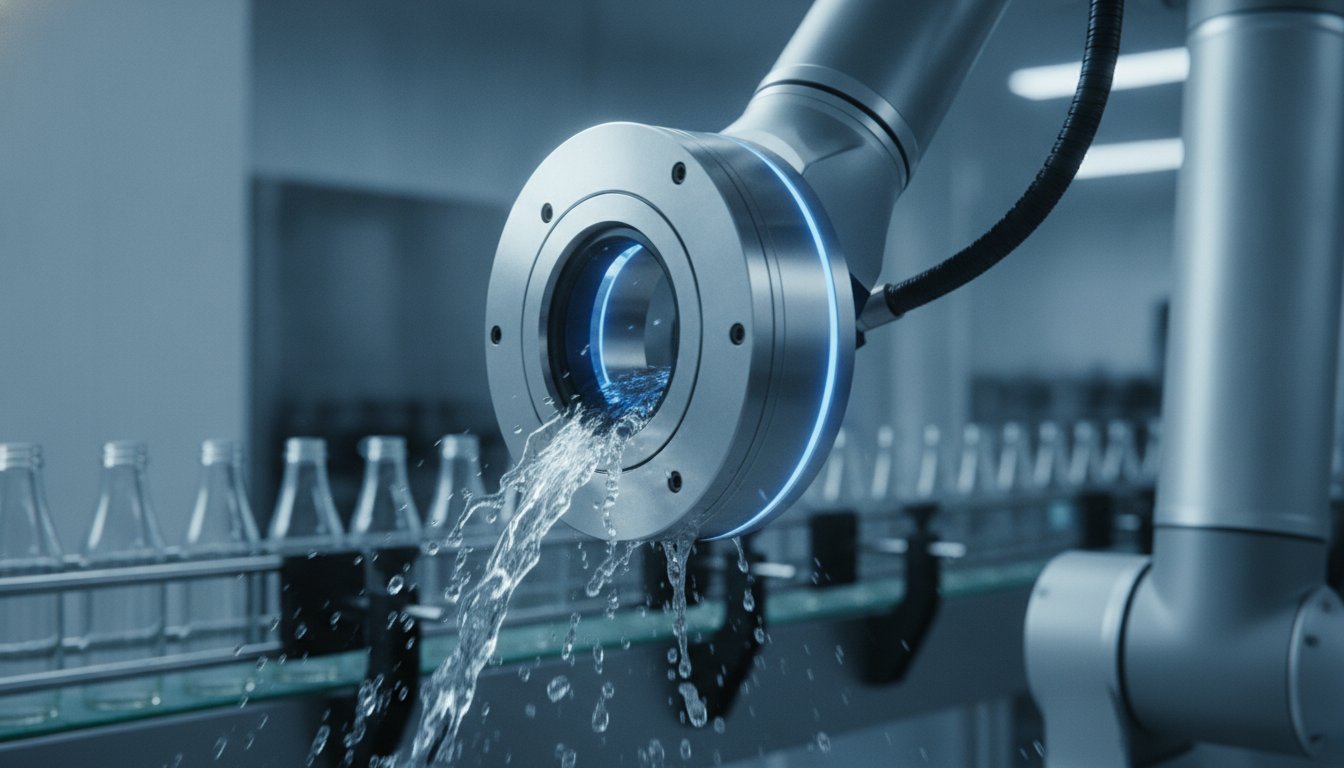
A single ingress point in a rotating assembly can halt an entire Australian bottling line for hours, costing thousands in lost throughput and contaminated product. Most engineering teams accept that frequent component failure is an inevitable consequence of daily caustic cleaning. However, the recurring cost of moisture ingress and signal noise isn't just a maintenance headache; it's a sign that your hardware isn't matched to the environmental rigour of your facility. Selecting the right slip rings for food and beverage industry applications requires a technical approach that prioritises both sealing integrity and electrical precision.
You probably agree that finding a balance between high-speed PLC data transmission and the physical demands of a washdown zone is one of the most persistent challenges in plant automation. This guide provides a framework to specify high-performance rotary connectors that survive Australian sanitation protocols without compromising your data. We will cover the critical selection criteria for IP67-rated protection, the move toward zero-maintenance designs, and how to achieve seamless Ethernet transmission in rotating heads.
Key Takeaways
- Identify the specific environmental stressors that impact slip rings for food and beverage industry use, focusing on the intersection of high-speed automation and rigorous sanitisation.
- Distinguish between IP65, IP67, and IP69K ratings to ensure your rotary assemblies are appropriately sealed against high-pressure washdowns and caustic chemicals.
- Assess the performance benefits of precious metal contacts over traditional brushes to eliminate contamination risks from wear debris in sensitive production zones.
- Establish a preventative maintenance framework that prioritises seal inspection and electrical testing to prevent moisture ingress before it disrupts PLC data.
- Streamline procurement by leveraging technical consulting to source specialised hardware from global leaders like BGB Innovation and Prosper Rotation.
Challenges of Rotary Electrical Connections in Food Processing
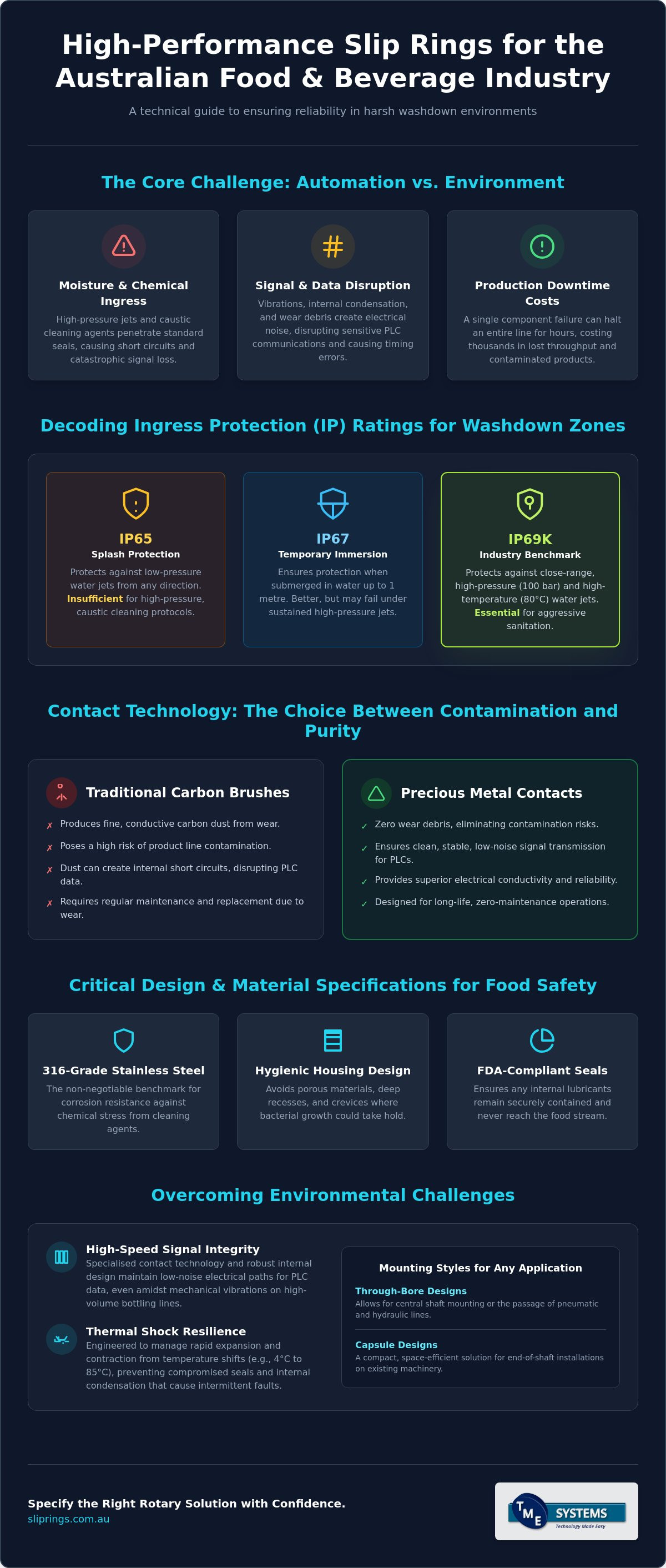
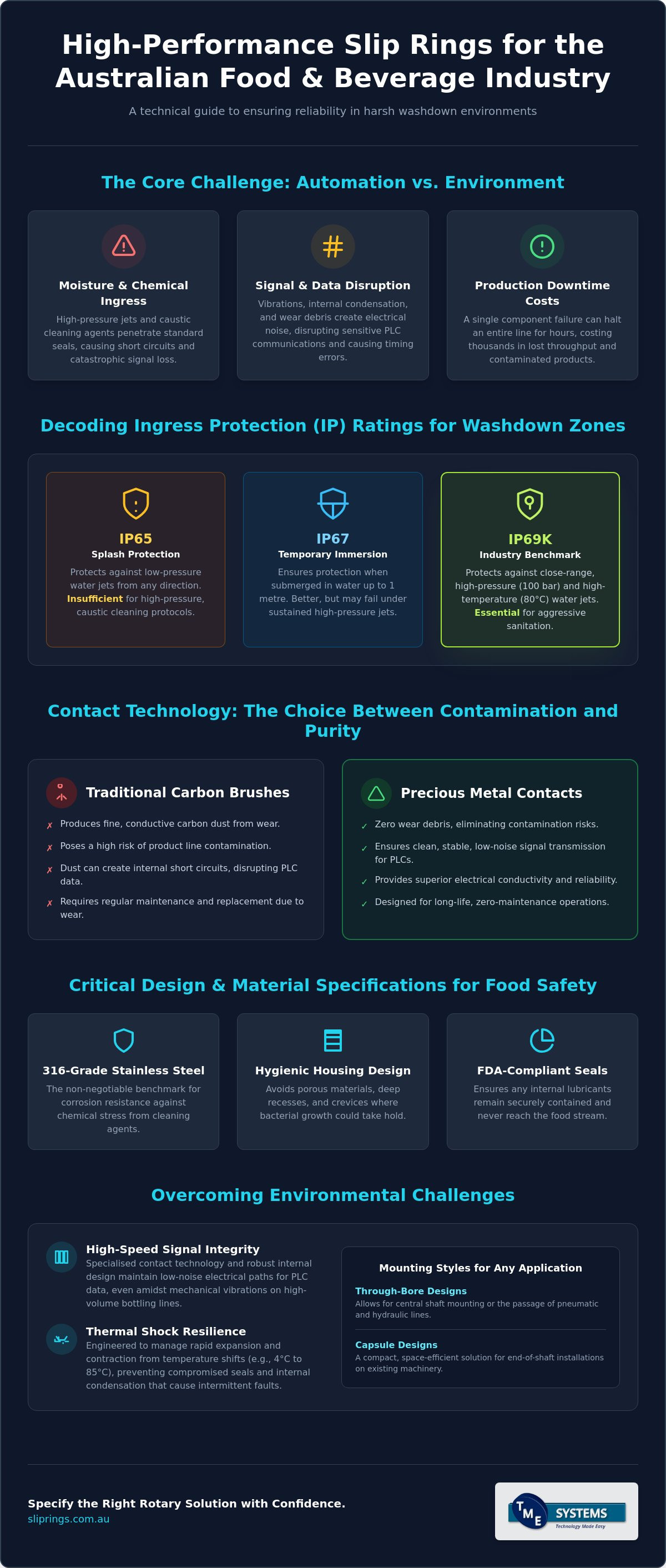
High-speed automation in modern food production demands absolute precision, yet the environment is inherently hostile to electrical components. A slip ring is a critical electromechanical device that facilitates the transfer of power and data between stationary and rotating components. When implementing slip rings for food and beverage industry applications, engineers must account for the brutal reality of Clean-in-Place (CIP) protocols. These cycles involve high-pressure jets and aggressive caustic or acidic cleaning agents that can quickly penetrate standard industrial seals, leading to short circuits or catastrophic signal loss.
Thermal shock presents another significant hurdle for rotary hardware. It's common for equipment to move from a chilled 4°C storage environment directly into an 85°C hot washdown cycle. This rapid temperature shift causes materials to expand and contract at different rates, often compromising the integrity of the housing. If the unit isn't specifically engineered to manage this expansion, internal condensation will form, causing intermittent faults that are notoriously difficult to diagnose. Reliability in these conditions isn't just a preference; it's a prerequisite for maintaining production uptime.
Maintaining these precise temperatures requires robust infrastructure; for instance, custom-built industrial cool rooms from makrefrigeration.com.au are designed to handle the rigorous demands of commercial food storage while integrating seamlessly with automated production lines.
The risk of contamination also extends to the internal mechanics of the connector itself. Traditional brush-style designs rely on carbon or graphite contacts that naturally wear over time. This process produces fine, conductive debris known as carbon dust. In a food-safe zone, this dust poses a dual threat: it can migrate out of the housing to contaminate the product line, and it can accumulate internally to create parasitic electrical paths that disrupt sensitive PLC communications.
Hygiene Standards and Material Integrity
In Australian manufacturing, 316-grade stainless steel is the non-negotiable benchmark for any component exposed to the production floor. Its superior resistance to pitting and crevice corrosion ensures the outer casing doesn't degrade under chemical stress. We prioritise designs that avoid porous materials or deep recesses where bacterial growth could take hold. Integrating FDA-compliant seals is also essential to ensure that any lubricants used within the assembly remain contained and never reach the food stream.
High-Speed Signal Integrity in Bottling
Modern bottling lines require the seamless transmission of high-speed Ethernet to rotating filling heads to maintain precise synchronisation. Standard rotary connections often struggle with the mechanical vibration inherent in high-volume conveyors, which can cause signal jitter or dropped data packets. Maintaining low-noise electrical paths is vital for PLC data integrity. Without specialised contact technology, these vibrations can lead to timing errors that reduce the overall efficiency of the filling process.
Technical Specifications for Food-Grade Slip Rings
Specifying slip rings for food and beverage industry applications requires a granular understanding of Ingress Protection (IP) ratings. While IP65 is sufficient for splash zones, it lacks the resilience needed for direct, high-pressure cleaning. IP67 provides protection against temporary immersion, but for meat and dairy processing where sanitation is aggressive, IP69K is the industry benchmark. This rating ensures the internal electrical paths remain dry even when subjected to 80°C water projected at 100 bar. Adhering to these standards is a core component of maintaining FDA Good Manufacturing Practices, ensuring that machinery doesn't become a vector for contamination.
Electrical requirements vary significantly between processing stages. Heavy-duty mixing and heating equipment often demand high-current capacity, sometimes exceeding 30A per circuit, to handle the torque and thermal loads of viscous ingredients. Conversely, multi-lane packaging machines require high circuit counts in a compact footprint to manage a dense array of proximity sensors and actuators. Choosing the correct mounting style is equally critical. Through-bore designs allow for central shaft mounting or the passage of pneumatic lines, while capsule designs offer a space-efficient solution for end-of-shaft installations on existing machinery.
Sealing and Environmental Protection
Standard water resistance is often insufficient when faced with the caustic agents used in Australian sanitation cycles. You must specify seals based on chemical compatibility; for example, Viton or EPDM seals are preferred for their resistance to oils and acidic cleaning solutions. Temperature fluctuations can cause a "breathing" effect, where internal air pressure changes draw moisture past the seals. Incorporating specialised venting or pressure equalisation elements prevents this vacuum effect, ensuring the housing remains hermetically sound throughout the production day.
Electrical and Data Requirements
Modern production lines rely on 1000Base-T Ethernet to facilitate real-time monitoring and synchronisation across rotating assemblies. Transmitting these high-frequency signals alongside high-voltage power lines requires advanced shielding and physical separation within the housing to prevent electromagnetic interference. Gold-on-gold contacts are essential for maintaining the integrity of low-voltage sensor signals by providing exceptionally low contact resistance and eliminating the risk of oxidation. For facilities requiring bespoke configurations, Prosper Rotation slip rings offer a versatile platform for integrating high-power and data circuits into a single assembly.
Comparing Contact Technologies for Bottling and Packaging
The choice of internal contact technology determines the long-term reliability of your rotary assembly. Traditional carbon brushes are a legacy solution, often selected for their initial cost-effectiveness. They are prone to mechanical wear. This process creates the conductive debris mentioned earlier in this guide, which can lead to signal interference or product contamination. In contrast, precious metal contacts utilise gold or silver alloys to provide superior signal quality, specifically for low-current sensor applications where resistance must remain constant.
Adhering to Hygienic Equipment Design Principles is essential when selecting slip rings for food and beverage industry use, as the contact method directly impacts the risk of batch contamination. High RPM applications require a technology that can maintain electrical stability without generating excessive heat. Choosing the right technology depends on balancing your operational RPM with the degree of environmental exposure your machinery faces. For instance, a low-speed mixer might tolerate the wear of a carbon brush, but a high-speed labelling turret demands a more sophisticated contact method to prevent unplanned downtime.
Mercotac vs. Traditional Brush Slip Rings
Liquid metal connectors, like those found in Mercotac slip rings, are preferred for high-speed data transmission. Unlike carbon brushes that create friction and electrical noise, liquid metal provides a near-zero noise connection. This is vital for 1000Base-T Ethernet signals where data integrity is paramount. While liquid metal offers maintenance-free operation, some sensitive food zones require specific "Mercury-Free" declarations. TME Systems provides specialised mercury-free options designed specifically for slip rings for food and beverage industry applications. This ensures your facility remains compliant with local Australian standards while benefiting from superior electrical performance.
Meridian Laboratory and Precision Engineering
For applications requiring extreme RPM or zero-maintenance over millions of cycles, Meridian Laboratory slip rings provide a high-performance alternative to mechanical contacts. These connectors are engineered to handle high rotational speeds without the signal degradation typical of sliding systems. A practical example is found in precision capping machines. These units require consistent torque signals and high-speed sensor feedback to ensure every bottle is sealed to exact specifications. Meridian technology eliminates the brush bounce and electrical fluctuations that can lead to rejected batches and wasted product.
Optimising Performance: Washdown Protocols and Maintenance
Maintaining slip rings for food and beverage industry equipment requires a transition from reactive repairs to a structured preventative programme. Even the most robust hardware will eventually succumb to the rigours of daily sanitisation if the maintenance schedule doesn't account for chemical wear. You should establish a routine to inspect seals for signs of degradation before moisture ingress occurs. This involves looking for hardening, cracking, or discoloration in the elastomer. These are clear indicators that your cleaning agents are reacting with the seal material and compromising its integrity.
A key part of any preventative programme is meticulous record-keeping; for the lever arch files and stationery required to manage your facility's technical documentation, Mega Office Supplies offers a vast range of essential office products.
Best practices for high-pressure washdowns include the use of secondary shielding where possible. While an IP69K rating provides significant protection, directing a high-pressure nozzle at point-blank range toward a seal interface for extended periods can eventually force moisture past the barrier. We recommend training sanitation staff to maintain a minimum distance and avoid direct, perpendicular hits on the rotary joint. Selecting the right slip rings for food and beverage industry environments means identifying the early signs of signal noise, such as intermittent sensor flicker or occasional PLC timing errors. This allows you to address contact wear or moisture buildup before it triggers a full line stoppage.
While technical maintenance prevents signal failure, general facility hygiene is just as critical for operational safety; to ensure your workspace meets professional standards, check out Tidy Masters.
Managing Caustic and Acidic Exposure
The pH levels of your cleaning solutions directly impact the longevity of your hardware. Standard aluminium slip ring bodies are highly susceptible to corrosion when exposed to caustic cleaners with high pH values. This leads to pitting and eventual structural failure. We specify 316-grade stainless steel or specialised polymer housings to mitigate this risk. Additionally, you must ensure your mounting brackets include drainage points to prevent fluid pooling. Stagnant cleaning fluid sitting against a seal for hours after a washdown cycle is a leading cause of premature seal failure.
Signal Noise Reduction Strategies
Properly implemented shielded cabling and comprehensive grounding protocols are the primary defences against electromagnetic interference in high-speed rotary joints. Troubleshooting intermittent sensor data in rotating filling stations often reveals that the issue isn't the contact itself, but poor cable management or inadequate shielding of the data lines. If you are experiencing persistent data drops, refer to our guide on troubleshooting signal noise in rotary connections for a step-by-step diagnostic process. If your current hardware continues to fail despite these measures, consult with our technical team to explore more resilient rotary solutions.
Specifying the Right Rotary Solution with TME Systems
Selecting the correct slip rings for food and beverage industry applications involves more than just comparing IP ratings or circuit counts. It requires a detailed technical audit of the operational environment, from the chemical composition of cleaning agents to the precision of PLC data packets. TME Systems operates as a specialised consultant for Australian manufacturers, providing the technical expertise needed to bridge the gap between complex rotary requirements and available hardware. By working with a local partner, engineering teams can significantly reduce procurement lead times and mitigate the risks associated with importing specialised components without local support.
Our approach prioritises long-term reliability over quick fixes. We understand that a failure in a rotating head isn't just a component cost; it's a loss of production capacity. This is why we facilitate access to global leaders in contact technology while providing the local engineering context necessary for Australian standards. Whether you're retrofitting a legacy bottling line or designing a new automated packaging system, our technical application consulting ensures that every rotary connection is optimised for its specific role. This methodical selection process eliminates the ambiguity that often leads to premature component failure.
Beyond internal technical specifications, developers overseeing new industrial facilities must also consider broader infrastructure needs; for professional support with site access and parking assessments, ML Traffic Engineers Australia provides the necessary expertise to ensure project compliance.
Heavy-Duty Solutions from BGB Innovation
Large-scale processing equipment, such as industrial mixers and rotary ovens, demands hardware that can handle high torque and sustained electrical loads. BGB Innovation slip rings are engineered for these demanding environments. Their robust construction and high-grade materials make them a preferred choice for heavy-duty rotation where mechanical stress is a constant factor. These units have established a reputation for durability in heavy industry applications across Australia, providing a reliable power path for equipment that can't afford unplanned downtime.
Versatile Configurations with Prosper Rotation
Modern packaging machinery often requires a high density of signal and power circuits in a very limited footprint. Prosper Rotation slip rings provide the modularity needed for these compact or miniature applications. Their designs allow for the seamless integration of electrical power, high-speed data, and even pneumatic or fluid passages within a single assembly. This flexibility is essential for Australian machinery builders selecting slip rings for food and beverage industry use who need to customise their equipment for unique production requirements. By utilising these modular configurations, you can achieve a tailored rotary solution that fits perfectly within your existing machine architecture without the need for extensive structural modifications.
Securing Long-Term Reliability in Rotating Food Machinery
Specifying the correct slip rings for food and beverage industry applications is a process of balancing electrical precision with environmental resilience. You've seen that relying on basic IP ratings is often insufficient; success requires a precise match between your contact technology and the specific chemical rigour of your facility's washdown protocols. Prioritising 316-grade stainless steel and advanced sealing prevents the moisture ingress that leads to costly unplanned downtime and batch contamination.
Achieving zero-maintenance rotary connections is possible when you integrate the right technical specifications from the outset. As the authorised Australian distributor for Mercotac and Meridian Laboratory, TME Systems provides national supply and support from our NSW facility. We offer specialised technical consulting to help you navigate complex rotary applications and ensure your data integrity remains uncompromised. Contact TME Systems for expert technical assistance with your food-grade slip ring selection. We look forward to helping you optimise your production line for maximum efficiency and long-term stability.
Frequently Asked Questions
Are liquid metal slip rings safe for use in food and beverage production?
Liquid metal connectors are safe when implemented with hermetically sealed housings that prevent any internal fluid from escaping. Mercotac units are common in these settings due to their superior signal stability and maintenance-free design. However, for applications requiring strict compliance with mercury-free mandates, we offer alternative contact technologies that maintain high performance without using liquid metal. Always verify the specific zone requirements of your facility before selecting a rotary solution.
What IP rating is required for a slip ring in a high-pressure washdown zone?
An IP69K rating is the required standard for equipment subjected to high-pressure, high-temperature washdown protocols. This rating ensures the internal electrical paths remain protected against 80°C water projected at 100 bar pressure. While IP67 provides protection against temporary immersion, it isn't sufficient for the direct impact of sanitation jets. Ensuring your slip rings for food and beverage industry use meet IP69K standards prevents moisture ingress during daily cleaning cycles.
Can a slip ring transmit high-speed Ethernet for Industry 4.0 applications?
High-performance rotary connectors can transmit 1000Base-T Ethernet without signal degradation or packet loss. This is achieved through specialised internal shielding and physical separation of data and power circuits to eliminate electromagnetic interference. Utilising liquid metal or precious metal contacts ensures the low-noise environment necessary for Industry 4.0 data synchronisation. These configurations allow for real-time monitoring and control of rotating machinery without the limitations of traditional mechanical contacts.
How do I prevent signal noise in my rotating filling machine?
Reducing signal noise requires a combination of low-resistance contact technology and robust electrical shielding. Liquid metal connectors or gold-on-gold contacts are preferred for their exceptionally low contact resistance and near-zero electrical noise. Additionally, you should ensure that all data cables are properly shielded and that the rotary joint is integrated into the plant's common grounding system. This prevents stray electromagnetic interference from disrupting sensitive sensor feedback in high-speed filling turrets.
What is the typical lifespan of a slip ring in a food processing environment?
The operational lifespan varies significantly based on the chosen contact technology and the severity of the washdown environment. Liquid metal connectors often exceed 100 million revolutions because they have no mechanical parts to wear out. Conversely, traditional carbon brush systems require periodic replacement as the brushes degrade over time. Maintaining a strict seal inspection schedule is vital; moisture ingress will terminate the life of any rotary connector regardless of its internal technology.
Do you provide mercury-free rotary connectors for sensitive applications?
We provide a comprehensive range of mercury-free slip rings for food and beverage industry applications where liquid metal is restricted. These units utilise precious metal fibre brushes or gold-on-gold contacts to deliver high signal integrity without the use of mercury. These alternatives are ideal for sensitive production zones that demand strict adherence to environmental and safety regulations while still requiring the high-speed data performance of a premium rotary connector.
How do I choose between a through-bore and a capsule slip ring?
The choice depends entirely on your mechanical mounting requirements and available space. Through-bore designs feature a central hole that allows for mounting on a drive shaft or the passage of pneumatic and hydraulic lines. Capsule slip rings are compact, self-contained units typically mounted at the end of a shaft. If your machinery requires a central passage for other services, a through-bore is necessary. For space-constrained applications with end-of-shaft access, a capsule design is the more efficient choice.
What maintenance is required for an IP67-rated slip ring?
Maintenance for IP67-rated units prioritises the physical inspection of external seals for signs of chemical degradation or hardening. You should regularly clean the housing to prevent the buildup of food debris that can harbour bacteria or abrade the seal interface. Periodic electrical testing to check for changes in contact resistance can also identify internal moisture buildup before it leads to failure. Unlike open brush systems, sealed units don't require internal cleaning or lubrication.