The success of a critical surveillance installation often hinges on a single, frequently overlooked mechanical bottleneck: the electromechanical interface. While many engineers focus on lens resolution or sensor sensitivity, the specific selection of slip rings for PTZ cameras is the primary determinant of whether a system maintains 4K clarity or succumbs to intermittent digital noise. You've likely experienced the frustration of signal degradation during high-speed panning or the logistical headache of frequent maintenance in dusty outdoor environments. These failures aren't just inconvenient; they compromise the integrity of the entire security network.
We recognise that achieving seamless 360-degree rotation without sacrificing signal quality is a significant engineering hurdle. This guide provides the technical parameters required to ensure your systems achieve maintenance-free operation for five years or more. We'll examine how to eliminate interference between power and data circuits and how to specify hardware that withstands harsh Australian conditions. By following this selection framework, you'll gain the expertise to choose high-performance components from brands like Mercotac and Meridian Laboratory that guarantee long-term reliability.
Key Takeaways
- Understand why specialised slip rings for PTZ cameras are the critical interface for achieving continuous 360-degree rotation without cable fatigue or signal loss.
- Learn to calculate precise circuit requirements for power, video, and control signals to ensure your hardware handles specific voltage and current loads effectively.
- Evaluate the performance differences between conventional brush contacts and liquid metal technology from brands like Mercotac to achieve superior signal clarity.
- Identify the early indicators of electromechanical wear and implement strategies to protect internal contacts from dust and moisture ingress in harsh environments.
- Discover how technical application consulting helps bridge the gap between complex engineering requirements and the procurement of reliable, long-term hardware solutions.
Understanding the Function of Slip Rings in Pan-Tilt-Zoom (PTZ) Systems
A PTZ camera's primary utility is its ability to cover a wide area without blind spots. To achieve this, the camera head must rotate indefinitely. A slip ring acts as an electromechanical bridge that allows the transmission of power and electrical signals from a stationary structure to a rotating one. For those new to the technology, understanding What is a Slip Ring involves looking at how conductive brushes maintain a constant connection with a rotating ring. Without this component, the internal wiring would eventually twist and snap, a phenomenon commonly known as cable wrap.
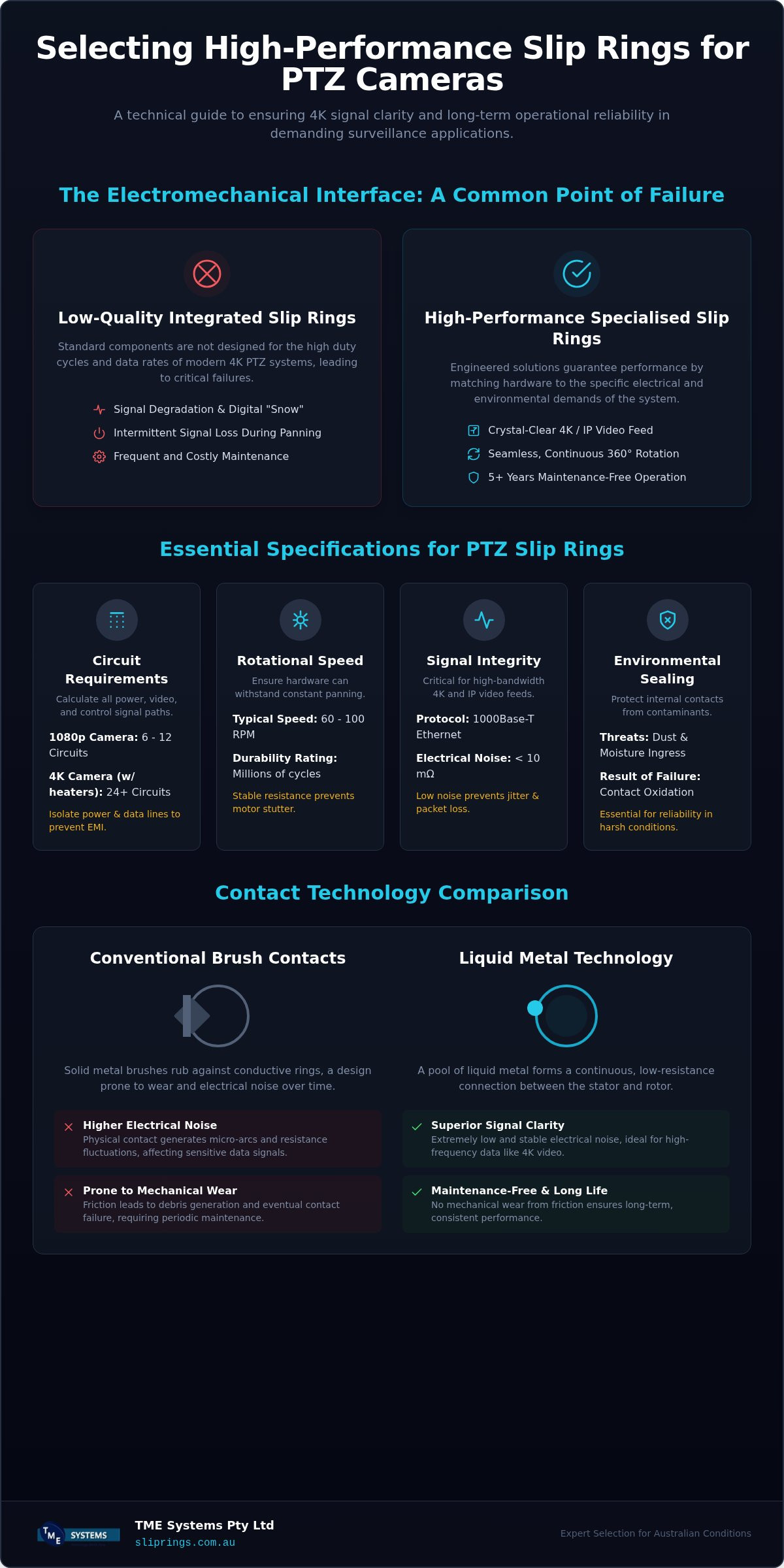
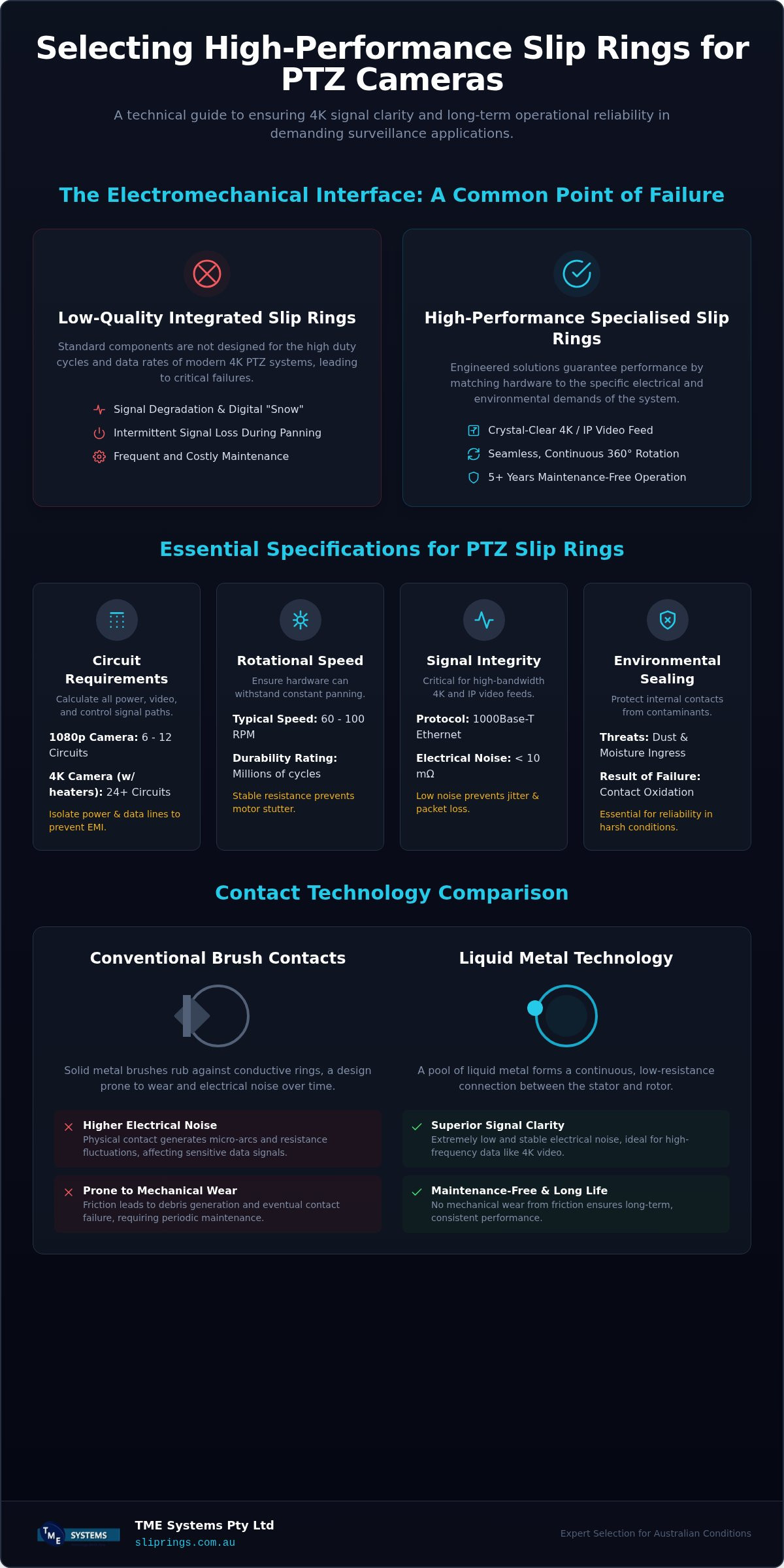
The shift from standard CCTV to high-definition IP systems has increased the technical demands on slip rings for PTZ cameras. Modern systems don't just carry low-voltage power; they transmit high-bandwidth digital video data. Any interruption in the physical connection results in packet loss, image freezing, or complete signal dropouts. These issues are often exacerbated in low-quality integrated units where the contact materials aren't rated for high-frequency signals or high-speed data protocols.
Low-quality integrated slip rings often fail due to contact wear or dust ingress. When these internal components degrade, you'll notice "snow" in the video feed or erratic movement during panning. These failures typically occur because the contact pressure is inconsistent or the housing lacks adequate environmental sealing, leading to oxidation on the conductive tracks.
The Mechanics of Continuous Rotation
The core of the system consists of two main parts: the stator and the rotor. Precious metal brushes or liquid metal interfaces move against conductive tracks to maintain the circuit. While many consumer-grade cameras use basic integrated components, industrial applications require modular designs. These allow for higher circuit counts and better shielding against electromagnetic interference (EMI). Effective shielding is vital when power lines run adjacent to sensitive data lines, as it prevents the "cross-talk" that leads to visual artefacts and signal degradation.
Why Industrial Grade Matters for Security and Defence
In critical infrastructure monitoring, cameras often run on autonomous 24/7 patrol cycles. This high duty cycle puts immense strain on the contact interfaces. Standard connectors aren't designed for millions of rotations and often fail within months of deployment. This is why TME Systems Pty Ltd prioritises robust solutions like Prosper Rotation slip rings. These units are engineered for longevity in harsh Australian conditions, reducing the total cost of ownership by extending the interval between maintenance cycles. Reliability isn't just a preference; in defence or high-security environments, it's an operational necessity.
Essential Specifications for PTZ Rotary Electrical Connectors
Selecting the correct hardware requires a detailed audit of the camera's electrical requirements. You must account for every signal path. While a standard 1080p camera might only require 6 to 12 circuits, a sophisticated 4K unit with integrated heaters and wipers often demands 24 or more. It's critical to separate high-current motor power from low-voltage signal lines to prevent electromagnetic interference. Mixing these without proper isolation leads to visible "ghosting" or data corruption in the video stream.
Rotational speed is another vital metric. While PTZ cameras don't typically rotate at the high RPMs found in industrial turbines, constant panning at 60 to 100 RPM still introduces mechanical wear. High-quality slip rings for PTZ cameras are rated for millions of cycles at these speeds, ensuring that contact resistance remains stable over time. If the resistance fluctuates, the voltage drop can cause the camera's logic board to reset or the pan-tilt motors to stutter during fine-tuned movements.
Bandwidth and Signal Integrity for 4K and IP Video
Managing 1000Base-T Ethernet protocols through a moving joint is a precise engineering task. High-definition video is sensitive to jitter and packet loss. To maintain a crystal-clear feed, the slip ring must exhibit extremely low electrical noise, typically less than 10 milliohms. Proper shielding and impedance matching are non-negotiable for 4K streams to ensure the signal remains within specified tolerances. If you're unsure about the signal compatibility of your current setup, our team provides technical application consulting to help you map your circuit requirements accurately.
Mechanical Footprint and Mounting Constraints
The physical housing of the camera dictates the slip ring's form factor. We generally categorise these into two main styles:
- Capsule Slip Rings: These are self-contained, compact units ideal for dome cameras where internal space is at a premium. They offer a simple "plug and play" interface for quick installation.
- Through-bore Slip Rings: These feature a hollow centre, allowing them to be mounted directly over a drive shaft. This is perfect for larger mast-mounted systems where you might need to pass pneumatic lines or additional cabling through the middle of the assembly.
Compatibility with existing gimbals is paramount. You must verify that the mounting flange and torque requirements don't exceed the camera motor's capacity. A slip ring with too much rotational torque will cause the pan motor to overheat or struggle, leading to premature system failure and expensive downtime.
Comparing Technologies: Liquid Metal vs. Conventional Contact Slip Rings
Traditional brush technology relies on physical friction to maintain electrical continuity. Metal brushes, often made of precious metal alloys, press against rotating tracks to transfer power and data. Over time, this mechanical interaction creates fine metallic wear debris. This buildup increases contact resistance and introduces electrical noise, which often manifests as "snow" or flickering in high-definition video feeds. In slip rings for PTZ cameras, these wear patterns are the primary cause of signal degradation during constant panning operations. Regular maintenance cycles are typically required to clean these contacts and ensure the brushes remain within their operational tolerances.
Liquid metal technology provides a significant departure from these friction-based limitations. By utilising a pool of conductive liquid metal to bridge the gap between stationary and rotating components, these units provide a constant, low-resistance connection. This fluid interface eliminates the debris buildup associated with traditional brushes, resulting in a significantly lower noise floor. This technology is particularly effective for maintaining the signal integrity required for 4K video and high-speed IP data protocols.
Mercotac Technology in PTZ Applications
Mercotac liquid metal connectors are engineered to provide a near-zero noise floor, making them ideal for high-frequency signal transmission. Unlike brush-based systems, their performance does not degrade as rotational speeds or duty cycles increase. This makes them a superior choice for autonomous patrolling systems that operate 24/7. We also provide mercury-free options for installations with specific environmental or safety regulations. These sealed units require no internal cleaning, which directly supports the goal of achieving a maintenance-free service life of five years or more in the field.
Meridian Laboratory and Precision Engineering
For mission-critical defence installations and high-security environments, Meridian Laboratory offers high-performance alternatives designed for absolute reliability. Their proprietary technology ensures a completely sealed, maintenance-free operation that is impervious to environmental contaminants. While the initial procurement cost for these precision-engineered units is higher than conventional alternatives, the long-term industrial value is found in the elimination of downtime. When comparing cost versus performance, the longevity of these components often results in a lower total cost of ownership over the life of the surveillance system. Choosing the right contact material is not just about the initial purchase; it is about ensuring the system remains operational without intervention.
Mitigating Signal Noise and Environmental Wear in Security Installations
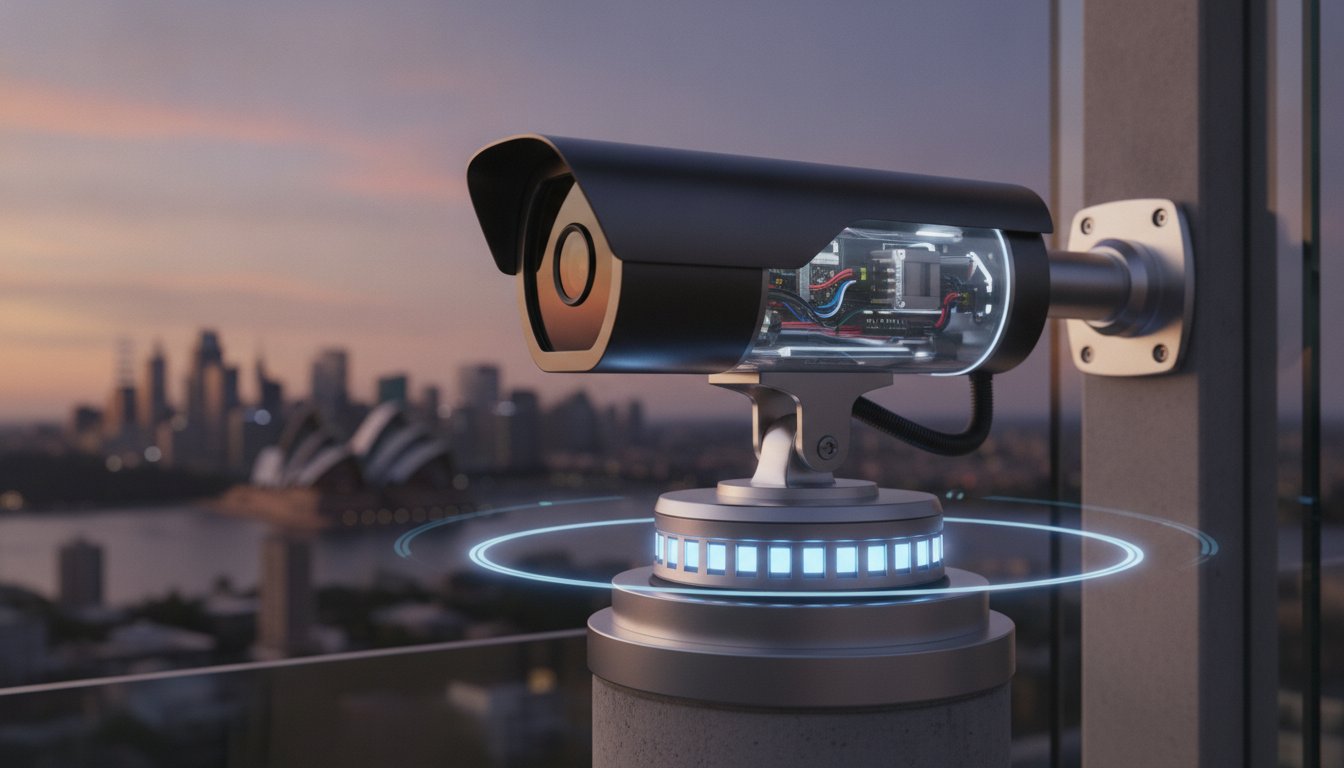
Detecting degradation early prevents total system failure. In outdoor security installations, the first indicators of failing slip rings for PTZ cameras are often subtle. You might observe intermittent "snow" on the monitor or a noticeable lag between a control command and the camera's physical movement. These symptoms typically stem from increased contact resistance caused by environmental ingress or internal wear on the conductive tracks. If left unaddressed, these minor signal interruptions can escalate into complete data loss during critical surveillance windows.
IP ratings serve as the industry standard for measuring protection against solids and liquids. In Australia's varied climate, an IP65 rating is often sufficient for general rain protection, but IP67 is required for sites prone to extreme weather events or temporary flooding. Thermal expansion is another critical factor in high-temperature industrial zones. As internal components expand in the heat, the contact pressure can shift. This leads to erratic signal behaviour if the hardware isn't specifically engineered for high-temperature stability and mechanical tolerance.
Solving Common Signal Issues
Electromagnetic interference (EMI) and radio frequency interference (RFI) are pervasive in modern industrial environments. Using shielded cables within the slip ring assembly is the most effective way to prevent these external signals from corrupting your video data. While some software-based "Position Refresh" techniques can compensate for minor data loss, they are often a reactive fix for poor hardware performance. Contact resistance stability prevents video lagging by ensuring a consistent electrical path that avoids signal timing errors. Investing in hardware-level noise reduction provides a more permanent solution than software workarounds that only mask underlying mechanical wear.
Environmental Protection for Remote Sites
Remote installations face unique challenges from salt-spray in coastal regions and fine particulate dust in desert environments. Standard housings often succumb to corrosion or seal failure within a few years of deployment. For these heavy-duty applications, we recommend BGB Innovation slip rings. These units are specifically designed with corrosion-resistant housings and UV-stable materials to withstand prolonged exposure to the harsh Australian sun. Proper sealing ensures that the internal contact area remains pristine, even when the external environment is hostile.
Ensuring your hardware matches your site's specific environmental profile is a complex task that requires careful planning. If you require a detailed review of your installation's technical requirements, you can consult with our engineering team for a tailored hardware recommendation that ensures long-term uptime.
Expert Selection and Procurement of PTZ Slip Rings in Australia
Procuring industrial components for surveillance systems requires more than just matching a part number or finding the lowest price point. It's a technical specification exercise where the electrical and mechanical properties must align perfectly with the operational environment. When sourcing slip rings for PTZ cameras, the primary goal is to eliminate the risk of premature failure that often plagues generic, off-the-shelf replacements. A professional selection process ensures that the chosen hardware can handle the specific data protocols and environmental stresses of your installation site without needing frequent on-site intervention.
Local technical support is a vital component of this process. Relying on international vendors without local representation often leads to long lead times and a lack of accountability when technical issues arise. TME Systems Pty Ltd acts as a dependable partner, bridging the gap between global manufacturing capabilities and the specific needs of Australian industrial and defence projects. This ensures that the hardware you receive is not only compatible but also supported by a national supply chain throughout its service life.
Consultative Selection with TME Systems Pty Ltd
Defining circuit count and voltage ratings is the first step in a professional audit. Our engineers work with you to determine the exact requirements for your system, whether you're managing low-voltage control signals or high-current motor power. This process ensures you don't over-specify and inflate costs, while still achieving long-term reliability goals. We help you balance budget constraints against the need for a low-noise floor and high-bandwidth transmission. For a deeper look at these variables, refer to our technical reference on Slip Ring Application Engineering.
National Supply and Technical Support
Accessing global brands like Mercotac and Prosper Rotation through a local Australian partner simplifies your procurement workflow. We focus on streamlining the replacement of failed OEM camera connectors, providing robust alternatives that often exceed the original specifications. This national supply chain ensures that specialised components are available when you need them, reducing downtime for critical infrastructure. If you're ready to define your system's needs, contact our technical team for a specialised specification review.
Before finalising your order, use this checklist to ensure all parameters are met:
- Total circuit count: Have you accounted for power, video, control, and future spares?
- Signal integrity: Does the unit support your specific data protocol, such as 1000Base-T or 4K video?
- Environmental rating: Is the IP rating appropriate for the site's specific dust and moisture levels?
- Mechanical fit: Does the capsule or through-bore diameter match your camera's internal housing?
- Duty cycle: Is the contact technology rated for your system's expected rotational life and pan speed?
Optimising Your Rotary Camera Infrastructure
Ensuring long-term reliability in surveillance systems requires a precise alignment between electromechanical hardware and your specific operational demands. We've examined how selecting high-performance slip rings for PTZ cameras eliminates common failure points such as signal noise, image snow, and mechanical wear. By prioritising low contact resistance and appropriate environmental sealing, you secure a 360-degree rotation that remains maintenance-free for years; even in the harshest Australian conditions.
As the authorised national distributor for Mercotac and Meridian Laboratory, TME Systems Pty Ltd provides the specialised technical advice required for high-stakes defence and security applications. Our comprehensive range of high-bandwidth rotary connectors ensures that your 4K video feeds remain crystal clear without the risk of packet loss or latency. Don't leave your system's uptime to chance by using generic components that aren't rated for high duty cycles.
Consult with our engineers for the correct PTZ slip ring specification to ensure your next installation meets the highest standards of technical excellence. We're ready to help you build a more dependable and resilient surveillance network.
Frequently Asked Questions
Can I use a standard slip ring for a high-definition IP camera?
No, standard slip rings typically lack the bandwidth required for high-definition IP video. IP cameras rely on high-speed data transmission that is sensitive to electrical noise. Using a generic component often leads to packet loss, causing the video to lag or freeze during rotation. You should specify a rotary connector designed for high-frequency data to ensure the signal remains stable and clear during continuous panning operations.
How do I reduce signal noise in my PTZ camera rotation?
To reduce signal noise, select hardware with low contact resistance and integrated internal shielding. High-quality slip rings for PTZ cameras utilise precious metal or liquid metal contacts to keep electrical noise levels below 10 milliohms. It's also vital to ensure that high-power motor lines are physically isolated from sensitive data circuits. This shielding prevents electromagnetic interference from corrupting the digital video stream as the camera rotates.
What is the lifespan of a slip ring in a 24/7 patrolling camera?
The lifespan of an industrial-grade slip ring in a 24/7 patrolling system should exceed five years. While basic consumer-grade connectors often fail within months of continuous duty, premium brands like Prosper Rotation are engineered for millions of cycles. Your system's longevity will depend on the rotational speed and the environmental sealing of the unit. Choosing a maintenance-free, sealed design is the most reliable way to ensure long-term uptime.
Are there mercury-free slip rings available for PTZ cameras?
Yes, mercury-free slip rings are available for installations where environmental or safety regulations are a priority. While many liquid metal units use mercury for its excellent conductivity, manufacturers like Mercotac provide gallium-based or precious metal alternatives. These units deliver a low-noise floor without the regulatory complications of mercury. They're particularly suitable for sensitive sites where environmental compliance is just as important as signal integrity and long-term reliability.
Do PTZ slip rings require regular maintenance or cleaning?
Traditional brush-based slip rings require periodic cleaning to remove wear debris, but sealed liquid metal units are designed to be maintenance-free. If you opt for a high-quality, sealed component, you eliminate the need for regular on-site servicing. In dusty Australian environments, a maintenance-free design is highly advantageous. It ensures the camera remains operational for years without the risk of signal degradation caused by dust ingress or contact oxidation.
How do I choose between a capsule and a through-bore slip ring for my camera?
Select a capsule slip ring for compact dome cameras where internal space is limited and a flange mount is needed. A through-bore design is more appropriate for larger mast-mounted systems that require a central shaft or additional cabling to pass through the middle. Your decision should be based on the mechanical footprint of the camera gimbal and the specific mounting constraints of your existing camera housing.
Can a slip ring transmit both power and high-speed data simultaneously?
Yes, specialised slip rings for PTZ cameras can transmit high-current power and high-speed data through the same assembly. This is achieved using internal shielding and isolation to prevent cross-talk between motor power lines and sensitive Ethernet signals. Properly specified hardware allows the camera to rotate indefinitely while maintaining a 4K video stream and powering internal heaters. This integration is essential for modern security systems requiring a single rotary joint.
What IP rating is recommended for outdoor PTZ camera slip rings in Australia?
We recommend a minimum of IP65 for outdoor use, though IP67 is preferred for sites exposed to extreme Australian weather. The combination of high UV levels and fine dust ingress can quickly compromise inferior seals. An IP67 rating ensures that the internal contacts remain protected against heavy rain and dust storms. You should also verify that the housing is made from UV-stable materials to ensure long-term durability.