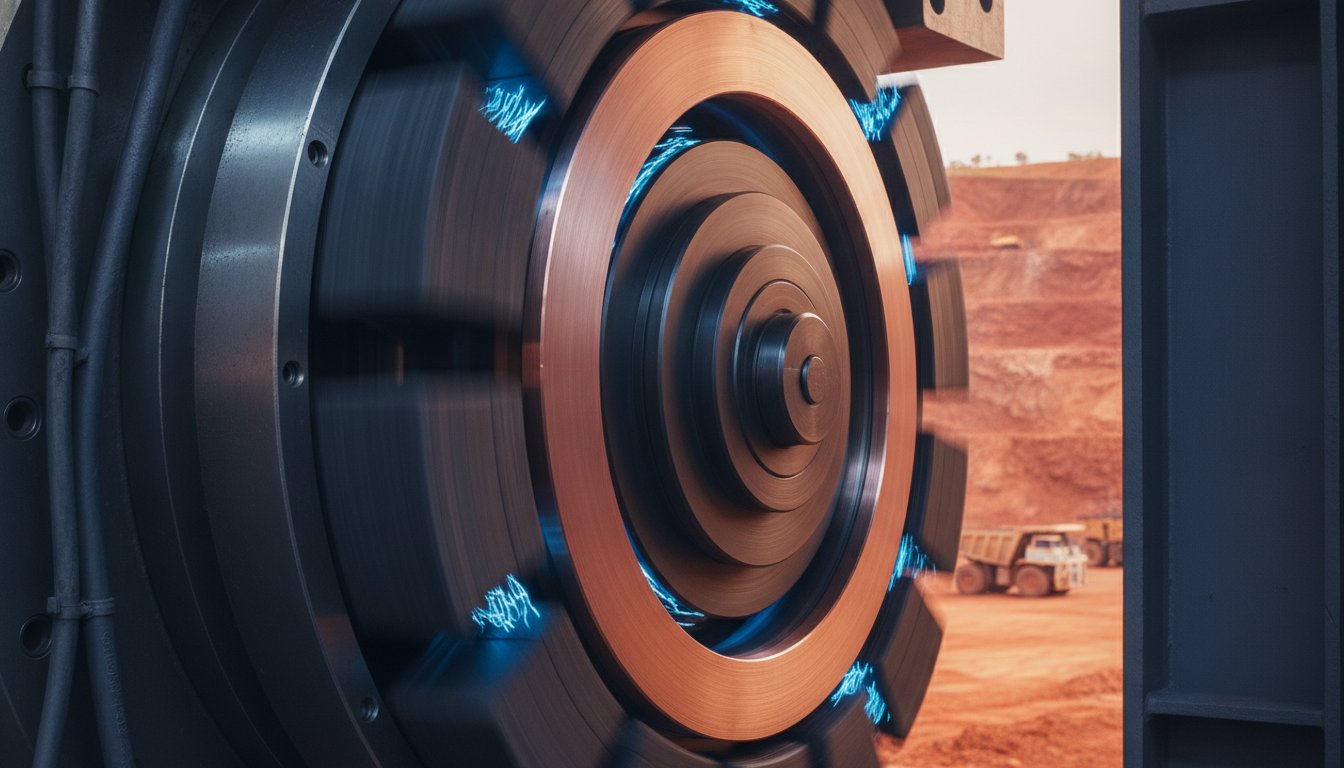
In heavy industrial power transfer, the difference between a high current slip ring that operates reliably for years and one that fails within months often comes down to just a few degrees of thermal dissipation. When you're managing high-amperage loads across a rotating interface, heat is your most persistent adversary. It's a reality that engineers and technical managers face daily, particularly in the unforgiving conditions of Australian mining and manufacturing sites where ambient temperatures already push hardware to its physical limits.
You're likely familiar with the cycle of accelerated contact wear and the subsequent downtime that erodes operational efficiency. This technical guide provides the specifications required to master high-amperage rotary connections, ensuring your systems maintain reliable power delivery under continuous 24/7 loads. We'll examine the critical balance between material selection and thermal footprints, while outlining how to mitigate signal noise and ensure your installations meet Australian safety standards for long-term performance.
Key Takeaways
- Learn to distinguish between standard signal connectors and a high current slip ring designed for continuous heavy-duty power delivery.
- Understand the critical relationship between rotational speed and current-carrying capacity to prevent overheating and premature contact failure.
- Evaluate the performance differences between mercury-wetted interfaces and traditional brush systems for various industrial vibration levels.
- Identify the essential IP ratings and environmental protections required to maintain electrical integrity in Australian mining and renewable energy sectors.
- Master the technical audit process to ensure your rotary connector specifications align with both operational loads and Australian safety standards.
What is a High Current Slip Ring and Why is it Critical?
A high current slip ring serves as a specialised electromechanical bridge. It allows for the transfer of high-amperage electrical power from a stationary source to a rotating component without restricting movement. Unlike standard slip rings designed for low-voltage data or sensor signals, these units are engineered to handle significant electrical loads without degrading. In the Australian industrial landscape, "high current" typically refers to systems rated from 50 Amps through to several thousand Amps. You'll find these in heavy-duty machinery like mining draglines, large-scale water treatment centrifuges, and industrial cranes.
The distinction between signal and power rings isn't just about size. While a signal ring focuses on minimising electrical noise to protect data integrity, a high current slip ring must prioritise the cross-sectional area of the conducting path and the efficiency of the contact interface. High amperage demands unique material science. Standard copper alloys often aren't enough; designs frequently incorporate advanced silver-graphite brushes or liquid metal interfaces to maintain conductivity while under constant mechanical stress.
Power Transmission vs. Signal Integrity
Many industrial applications require a hybrid approach where power and data coexist in a single assembly. However, high current circuits generate significant electromagnetic fields that can corrupt sensitive control signals. To maintain integrity, engineers use physical isolation and internal shielding within the housing. Choosing a BGB Innovation slip ring or a similar high-spec unit ensures that power circuits don't interfere with your PLC data. Maintaining a stable electrical path through a full 360-degree rotation requires precision-ground rings and consistent brush pressure to avoid micro-arcing, which can quickly destroy sensitive electronics.
The Thermal Challenge of High Amperage
Heat is the primary constraint in high-amperage design. Joule heating, where energy is lost as heat due to electrical resistance, increases exponentially with current. If the contact resistance is too high, the resulting thermal spike can melt internal components or cause the lubricant to fail. This makes contact resistance the primary enemy of system longevity. Robust housings, often constructed from aluminium or specialised alloys, act as heat sinks to dissipate this energy. For extremely high loads where heat must be minimised, Meridian Laboratory slip rings utilise liquid metal contacts to achieve near-zero resistance. This significantly reduces the thermal footprint compared to traditional carbon brush systems.
Engineering Specifications for High Current Rotary Connectors
Specifying a high current slip ring requires a precise understanding of three primary metrics: rated current, operating voltage, and dielectric strength. While current determines the conductor's cross-section, dielectric strength ensures the insulation won't fail between phases or to the housing under load. In Australian environments, you must also consider the derating factor. High ambient temperatures in regions like the Pilbara mean a unit rated for 200 Amps at 20°C may only safely handle 160 Amps when the enclosure temperature hits 50°C.
Amperage, Voltage, and Contact Resistance
Calculating the allowable voltage drop is essential for system efficiency. This is determined by the formula V = I x R, where R is the dynamic contact resistance of the rotary interface. To keep this resistance at a minimum, manufacturers use materials like silver, gold, or liquid metal alloys. Liquid metal options, such as those found in Mercotac slip rings, provide the lowest possible resistance. You must also distinguish between peak current, which covers short-duration surges, and continuous duty cycles. Continuous operation at peak ratings will lead to rapid thermal degradation.
RPM Limits and Mechanical Durability
Rotation speed directly impacts the thermal load of a high current system. As RPM increases, the friction between the brushes and the ring generates additional heat on top of the electrical load. If you require high rotation speeds alongside high amperage, you may need to sacrifice some circuit density to allow for larger, more robust contact surfaces that can dissipate heat effectively. Critical speed is the rotational threshold where centrifugal forces or mechanical vibration cause the contact interface to lose physical connection, resulting in destructive electrical arcing.
Balancing circuit count with physical space is often the most difficult part of the specification process. High-amperage circuits require wider rings and larger brushes, which increases the overall length of the unit. If your footprint is limited, you might consider a through-bore design to mount the slip ring directly onto an existing shaft. For complex configurations involving both high power and multiple signal paths, seeking technical application consulting ensures you don't overlook critical derating factors or mechanical constraints.
Comparing Contact Technologies for Power Transfer
Choosing the right contact technology for a high current slip ring is a decision that directly impacts both your maintenance schedules and electrical performance. There is no universal solution; instead, the selection is a strategic trade-off between electrical stability and mechanical resilience. In Australia's heavy industrial sectors, the two primary contenders are liquid metal interfaces and advanced brush systems, each serving distinct operational needs.
Liquid Metal Connectors for High Power
Liquid metal technology, specifically mercury-wetted contacts, is often considered the gold standard for applications requiring minimal electrical resistance and high signal clarity. Mercotac slip rings are frequently preferred for low-maintenance power transfer because the liquid metal provides a continuous, molecular bond between the stationary and rotating parts. This eliminates the friction and mechanical wear typically associated with sliding brushes, which reduces heat generation at high Amps.
These units are ideal for packaging machinery, cable reels, and sensitive laboratory equipment where electrical noise must be kept to an absolute minimum. From a regulatory perspective, modern liquid metal connectors are hermetically sealed to prevent environmental ingress and leakage. While mercury-free alternatives exist for food and beverage applications, they often cannot match the current density of mercury-wetted units in a comparable physical footprint. It's essential to ensure your selection aligns with site-specific environmental policies regarding the use of mercury.
Heavy-Duty Brush Systems
In environments where high vibration or shock loads are prevalent, such as mining excavators or wind turbine nacelles, traditional brush systems offer superior mechanical durability. BGB Innovation slip rings manage high amperage by using robust brush gear often made from silver-graphite or copper-graphite composites. These materials are engineered to maintain a steady contact path even when the machinery is subjected to significant physical stress or misalignment.
The trade-off for this resilience is a scheduled maintenance requirement. In dusty or remote Australian sites, brushes will gradually wear down and produce conductive dust that must be periodically removed to prevent short circuits. Advanced multi-point contact designs help mitigate this by distributing the current across several independent contact points. This increases the total surface area and provides redundancy. If one brush momentarily loses contact due to vibration, the electrical path remains unbroken, which is critical for a high current slip ring operating in a 24/7 production environment.
Choosing Based on Operational Reality
When specifying your rotary interface, consider the following technical priorities:
- Electrical Noise: Liquid metal offers near-zero noise; brush systems generate a measurable electrical signature.
- Maintenance Access: Brush systems require physical inspection; liquid metal units are typically "fit and forget" until the end of their service life.
- Environmental Stability: Brush systems are more tolerant of extreme vibration, while liquid metal units require stable mounting to prevent seal fatigue.
Critical Applications for High Current Transfer in Australia
Australia's industrial landscape relies on the movement of massive volumes of material, from iron ore in the Pilbara to containerised freight at Port Botany. These operations depend on machinery that requires a constant, high-amperage power supply across rotating joints. A high current slip ring isn't merely a component in these systems; it's a critical link that determines the uptime of multi-million dollar assets. Whether it's powering the pitch control in a wind turbine or the main drive of a stacker-reclaimer, the mechanical and electrical integrity of the rotary connection is paramount.
Heavy Lifting and Crane Operations
Tower cranes and gantry systems at major Australian ports manage immense torque requirements during peak loading cycles. These machines use high-torque electric motors that demand significant current during start-up and heavy lifts. Reliability in the Slip ring for crane category is achieved through robust housing designs and high-conductivity contact surfaces that can withstand the surge currents without arcing. Coastal environments add the complication of salt spray and high humidity. This necessitates weatherproofing to IP65 or IP67 standards to prevent corrosion from compromising the electrical path.
Mining Excavators and Processing Plants
The Australian mining sector presents perhaps the most aggressive environment for electrical hardware. In a rotating shovel or a large-scale drill rig, the slip ring must maintain a stable connection while subjected to constant, high-amplitude vibration and abrasive dust. These conditions quickly expose weaknesses in standard connectors. This is why heavy duty slip rings are essential for 24/7 mining operations. By using reinforced brush gear and dust-tight enclosures, these units prevent the accumulation of conductive particulates that lead to phase-to-phase short circuits. In processing plants, high current units power massive centrifuges and rotary kilns, where thermal stability is the primary concern.
Renewables and Industrial Automation
The transition to renewable energy has introduced new demands for high-amperage transfer. Modern wind turbines require reliable power take-off and pitch control systems that can handle fluctuating loads in remote, often inaccessible nacelles. Similarly, in industrial automation, high-speed packaging lines and rotary indexing tables require high current slip ring technology that can operate at high duty cycles without frequent maintenance. These applications often prioritise a compact footprint and low electrical noise to ensure that power circuits don't interfere with sensitive control sensors.
If you're specifying hardware for a demanding Australian project, you can consult with our technical team to ensure your rotary connectors are fit for purpose and compliant with local safety standards.
Procurement and Selection: Getting the Specification Right
Selecting a high current slip ring is a high-stakes engineering decision where the cost of a specification error far outweighs the unit price. A thorough technical audit is the first step in any successful procurement process. This audit must account for not only the peak amperage but also the duty cycle and the mechanical environment. For instance, a unit that performs well in a climate-controlled factory may fail rapidly if installed on an outdoor conveyor in a coastal region. Engaging in Technical Application Consulting during the design phase ensures that variables like voltage drop and rotational friction are balanced against your specific power requirements.
Mechanical integration is another critical factor. You'll generally choose between through-bore and flange-mounted designs. Through-bore configurations allow the slip ring to slide directly onto a central shaft, which is often necessary for large-scale machinery where the centre must remain clear for hydraulic lines or pneumatic tubes. Flange-mounted units, on the other hand, offer a more compact footprint and are typically easier to install in restricted spaces. Your choice depends on the existing shaft diameter and the available axial length in your enclosure.
Environmental Ratings and Sealing
In Australia, environmental ingress is a leading cause of premature failure in high-amperage systems. Protecting contacts from corrosion in salt-spray zones or high-humidity regions requires enclosures rated to IP65 or higher. These seals don't just keep dust and water out; they also play a role in managing internal heat. If a unit is completely sealed, the housing must be capable of dissipating the heat generated by the electrical load. For precision environments where signal purity is as important as power delivery, Meridian Laboratory slip rings provide advanced sealing and low-resistance contacts that perform reliably in demanding conditions.
Partnering with an Australian Specialist
Working with a local distributor provides access to technical support that understands the specific demands of Australian industry. This local expertise is invaluable when navigating custom configurations, such as those offered by Prosper Rotation slip rings, which can be tailored to unique circuit counts or voltage ratings. Having stock availability and procurement support within the same time zone reduces the risk of project delays and ensures you have a dependable partner for long-term reliability.
Before finalising your procurement, use this checklist to ensure the specification is accurate:
- Continuous vs. Peak Current: Does the unit handle the maximum continuous load without exceeding thermal limits?
- Voltage Drop: Is the contact resistance low enough to maintain the required voltage at the load?
- IP Rating: Does the housing provide sufficient protection against site-specific contaminants?
- RPM Compatibility: Is the unit rated for the operational speed of your machinery?
- Duty Cycle: Will the contacts withstand the expected frequency of rotation over the service life?
Optimising Rotary Power for Long-Term Reliability
Securing a reliable high current slip ring requires a precise balance of material science, mechanical durability, and environmental protection. By prioritising thermal management and conducting a thorough technical audit, you can significantly reduce maintenance intervals and prevent the costly downtime associated with contact failure. Whether your application involves heavy-duty mining equipment or precision maritime infrastructure, the right specification ensures your power transfer remains stable under continuous 24/7 loads.
TME Systems Pty Ltd serves as a specialised technical intermediary, providing access to a comprehensive range of mercury-free and liquid metal solutions. As an authorised distributor for world-leading brands like Mercotac and BGB Innovation, we offer the technical expertise required to navigate complex Australian industrial requirements. Our team is ready to assist with custom configurations and circuit counts to match your operational demands.
Contact TME Systems Pty Ltd for expert high current slip ring consultation to ensure your next installation delivers peak performance in any environment. We look forward to helping you solve your most challenging rotary power requirements.
Frequently Asked Questions
What is the maximum current a standard slip ring can handle?
Standard signal slip rings typically handle between 2 and 10 Amps per circuit. Once your power requirements exceed 50 Amps, you've entered the category of a high current slip ring. These specialised units are engineered with larger contact surfaces and advanced alloys to manage loads that can reach several thousand Amps in heavy industrial machinery like mining draglines and port cranes.
How does heat affect the performance of a high current slip ring?
Excessive heat increases the electrical resistance of the contact interface, which creates a destructive feedback loop known as Joule heating. If this thermal energy isn't dissipated effectively through the housing, it can melt internal insulation and degrade contact lubricants. This results in accelerated mechanical wear, increased electrical noise, and the eventual failure of the rotary power connection.
Are mercury-wetted slip rings allowed in Australian industrial sites?
Mercury-wetted slip rings are permitted on Australian industrial sites, provided they are hermetically sealed and meet relevant safety standards. Many operators prefer them for their near-zero resistance and high reliability. However, it's essential to ensure your site's environmental management plan accounts for the specific handling and disposal requirements of mercury-containing hardware to remain compliant with local regulations.
How often do high current brush-based slip rings require maintenance?
Maintenance intervals for brush-based systems depend heavily on the operating environment and duty cycle. In a dusty Australian mining site, you may need to inspect brush wear and clear conductive debris every 500 to 1,000 operating hours. In cleaner factory environments, these intervals can often extend to 12 months or more depending on the specific amperage loads.
Can I combine high current power and high-speed data in one slip ring?
You can combine high-amperage power and high-speed data within a single hybrid high current slip ring assembly. To prevent electromagnetic interference from corrupting sensitive data, these units use internal shielding and physical isolation between the circuits. This design allows you to transmit heavy motor power and PLC signals through the same rotating interface without risk of signal loss.
What are the signs that a high current slip ring is beginning to fail?
Common indicators of failure include unusual heat generation at the housing, increased electrical noise, and measurable voltage drops across the rotary interface. You might also notice physical signs like vibration or audible grinding during rotation. Regular thermal imaging is a highly effective way to identify these issues before they lead to a complete system breakdown and unplanned downtime.
How do I protect a high current slip ring from dust and moisture in mining?
Protection is achieved by specifying high IP ratings, typically IP65 or IP67, which ensure the unit is dust-tight and resistant to moisture ingress. In mining applications, you should also look for reinforced housings and specialised seals. These prevent abrasive particulates from entering the contact chamber, where they could cause mechanical abrasion or phase-to-phase short circuits.
What is the difference between a collector ring and a high current slip ring?
A collector ring is a specific type of slip ring often used for delivering AC power to the rotor of an induction motor. While the terms are sometimes used interchangeably in industry, a high current slip ring is a more comprehensive electromechanical device. It's capable of handling multiple power circuits and integrated signal paths in complex configurations across a wide range of industrial equipment.