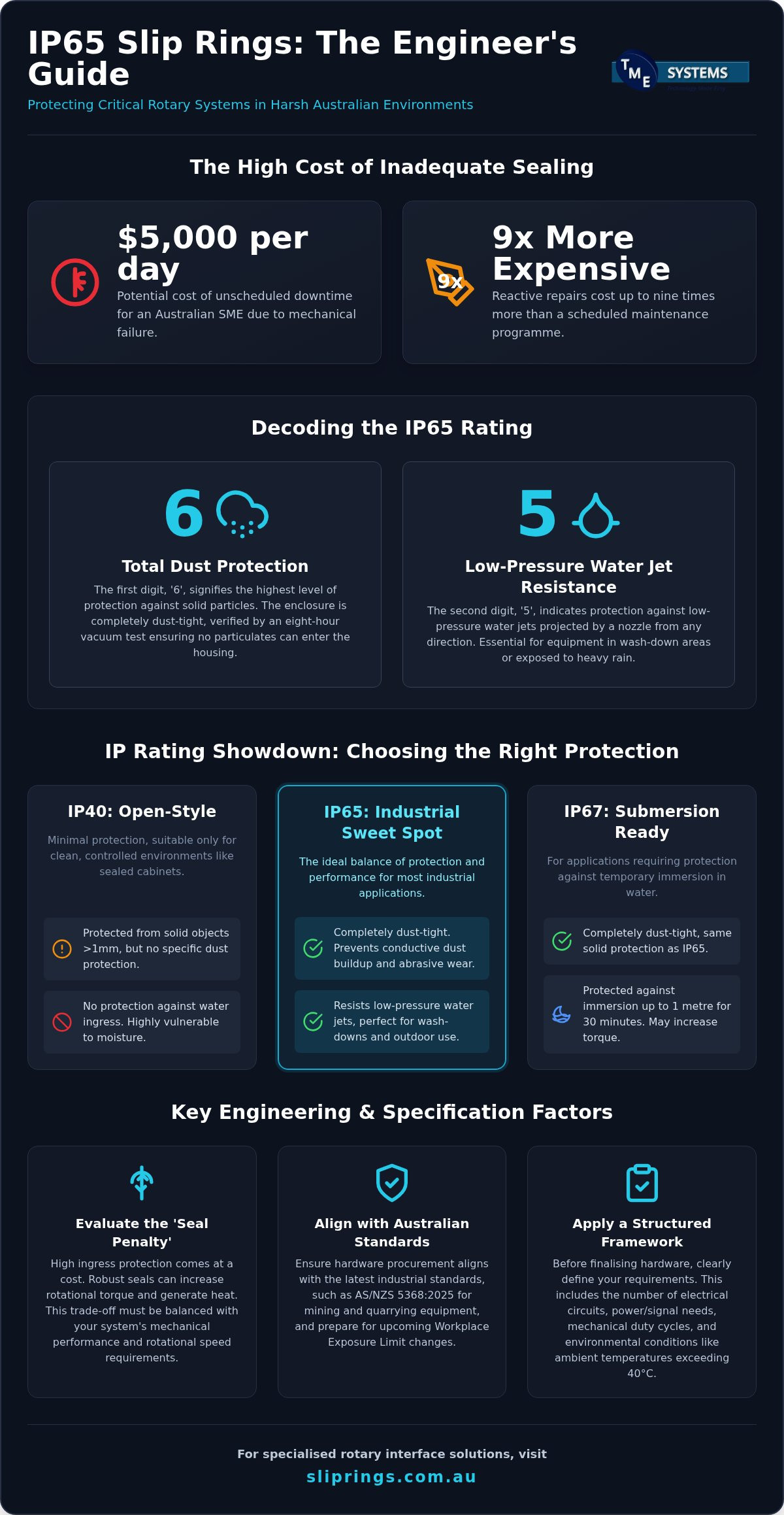
Unscheduled downtime can cost an Australian SME up to $5,000 per day, yet a significant portion of these mechanical failures stems from inadequate environmental sealing at the rotary interface. You've likely seen how fine, abrasive dust or high-pressure wash-downs can quickly compromise a standard connector, making the choice of a robust IP65 slip ring essential for operational continuity. It's a frustrating reality that reactive repairs often cost nine times more than a scheduled maintenance programme, making the initial specification of your hardware a critical financial decision.
This technical reference serves as a guide for engineers and procurement officers to correctly specify and implement these components within demanding Australian industrial environments. We'll examine how to ensure compliance with the new AS/NZS 5368:2025 mining standards and prepare for the upcoming Workplace Exposure Limit changes effective December 2026. By the end of this article, you'll understand how to balance ingress protection with mechanical performance, ensuring your rotary systems survive ambient temperatures that frequently exceed 40°C while minimising long-term maintenance overheads.
Key Takeaways
- Understand the technical parameters of an IP65 slip ring, focusing on its capacity for total dust protection and resistance to low-pressure water jets in wash-down areas.
- Evaluate the "seal penalty" by balancing high ingress protection against the increased torque and heat generation inherent in dynamic sealing systems.
- Identify the critical boundary between IP65 and IP67 ratings to select the most efficient protection level for your specific rotational speed and environmental conditions.
- Align your hardware procurement with the latest Australian industrial standards, including the AS/NZS 5368:2025 requirements for mining and quarrying equipment.
- Apply a structured specification framework to define electrical circuit needs and mechanical duty cycles before committing to a final hardware configuration.
Understanding IP65 Ratings for Rotary Electrical Connectors
The Ingress Protection rating system is the definitive framework for categorising the sealing effectiveness of electrical enclosures. For an IP65 slip ring, these digits provide a clear performance baseline that engineers can rely on during the design and specification process. The IP Code, governed by international standard IEC 60529, uses a two-digit suffix to denote specific resistance levels against solids and liquids. It's a precise language that replaces vague marketing terms with measurable data.
The first digit, '6', represents the highest level of solid particle protection. It signifies that the unit is completely dust-tight. In a laboratory setting, this involves an eight-hour vacuum test to ensure no particulates enter the housing. The second digit, '5', indicates protection against low-pressure water jets from any direction. It's a mistake to use the term "waterproof" as a catch-all descriptor in technical documentation. In industrial rotation, "waterproof" is imprecise. A component might be resistant to heavy rain but fail if subjected to a high-pressure wash-down or temporary immersion. Using the specific rating ensures the hardware matches the actual site conditions.
The Anatomy of an IP65 Sealed Slip Ring
Maintaining a seal in a 360-degree continuous rotation environment requires a sophisticated mechanical design. Engineers must manage two distinct types of interfaces: static and dynamic. Static seals protect the fixed joints where housing components meet. Dynamic seals are more complex, as they must maintain a physical barrier while the shaft rotates at speed. This often involves precision-machined tolerances to prevent moisture from wicking along the shaft.
Housings are typically constructed from anodised aluminium or 316-grade stainless steel to provide a rigid, corrosion-resistant shell. Inside, precision-engineered O-rings and specialised gaskets act as the primary barrier. These materials are selected based on their ability to withstand the friction-induced heat that occurs at the rotational interface, ensuring the seal doesn't degrade over thousands of operating hours.
IP65 vs Standard Open-Style Slip Rings
Standard open-style components, often rated at IP00 or IP40, are suitable for controlled, clean-room environments or sealed control cabinets. However, most Australian industrial sites involve airborne contaminants that can degrade electrical performance. Dust ingress on a standard ring increases friction and accelerates the wear of the precious metal or carbon brush contacts, leading to signal noise.
Upgrading to an IP65 slip ring is a safety requirement for high-voltage rotary transfers. Moisture ingress in an unsealed unit can lead to arcing or catastrophic short circuits. By isolating the internal contacts from the external environment, you ensure a consistent signal-to-noise ratio and prevent the buildup of conductive dust. This level of protection is the industrial "sweet spot" for equipment located in areas prone to dust or occasional splashing, providing a balance between protection and mechanical efficiency.
The Engineering Behind IP65 Sealing and Ingress Protection
Engineering an IP65 slip ring involves far more than simply placing a standard component inside a box. The primary challenge lies in the dynamic interface where the rotating shaft meets the stationary housing. While static seals in traditional electrical enclosures are relatively straightforward, a slip ring requires a seal that maintains its integrity during 360-degree continuous rotation. This performance is measured against the IEC 60529 standard for Ingress Protection, which defines the testing parameters for both solid particulates and liquid ingress.
Material selection for these seals is a critical engineering decision. Nitrile (NBR) is frequently utilised for general industrial applications due to its excellent oil resistance and durability. For environments involving high temperatures or aggressive chemicals, Viton is the preferred choice. In applications requiring lower rotational torque, PTFE (Teflon) seals are often specified. However, PTFE requires extremely precise housing tolerances to function correctly. The longevity of these seals depends heavily on the surface finish of the rotating shaft. A surface that is too rough will quickly abrade the seal material, while a surface that is too smooth may not allow a microscopic film of lubricant to form, leading to "stiction" and premature failure.
Heat dissipation is another vital consideration. Seals naturally create friction, which generates heat during operation. In a sealed IP65 unit, this heat can become trapped, potentially leading to internal pressure build-up or the degradation of electrical contact lubricants. Designers must ensure the housing material, often anodised aluminium, can effectively conduct heat away from the internal assembly to maintain stable operating temperatures.
Dynamic Sealing Mechanisms
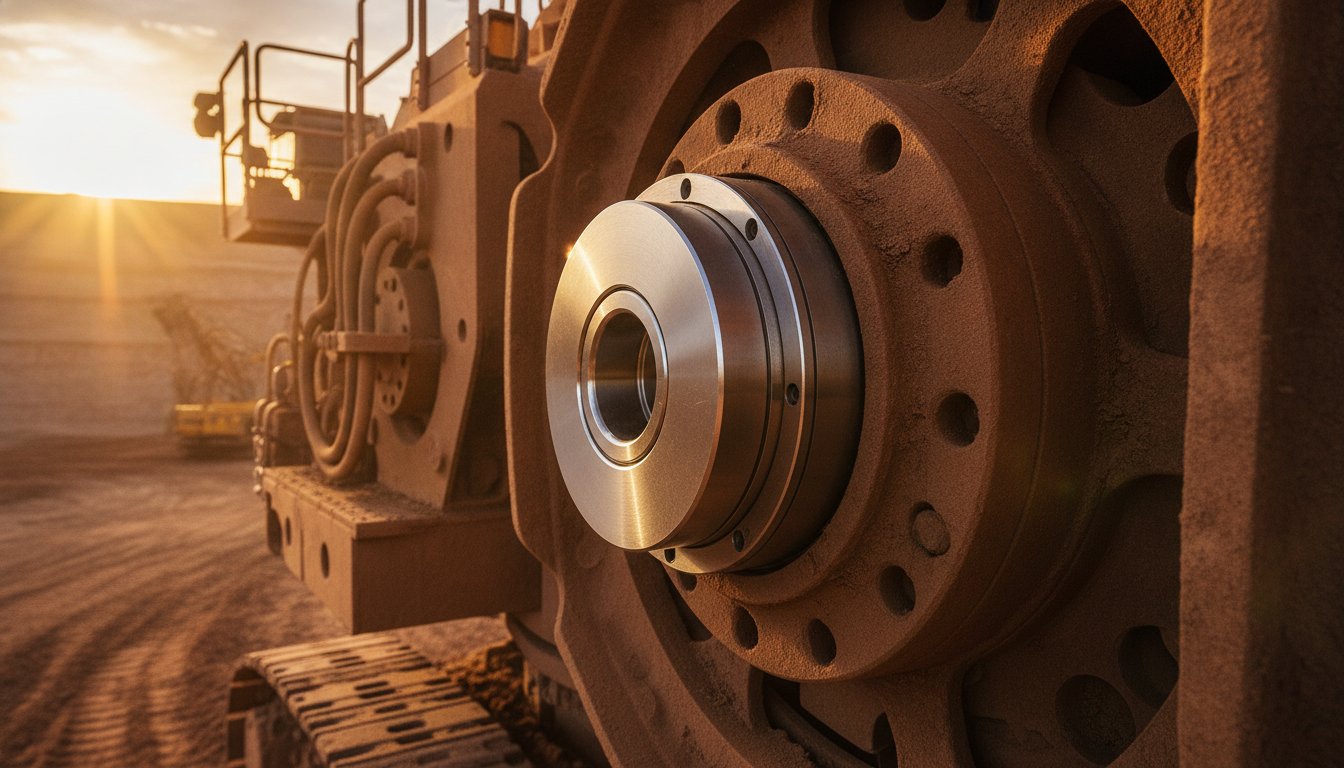
Rotary shaft seals, or lip seals, are the standard mechanism for preventing particulate entry. There is an inherent trade-off between the "tightness" of the seal and the resulting rotational friction. A tighter seal offers superior protection but increases the breakaway and running torque of the unit. For high-duty cycle applications, internal lubrication is essential. This lubricant reduces the wear on the seal lip and helps maintain a barrier against fine dust, which is particularly important in Australian mining and quarrying operations where abrasive silica is common.
Housing and Cable Exit Protection
The integrity of an IP65 slip ring is only as strong as its weakest point, which is often the cable entry. High-quality units utilise sealed glands or NPT (National Pipe Thread) connections to ensure moisture cannot track along the cables into the housing. In Australian coastal or chemical processing environments, the housing itself must resist corrosion. For these demanding scenarios, BGB Innovation slip rings are frequently specified due to their robust heavy-duty sealing and proven performance in harsh conditions. If you are unsure which sealing material suits your specific chemical environment, our team can provide technical application consulting to help you find the right fit.
IP65 vs IP67: Selecting the Correct Protection Level
Choosing between IP65 and IP67 is a decision that dictates both the upfront cost and the long-term operational efficiency of your machinery. While it's tempting to specify the highest protection level available, doing so without a technical justification can lead to unnecessary mechanical complications. An IP65 slip ring provides protection against low-pressure water jets and is considered dust-tight, making it the industrial standard for most factory floor applications. In contrast, IP67 signifies the unit can withstand temporary immersion in water up to one metre deep.
Identifying the specific zones within an Australian processing facility is the first step in this selection process. Wash-down zones, common in food and beverage processing, require equipment to survive direct spray from hoses. These environments are perfectly suited for IP65 hardware. However, flood-risk zones or outdoor installations prone to pooling water during heavy tropical rain may necessitate an upgrade to IP67. Over-specifying to IP67 when IP65 is sufficient often results in a friction penalty. Higher ingress protection typically requires tighter seal tolerances or multiple seal lips, which increases rotational torque and heat generation. For high-speed applications, this extra friction can limit the maximum RPM and shorten the service life of the internal components. Engineers looking for technical specifications for a sealed slip ring apparatus will find that sealing strategies must balance environmental isolation with the physical realities of rotation.
When IP65 is the Right Choice
In many Australian sectors, an IP65 slip ring is the optimal solution because it balances protection with mechanical performance. Packaging machinery, for instance, often requires protection against dust and occasional cleaning fluids but rarely faces immersion. Similarly, grain handling and cement plants deal with heavy particulate loads where a dust-tight seal is mandatory, but water ingress is a secondary concern. In these scenarios, the lower friction of an IP65 seal allows for higher operational speeds and lower energy consumption compared to more aggressively sealed alternatives.
When to Upgrade to IP67 or IP68
Certain environments leave no room for compromise. Marine applications, offshore platforms, and wastewater treatment plants frequently expose hardware to salt spray, heavy seas, or total submersion. These conditions demand IP67 or IP68 ratings to prevent catastrophic failure. High-precision signal slip ring applications in high-humidity zones also benefit from higher ratings. Even if immersion isn't a risk, the superior sealing of an IP67 unit can provide an extra layer of protection against moisture vapour, which can cause signal attenuation or data loss in sensitive rotary interfaces.
Operational Considerations: Torque, RPM, and Maintenance
Integrating an IP65 slip ring into your machinery introduces mechanical variables that unsealed units don't face. The most prominent is the "seal penalty". This term describes the additional torque required to overcome the physical contact between the seal lip and the rotating shaft. Breakaway torque, the force needed to initiate rotation, is always higher than running torque. Both values are significantly greater in sealed units compared to open designs. Engineers must account for this drag when sizing drive motors to ensure the system doesn't stall or overheat during startup.
Rotational speed limitations are directly linked to the heat generated at these seal interfaces. While many standardised models list a continuous rotation speed of up to 250 RPM, running at these limits for extended periods can lead to seal hardening. As the seal material loses its elasticity due to thermal stress, its ability to exclude fine dust diminishes. This is particularly relevant in the harsh Australian climate, where ambient temperatures in industrial sheds can exceed 40°C, further challenging the unit's duty cycle and cooling capacity.
Managing Rotational Friction
Friction isn't a static value; it fluctuates based on temperature and rotational velocity. In many applications, the initial drag reduces as the seal warms up and the internal lubricants reach their operating viscosity. However, for sensitive instrumentation or low-power systems, this drag can cause signal jitter or mechanical lag. Selecting a specialised low-torque IP65 slip ring design is necessary for these scenarios. These units often utilise thinner seal lips or alternative materials like PTFE to minimise the impact on energy consumption and motor sizing without compromising the ingress protection rating.
Maintenance and Service Life
Routine inspection protocols are essential to prevent unscheduled downtime. Technicians should look for visible moisture inside the housing or a sudden increase in electrical noise, which are primary indicators of seal bypass. Environmental factors like high UV exposure in outdoor Australian installations or frequent contact with harsh cleaning chemicals can accelerate the degradation of nitrile or Viton components. Proper seal maintenance can extend slip ring life by up to 300%.
Whether these seals can be replaced in the field depends on the hardware's construction. Heavy-duty modular units often allow for seal replacement, whereas compact capsule types are typically factory-sealed and require a full unit swap if the seal fails. If you're observing increased torque or signal interference, it's often more cost-effective to consult with a specialist than to risk a complete system failure. For expert guidance on selecting a unit that balances protection with mechanical efficiency, contact our technical team for a consultation.
Specifying IP65 Slip Rings for Australian Industrial Projects
Selecting an IP65 slip ring requires a methodical approach to ensure the hardware survives the specific rigours of your site. It isn't enough to simply match a part number. You must align the mechanical protection with the electrical and operational realities of the machine. A logical specification process reduces the risk of premature failure and avoids the "seal penalty" described in previous sections. We recommend following these four technical steps during the procurement phase.
- Step 1: Define the electrical circuit requirements. Distinguish between high-current power circuits and sensitive signal lines. Signal circuits require shielding and low-noise contacts to maintain data integrity in electrically "noisy" industrial environments.
- Step 2: Determine the maximum operational RPM and duty cycle. High-speed rotation generates friction-induced heat at the seal interface. If your application exceeds 250 RPM, you may need a specialised low-friction seal or a brushless design to prevent thermal degradation.
- Step 3: Assess the specific contaminants. In the Pilbara, you're dealing with fine, abrasive iron ore dust. In a coastal plant, it's salt spray. Each requires a different seal material, such as Viton for chemical resistance or Nitrile for general oil and water exclusion.
- Step 4: Consult with a specialist. Custom mounting flanges or specific cable exit orientations can significantly simplify installation and prevent cable strain, which is a common cause of seal bypass.
Industry-Specific Applications in Australia
In the food and beverage sector, hygiene and wash-down resistance are paramount. Meeting these standards often involves utilising Prosper Rotation slip rings, which provide the necessary ingress protection while handling the frequent cleaning cycles required in bottling and packaging lines. In material handling and warehousing, the focus shifts to protecting contacts from the constant ingress of fine cardboard dust and debris that can increase electrical noise.
For mining and heavy industry, specifying an IP65 slip ring is often a regulatory necessity. With the introduction of the AS/NZS 5368:2025 standard for electrical equipment in mines, ensuring your rotary connectors are dust-tight is critical for compliance. Leveraging BGB slip rings Australia ensures your equipment can withstand the extreme vibration and particulate loads found in vibrating screens and reclaimers.
The TME Systems Technical Advantage
Our role is to act as a technical intermediary, helping you cross-reference IP ratings with your specific mechanical needs. We provide access to specialised brands like Meridian Laboratory for high-performance sealing requirements where traditional brush contacts might fail. Whether you're dealing with the high ambient temperatures of an Australian summer or the abrasive dust of a quarry, we help you customise a solution that ensures long-term reliability and minimal maintenance downtime.
Optimising Rotary Performance in Harsh Australian Conditions
Specifying the correct rotary interface is a critical step in safeguarding your industrial assets against the abrasive dust and moisture typical of Australian worksites. An IP65 slip ring provides the essential balance between robust ingress protection and mechanical efficiency, ensuring that your systems remain compliant with standards like AS/NZS 5368:2025. By carefully evaluating torque requirements and environmental variables, you can significantly reduce the risk of unscheduled downtime and expensive reactive repairs. It's a pragmatic investment that prioritises technical accuracy over short-term savings.
TME Systems acts as an authorised distributor for industry leaders including Mercotac, BGB, and Meridian Laboratory. We offer an extensive range of sealed and heavy-duty rotary solutions tailored to the unique challenges of local projects. Our team provides the specialised technical assistance needed to cross-reference your operational parameters with the ideal hardware configuration. To ensure your next installation is engineered for long-term reliability, please consult with TME Systems for technical selection support. We're committed to helping you achieve technical excellence in every rotational application.
Frequently Asked Questions
Is an IP65 slip ring completely waterproof?
An IP65 slip ring is not designed for submersion. The rating indicates the unit is "dust-tight" and protected against low-pressure water jets from any direction. While it survives heavy rain or standard wash-down procedures, it will fail if submerged in water. For applications where the component may be underwater, even temporarily, you must specify an IP67 or IP68 rated connector instead.
How does an IP65 rating affect the maximum RPM of a slip ring?
The seals required for an IP65 rating increase mechanical friction, which generates heat during rotation. This thermal build-up typically limits the maximum continuous speed to approximately 250 RPM for many standard models. Exceeding these limits can cause the seal material to harden and lose its effectiveness. High-speed applications often require specialised low-friction seals or alternative technologies to maintain the rating without overheating.
Can I use an IP65 slip ring in a marine environment?
You can use these units in marine environments, provided the housing material is suitable for salt exposure. Standard aluminium housings may corrode quickly; therefore, 316-grade stainless steel or specialised anodised coatings are necessary. While IP65 protects against splashes, offshore platforms often prefer IP67 to account for heavy seas and the high humidity that can bypass basic seals over time.
What is the difference between IP65 and IP66 for rotary connectors?
The primary difference lies in the water pressure resistance. While IP65 handles low-pressure jets at 12.5 litres per minute, IP66 is tested against high-pressure jets at 100 litres per minute. For rotary connectors, moving to IP66 involves more aggressive sealing profiles. This transition increases the rotational torque, so it should only be specified if the equipment faces high-pressure cleaning or extreme weather conditions.
Do IP65 slip rings require more maintenance than unsealed units?
These units require less frequent contact cleaning because the housing prevents dust ingress. However, the seals themselves become a new maintenance point. You must regularly inspect the dynamic seal for wear, hardening, or leakage. In dusty Australian environments, preventing the buildup of abrasive grit on the rotating shaft is vital. Proper seal care ensures the internal electrical contacts remain protected for their full service life.
Can an IP65 rating protect against chemical wash-downs in food processing?
An IP65 rating confirms the physical barrier against liquid entry, but it doesn't guarantee chemical compatibility. The cleaning agents used in food processing can degrade standard nitrile seals. You should specify Viton or PTFE seals for these applications to prevent the material from swelling or cracking. Ensuring the housing is made of food-grade stainless steel is also a requirement for meeting Australian hygiene standards.
How do I ensure the cable entry remains IP65 rated?
The integrity of the IP65 slip ring depends entirely on the cable interface. You must use high-quality, correctly sized cable glands or NPT threaded connections to maintain the seal. Simply running a cable through an unsealed entry point will void the rating. It's also important to ensure the cable jacket is compatible with the environment, as moisture can sometimes wick through damaged insulation into the housing.
Does an IP65 housing increase the electrical noise of the slip ring?
A sealed housing generally reduces electrical noise by keeping the contacts free from contaminants and oxidation. However, if the seal friction causes excessive heat or mechanical vibration, noise levels can increase. This is why selecting the correct seal pressure is vital for signal-level circuits. In most industrial settings, the benefit of a clean, dust-free contact surface far outweighs any noise generated by the mechanical sealing interface.