Why should an Australian mining or manufacturing facility wait months for a bespoke rotary joint when a modular system can be configured to the same exacting specifications in a fraction of the time? You've likely experienced the frustration of choosing between off-the-shelf components that lack precision or custom-engineered units that stall your project timeline. It's a difficult balance to strike, especially when seeking custom slip ring solutions Australia wide that require a mix of high-current power and sensitive data signals. This guide demonstrates how modular slip ring systems provide the flexibility, scalability, and technical precision required for modern Australian industrial applications.
We'll explore how these systems ensure your equipment meets AS/NZS 60079 standards while resisting our unique environmental conditions. You'll gain technical confidence in selecting configurations that balance high performance with field-serviceability. We'll examine the technical advantages of stackable configurations, the integration of diverse signal types, and how standardised components can significantly reduce your operational downtime. By the end of this professional guide, you'll understand how to configure a reliable rotary connector that handles power and high-speed data without the burden of excessive lead times.
Key Takeaways
- Learn how the "building block" philosophy of modular slip rings allows for rapid configuration of stackable rotary connectors without the long lead times of traditional bespoke engineering.
- Understand the technical requirements for managing electromagnetic interference when combining high-current power and sensitive data modules within a single assembly.
- Discover how to source custom slip ring solutions Australia wide that offer lower total cost of ownership by allowing for individual module replacement rather than entire unit overhauls.
- Identify critical specification parameters, including IP ratings and temperature tolerances, to ensure your rotary connectors withstand harsh Australian industrial environments.
- See how technical application consulting can help you navigate complex circuit counts and select the right BGB Innovation or Prosper Rotation modules for your specific machinery.
Understanding Modular Slip Ring Systems: Flexibility in Industrial Design
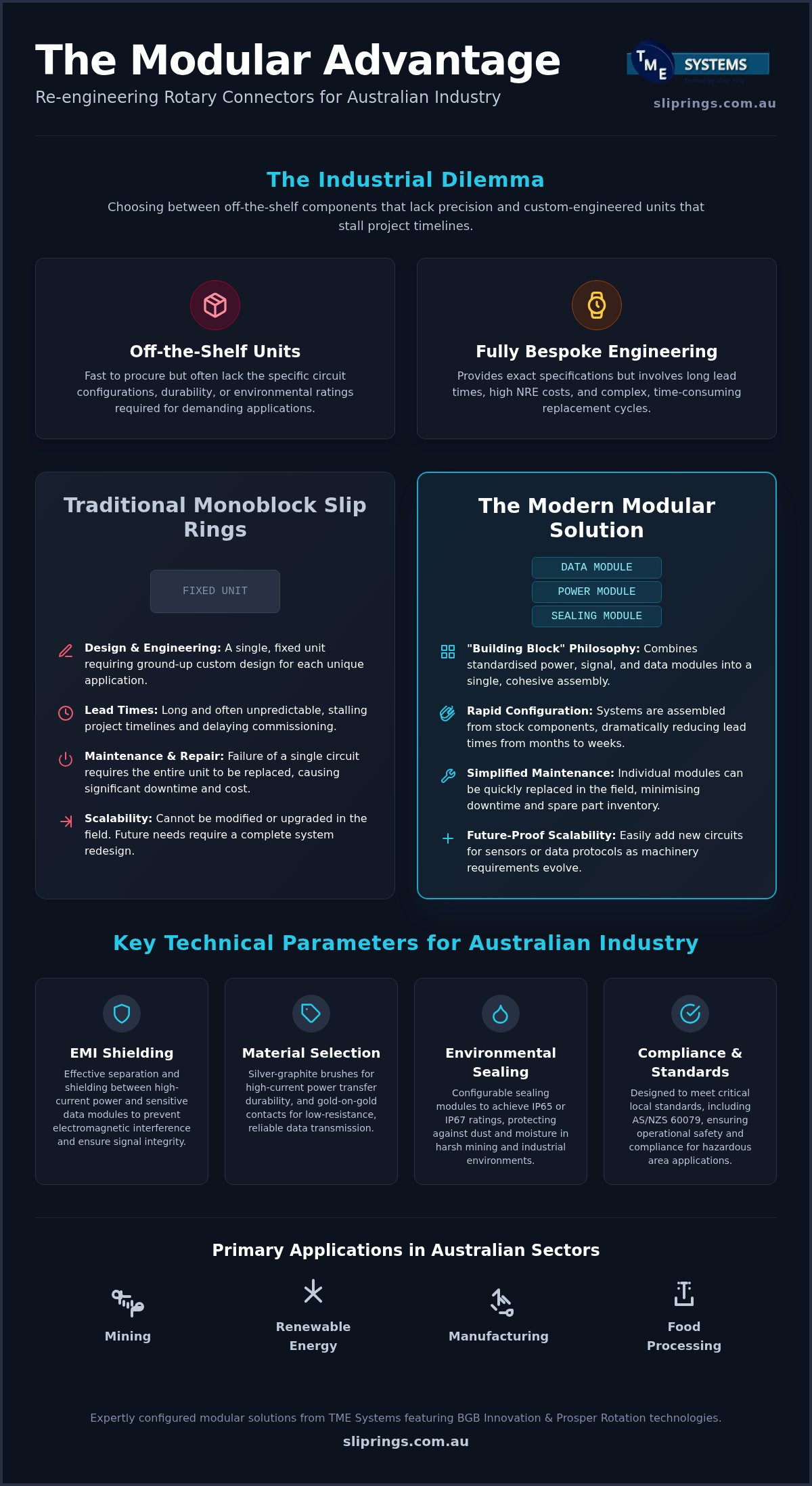
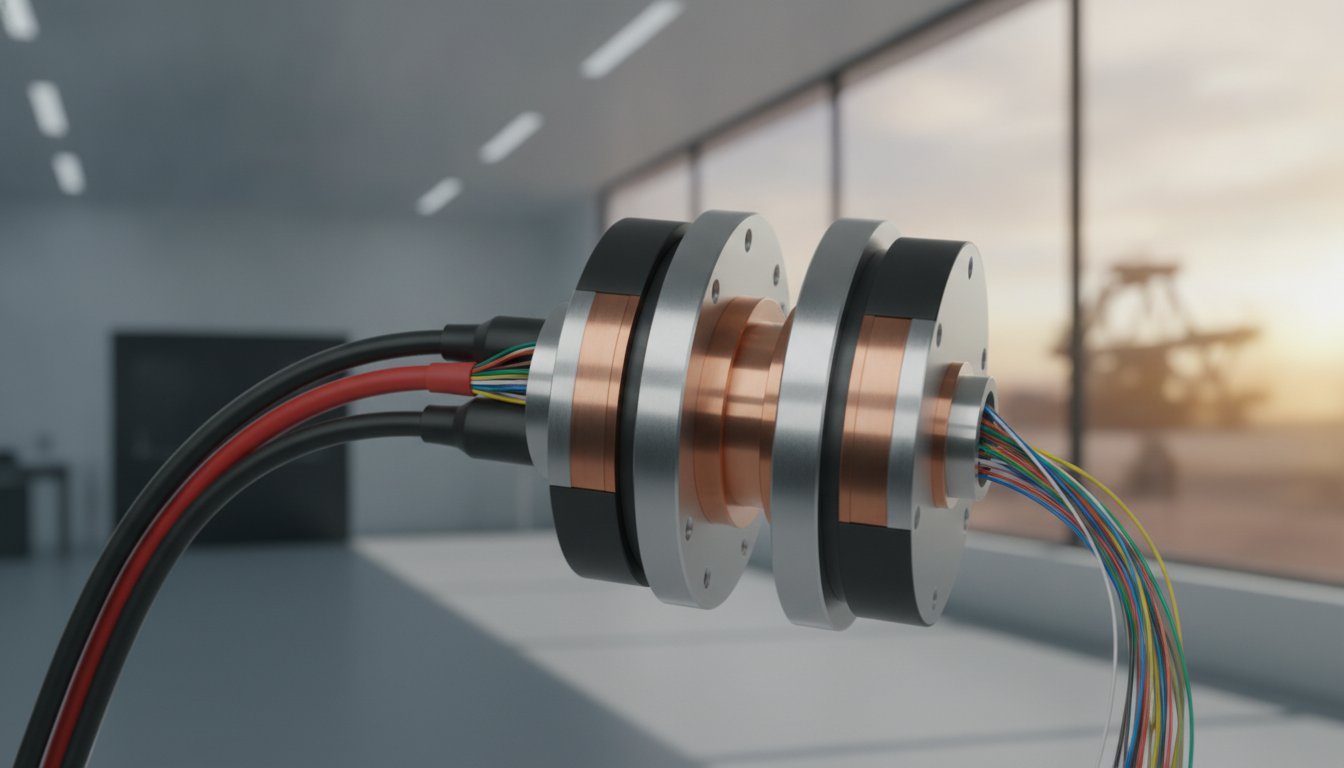
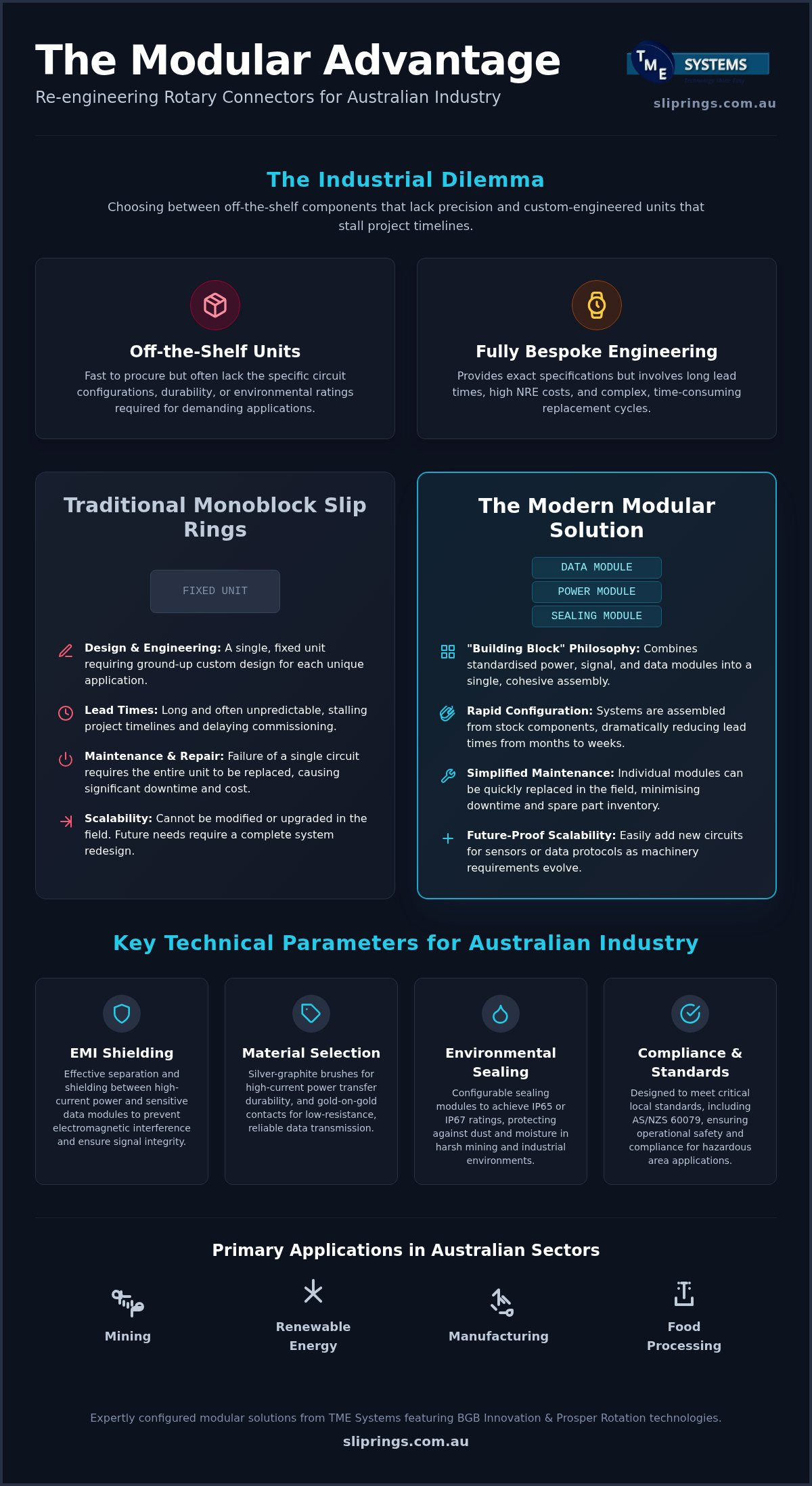
A modular slip ring is an electromechanical device designed with a stackable architecture. Unlike traditional monoblock units, these systems allow engineers to combine specific power and signal circuits into a single assembly. This "building block" philosophy is transforming how engineers approach custom slip ring solutions Australia wide. By using standardised modules, you can eliminate the need for expensive, ground-up custom engineering for every new project. It's a pragmatic approach that prioritises technical precision without the typical delays associated with bespoke manufacturing.
Australian industrial sectors, including mining, renewable energy, and food processing, are increasingly moving toward modularity. This shift is primarily driven by the need for simplified maintenance and future scalability. If your machinery requires an upgrade or a circuit fails, you don't need to replace the entire unit. Instead, you can simply swap or add a module. This capability reduces your spare parts inventory and enables rapid prototyping. It's a strategic move for any facility looking to reduce downtime and improve long-term reliability.
The Core Components of a Modular Assembly
The structural integrity of a modular system relies on robust housings and mounting flanges. These components ensure mechanical stability during rotation. Within these housings, interchangeable ring and brush blocks are selected based on electrical requirements. For instance, precious metal contacts are often chosen for sensitive data, while robust alloys handle high-current power. Environmental resilience is achieved through specific sealing modules. These can be configured to reach IP65 or IP67 ratings, providing essential protection against the dust and moisture common in harsh Australian conditions.
When to Choose Modularity Over Integrated Designs
Modularity is the preferred choice for applications where circuit requirements might evolve. If you anticipate adding sensors or data protocols later, a stackable system allows for field-upgradability without a total system redesign. It's also a critical solution when lead times are tight. Because components are standardised, systems can be assembled and dispatched much faster than fully custom-built alternatives. This is particularly valuable for high-mix, low-volume machinery manufacturing where standardisation helps manage costs. At TME Systems Pty Ltd, we leverage the modular strengths of BGB Innovation Slip Rings and Prosper Rotation Slip Rings to provide these flexible, high-performance solutions.
The Architecture of Modularity: Combining Power, Signal, and Data
The architecture of a modular assembly must account for the physical and electrical interaction between disparate circuit types. When designing custom slip ring solutions Australia wide, the primary challenge is managing electromagnetic interference (EMI). High-voltage power modules generate magnetic fields that can corrupt sensitive data packets in adjacent signal modules. Effective shielding and physical separation are non-negotiable. This engineering approach is often detailed in a modular slip ring system patent, which outlines how individual body sections can be isolated to preserve electrical integrity.
Material selection is equally critical for performance. For high-current power transfer, silver-graphite brushes provide the durability and conductivity needed to handle heavy loads. Conversely, data transmission requires gold-on-gold contacts to ensure low contact resistance and oxidisation immunity. Modular designs also allow for the integration of pneumatic or hydraulic swivels, creating a hybrid rotary union that manages electricity, data, and fluids in a single footprint. When configuring custom slip ring solutions Australia, engineers must consider these protocol requirements to avoid signal degradation. If you're unsure which materials suit your specific load, consulting with a technical specialist can help clarify the requirements.
Power Modules: Handling High Current and Voltage
Heavy machinery often demands modules capable of handling 100A or more. In these high-load scenarios, thermal management becomes a priority because heat build-up in a stacked configuration can degrade insulation. Designers must ensure that the assembly complies with AS/NZS 3000:2018 standards for safety and insulation. Proper spacing between modules and the use of heat-dissipating housings are essential to maintain performance under continuous operation. This pragmatic design prevents premature component failure and ensures the safety of the entire electrical installation.
Signal and Data Modules: Maintaining Integrity
Modern industrial automation relies on Ethernet, Profinet, and CANbus protocols. Maintaining signal integrity in a modular stack requires specific brush geometries and shielding to minimise electrical noise. This is particularly important for low-voltage sensor circuits where even minor interference leads to data loss. Signal integrity in modular systems is primarily defined by stable contact resistance across the entire rotational range, ensuring that the signal remains clear regardless of speed or vibration. By isolating these modules from power circuits, you protect the quality of your control data.
Modular vs. Integrated Slip Rings: Which is Right for Your Machinery?
Deciding between modular and integrated slip rings requires a thorough analysis of total cost of ownership (TCO). While integrated designs offer a compact, monolithic footprint, they often lead to higher long-term costs. If a single circuit fails in a fixed-design ring, the entire unit usually requires replacement. Modular systems allow you to replace individual modules, which significantly lowers maintenance expenses. This flexibility is a core reason why many engineers seeking custom slip ring solutions Australia wide are moving away from traditional integrated models. It's a shift toward a more sustainable and cost-effective maintenance strategy.
Lead times are another critical differentiator. A bespoke, integrated slip ring often involves a 12-week custom engineering cycle, including design approvals and manufacturing from scratch. In contrast, modular systems utilise off-the-shelf components that can be configured and dispatched in a fraction of that time. This speed is vital for Australian projects where project timelines are tight and equipment downtime is expensive. By choosing a modular approach, you gain the benefits of a custom configuration without the typical delays associated with bespoke engineering.
Reliability in High-Vibration Environments
Modular connections are engineered to withstand significant mechanical stress. While monolithic designs are inherently rigid, modular stacks use robust mounting flanges and torque arms to ensure stability. These components prevent rotational forces from damaging the internal electrical contacts. When properly installed, a modular assembly provides the same level of reliability as a single-piece unit but with the added benefit of easier access for inspections. For a deeper look at specifying these units for your project, see our guide on Industrial Slip Rings Australia: The Technical Procurement Reference.
ROI and Maintenance Cycles
Calculating the return on investment for modularity involves looking at downtime costs. The ability to perform a rapid module replacement in the field, rather than waiting for a custom-built unit to arrive from overseas, can save thousands in lost production. Inventory management also becomes more efficient. Instead of stocking dozens of unique slip ring models for different machines, you can stock standardised modules that fit multiple configurations. This approach reduces the risk of prolonged outages during emergency breakdowns. It's a strategic way to manage custom slip ring solutions Australia and ensure your machinery remains operational with minimal overhead.
Specifying Your System: Key Technical Parameters for Australian Industry
Specifying a modular assembly requires a methodical audit of your machine’s operational needs. To secure successful custom slip ring solutions Australia wide, you must first define the total circuit count by categorising requirements into power, signal, and ground. Mixing these within a single stack demands precise electrical separation to prevent cross-talk. You also need to identify the peak current and voltage ratings for power modules, alongside the specific baud rates required for data protocols. Omitting these details at the design stage often leads to signal degradation or thermal issues during peak operation. It's a pragmatic process that ensures the hardware matches the physical and electrical reality of your site.
When preparing your technical brief, ensure you have data points ready for the following parameters:
- Continuous and peak amperage requirements per power circuit.
- Voltage levels (AC or DC) and the potential for electrical surges.
- Exact data protocols, such as EtherCAT, Profinet, or standard Ethernet.
- Available mounting envelope and any central shaft diameter requirements.
Environmental Protection and IP Ratings
The Australian environment presents unique challenges, from harsh, dusty inland environments to high-humidity coastal regions. Selecting the correct sealing module is essential for longevity. While IP65 provides protection against low-pressure water jets and dust ingress, IP67 is necessary for equipment that may face temporary submersion or intensive washdowns. For marine or chemical processing installations, you should specify corrosion-resistant housings to prevent material degradation. These modular seals act as the first line of defence, ensuring the internal contacts remain uncontaminated by external elements.
Mechanical Integration and Speed Ratings
Mechanical constraints such as through-bore diameter and available mounting space dictate the physical base of your system. If your application involves a central rotating shaft, a through-bore modular base is required. Alternatively, capsule-style bases are more suitable for compact, end-of-shaft installations. You must also balance your RPM requirements with the expected contact life. High-speed rotation increases friction and wear on brushes, so selecting modules with specific contact geometries is vital for maintaining performance over millions of revolutions. For a deeper technical dive, refer to our Slip Ring Application Engineering: A Technical Reference for Australian Industry.
If you are ready to define your requirements and need assistance with these parameters, contact our engineering team for a technical consultation.
Procuring Modular Solutions with TME Systems Technical Support
Procuring a rotary connector requires a partner who understands the intersection of mechanical constraints and electrical performance. TME Systems operates as a specialist distributor, bridging the gap between complex manufacturing capabilities and practical Australian site requirements. When sourcing custom slip ring solutions Australia, the selection process involves more than a simple catalogue order. It requires a detailed technical audit to ensure the chosen assembly matches your specific circuit counts and environmental challenges. We provide national supply chain capability and technical consulting from our Ingleburn base, ensuring that Australian industrial sectors have access to global brands with local support.
For modular builds, we leverage the versatile architectures of BGB Innovation and Prosper Rotation. These manufacturers provide the stackable modules needed to combine high-current power with sensitive data protocols. In scenarios where high-speed data or extreme precision is the priority, the specialised technologies from Mercotac and Meridian Laboratory offer the technical edge required for reliable performance. Our role is to help you navigate these options to find the most durable and cost-effective configuration for your machinery.
Expert Consultation for Custom Configurations
A technical audit is the essential first step in any modular project. Our engineering team evaluates your operational data points, including RPM, voltage, and environmental exposure, before recommending a configuration. This consultative approach is particularly valuable for troubleshooting complex rotary connections in regional or remote Australian sites where reliability is paramount. You can initiate a technical request by providing your specific parameters to our team, ensuring the final assembly is engineered for your exact application.
Quality Assurance and Brand Reliability
Using reputable brands ensures that every module within your stack is compatible and manufactured to high tolerances. This reliability is vital for maintaining signal integrity and preventing mechanical failure. By specifying established brands, you also secure long-term support and spare parts availability within Australia. This means expansion modules or replacement brushes remain accessible throughout the machinery's lifecycle, reducing the risk of being stranded with obsolete hardware. For more information on high-precision options, see our Mercotac Distributors Australia: Professional Guide to Liquid Metal Rotary Connectors.
Optimising Your Rotary Connection Strategy
Transitioning to a modular architecture allows your facility to move away from the constraints of long lead times and rigid, integrated designs. By adopting a "building block" approach, you gain the ability to scale power and data circuits as your machinery requirements evolve. This strategy doesn't just reduce immediate downtime; it future-proofs your operations against shifting industrial standards and hardware requirements. It's a pragmatic choice for any engineer looking to balance high performance with long-term field serviceability.
Navigating the complexities of EMI shielding and IP ratings requires a methodical approach to technical specification. Whether you're integrating BGB Innovation, Prosper Rotation, or high-precision Meridian Laboratory systems, the priority remains technical accuracy and environmental resilience. For those seeking custom slip ring solutions Australia wide, local expertise is the most reliable path to a successful installation. Our national distribution network ensures you have access to the components and support you need, precisely when you need them.
Consult with our technical team for your modular slip ring configuration to ensure your project benefits from specialist selection assistance and national Australian support. We're ready to help you achieve a reliable, high-performance rotary connection for your specific industrial application.
Frequently Asked Questions
What is the main advantage of a modular slip ring over a standard one?
The primary advantage is the ability to configure specific circuits without the long lead times of bespoke engineering. Standard slip rings are integrated units that require total replacement if a single circuit fails. Modular systems use a "building block" architecture, allowing you to replace or upgrade individual power or signal modules. This flexibility makes them ideal for custom slip ring solutions Australia wide, where machinery requirements often evolve over time.
Can I mix high-voltage power and sensitive data signals in the same modular slip ring?
Yes, you can combine these in a single stack by using isolated modules and proper shielding. The modular design provides physical separation between high-current power blocks and sensitive data circuits, which is essential for managing electromagnetic interference (EMI). Our technical application consulting helps determine the correct spacing and shielding required to maintain signal integrity for protocols like Ethernet or Profinet while transferring significant electrical loads through the same assembly.
How many circuits can I typically stack in a modular system?
The total circuit count depends on the mechanical constraints of your application, such as the available length and the torque capacity of the mounting system. Most modular systems from brands like BGB Innovation or Prosper Rotation allow for dozens of circuits to be stacked. However, as the assembly grows, mechanical stability becomes a priority. We assist in calculating the physical limits to ensure the stack remains reliable under continuous rotation.
Are modular slip rings suitable for high-speed applications above 1000 RPM?
Modular systems can be configured for high-speed operation, though standard configurations are often rated for lower RPMs. For applications exceeding 1000 RPM, we typically specify specialised contact materials or high-precision modules from Mercotac or Meridian Laboratory. These components are engineered to reduce friction and heat build-up. It's vital to consult with our engineering team to ensure the chosen modular base and brush blocks are compatible with your specific speed requirements.
What IP ratings are available for modular slip ring systems in Australia?
Modular slip ring systems are available with ratings from IP65 for dust-tight protection up to IP67 for temporary submersion. These ratings comply with AS/NZS 60529:2025 standards, ensuring equipment remains protected in harsh Australian conditions. For mining or marine environments, we specify sealing modules that prevent moisture and abrasive particles from contaminating the internal contacts. This level of protection is essential for maintaining electrical performance in washdown or outdoor installations.
How do I maintain a modular slip ring to ensure maximum service life?
Regular inspection of the brush blocks and rings is the most effective way to extend service life. You should check for debris build-up and ensure that the torque arms are properly tensioned to prevent vibration damage. Because these systems are modular, you can replace individual worn modules without overhauling the entire unit. Following a methodical maintenance schedule based on your specific RPM and environmental exposure will significantly reduce the risk of unexpected downtime.
Can modular slip rings be used in hazardous or explosion-proof zones?
Yes, specific modular configurations are designed for hazardous environments and comply with the AS/NZS 60079 series standards. These units often feature explosion-proof housings or IECEx certification, making them suitable for Australian mining and oil and gas sites. When seeking custom slip ring solutions Australia for hazardous zones, it's critical to specify the exact gas or dust group requirements during the technical consulting phase to ensure total compliance and safety.
What is the typical lead time for a configured modular slip ring from TME Systems?
Configured modular systems generally have shorter lead times than fully bespoke, integrated units. Because TME Systems utilises standardised components from our national supply chain in Ingleburn, many configurations can be assembled and dispatched relatively quickly. While lead times vary based on the complexity of the circuit count and specific sealing requirements, the modular approach avoids the 12-week design cycles typical of traditional custom engineering. Contact us for a project-specific estimate.