An intermittent signal error in a high-speed rotary interface is rarely a random glitch; it's often the final warning before a catastrophic hardware failure. In the demanding context of Australian industrial environments, these disruptions frequently stem from the subtle degradation of internal contact surfaces. You likely recognise the frustration of tracing a "ghost" in the machine, where unplanned production downtime occurs because of a millisecond drop in electrical continuity. Identifying the early signs of a failing rotary connector is the only reliable method to maintain signal integrity and avoid the significant costs associated with unexpected component failure.
This article provides a pragmatic diagnostic path to help you confirm whether your hardware is reaching its end of life. We'll move through a professional troubleshooting checklist that covers everything from electrical resistance fluctuations to physical heat signatures. By the end of this guide, you'll have the technical knowledge to decide whether to repair or replace your components, alongside strategies to prevent premature wear in future installations. We'll also examine how updated standards, such as IEC 61076-2:2026, are shaping the reliability expectations for high-power industrial connectors in automated systems.
Key Takeaways
- Learn to identify electrical resistance fluctuations and signal noise that indicate internal contact degradation before a total system shutdown occurs.
- Recognise the physical signs of a failing rotary connector, such as excessive heat generation and unusual mechanical noise, to prevent damage to surrounding equipment.
- Understand how to use specialised tools like milliohmmeters and oscilloscopes to perform dynamic resistance tests and visualise signal integrity.
- Establish a preventative maintenance schedule focused on mounting alignment and operational hours to extend the service life of your rotating interfaces.
- Determine whether your application requires a direct replacement or a higher-specification upgrade to handle specific environmental or electrical loads.
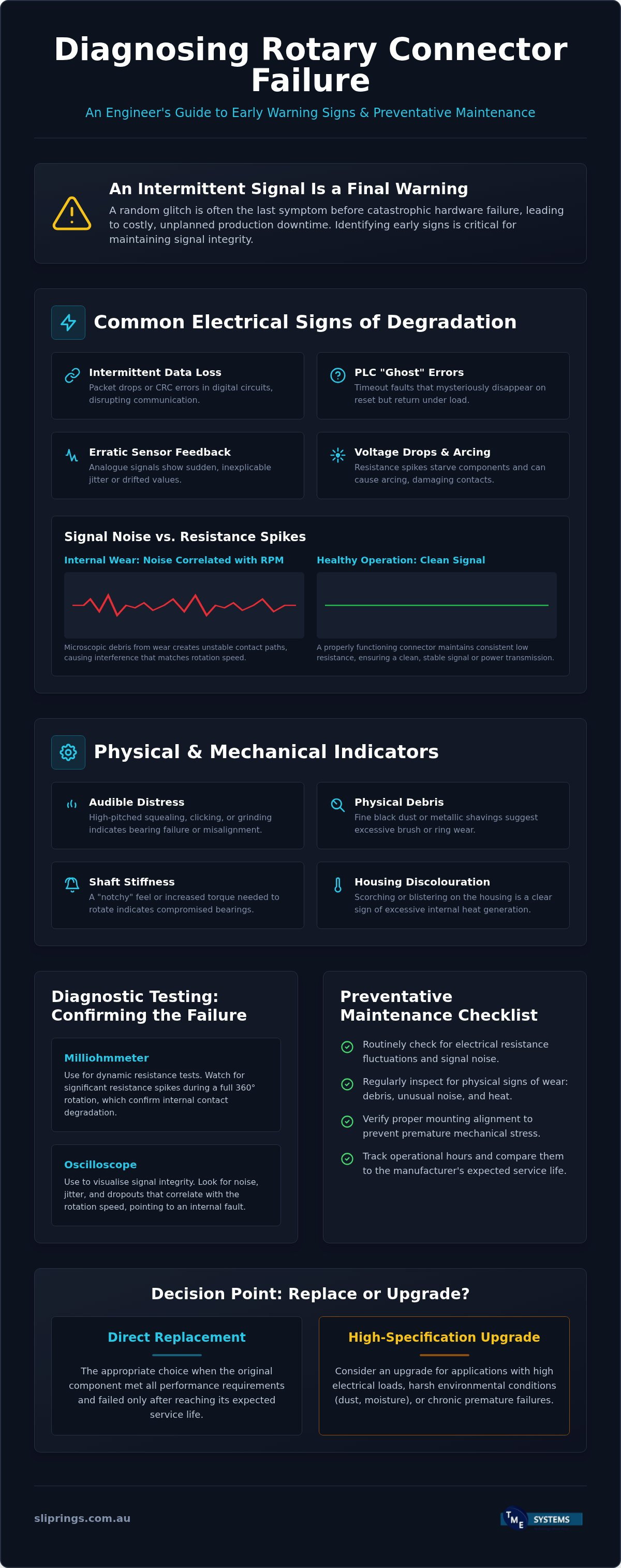
Common Electrical Signs of a Failing Rotary Connector
Electrical degradation in a rotating interface often begins long before a complete circuit break occurs. Because a Slip ring relies on physical contact to transmit power or data, any wear on the conductive surfaces directly impacts performance. One of the most reliable signs of a failing rotary connector is a gradual increase in electrical resistance. This isn't always constant; it often presents as spikes during specific points of the rotation cycle. Identifying these issues early prevents the "ghost" errors that plague automated production lines.
Operators should look for these specific electrical red flags during routine diagnostics:
- Intermittent data loss: Digital circuits may experience packet drops or cyclic redundancy check (CRC) errors that disrupt communication.
- PLC "ghost" errors: Programmable Logic Controllers might report timeout faults that disappear upon reset but return during high-speed operation.
- Erratic sensor feedback: Analogue signals, such as those from thermocouples or strain gauges, might show sudden, inexplicable jitter or drifted values.
- Sudden voltage drops: A measurable decrease in voltage across the connector can starve downstream components, leading to sluggish motor performance or sensor instability.
Identifying Signal Noise and Interference
In high-speed data applications, signal noise manifests as "snow" in video feeds or corrupted bits in industrial Ethernet. While external electromagnetic interference (EMI) is often blamed, internal connector degradation is a frequent culprit. As contact materials wear down, they create microscopic debris. This debris increases electrical noise by creating unstable contact paths. Differentiating between the two requires checking if the noise correlates with the rotation speed. If the interference patterns match the RPM, the issue is likely internal wear rather than external shielding failure. High-quality alternatives like Mercotac Slip Rings use liquid metal technology to eliminate this debris-related noise entirely.
Voltage Drops and Resistance Spikes
Increased resistance is a definitive precursor to total connector failure. When resistance rises, it creates a voltage drop that starves downstream components of power. Monitoring voltage consistency during a full 360-degree rotation is essential. If you notice a drop of more than a few millivolts at specific angles, the internal brush or ring surface is likely pitted or contaminated. In high-current power applications, these resistance spikes lead to "arcing." This process generates intense localised heat, which further damages the conductive path and can eventually weld the internal components together. If your current hardware shows chronic arcing, upgrading to robust solutions like BGB Innovation Slip Rings can provide the environmental resilience needed for harsh Australian conditions. Recognising these signs of a failing rotary connector allows for scheduled replacement rather than a reactive shutdown.
Physical and Mechanical Indicators of Deterioration
While electrical faults are often invisible to the naked eye, physical symptoms provide tangible evidence of component fatigue. Identifying these signs of a failing rotary connector early can prevent secondary damage to drive motors and connected machinery. Mechanical wear is often a progressive process. It begins with microscopic surface changes and culminates in total structural failure. In the harsh operating conditions found in Australian mining and manufacturing plants, environmental contaminants often accelerate this process.
Maintainers should regularly inspect for the following mechanical red flags:
- Audible distress: High-pitched squealing, clicking, or grinding sounds usually indicate bearing failure or internal contact misalignment.
- Physical debris: The presence of fine black dust or metallic shavings around the rotation point suggests excessive brush wear or ring galling.
- Shaft stiffness: If the connector feels "notchy" or requires increased torque to rotate manually, the internal bearings are likely compromised.
- Housing discolouration: Scorching or paint blistering on the connector body is a definitive sign of extreme internal temperatures.
Thermal Issues and Overheating
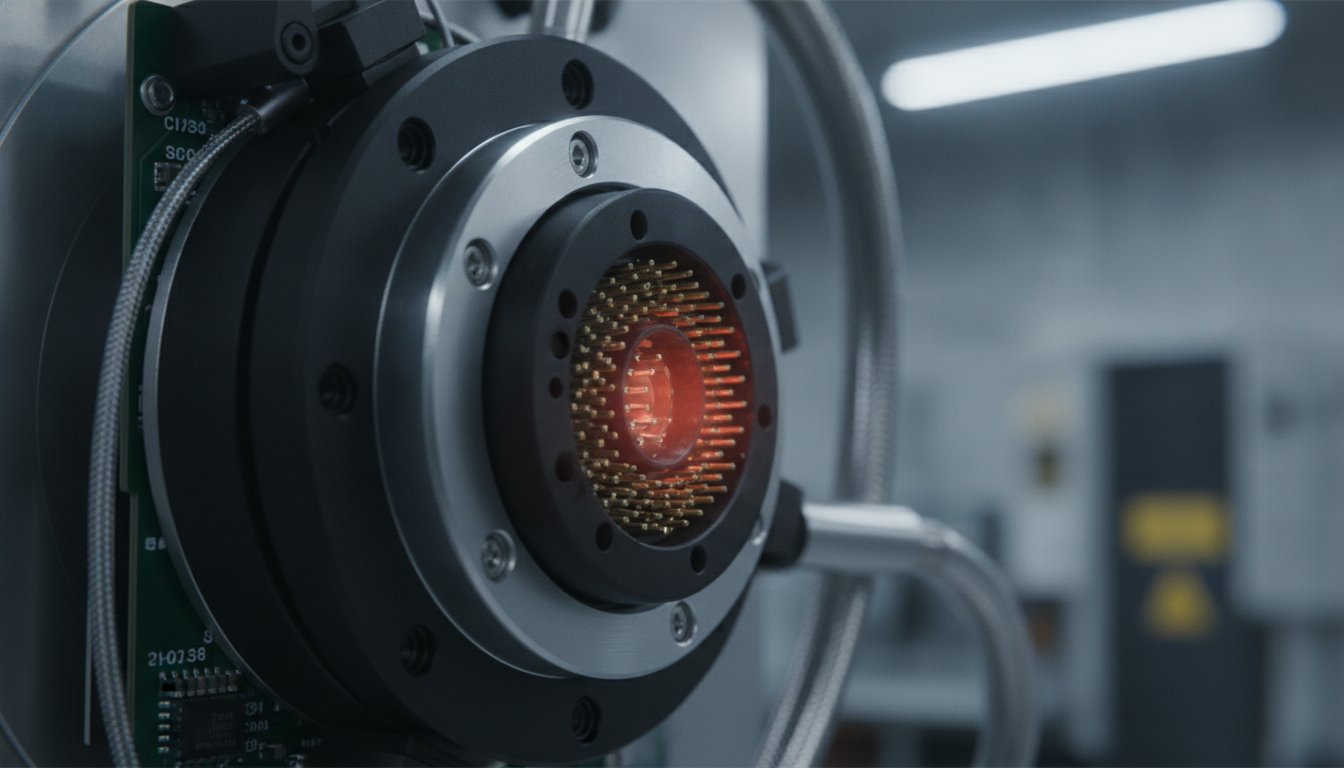
Heat is one of the most reliable indicators of internal distress. Using infrared thermography allows technicians to detect hotspots without interrupting production. It's essential to distinguish between a normal operational temperature rise and a fault condition. Most high-quality connectors are designed to operate within specific thermal limits, but excessive heat usually points to either high contact resistance or friction from a failing bearing. The IEC 60034-1:2026 standard provides updated guidelines on the rating and performance of rotating electrical machines, including thermal tolerances. If the temperature at the connector housing exceeds the ambient environment by a margin not specified in the technical manual, it's a clear signal that the unit is nearing the end of its service life.
Vibration and Mechanical Instability
Mechanical instability often stems from poor mounting practices. If a connector is subjected to unintended radial or axial loading, the internal rings and brushes will wear unevenly. This misalignment leads to vibration that can be felt through the machine frame. Over time, this vibration causes bearing fatigue, especially in high-RPM applications. Technicians should check for "play" in the assembly; any noticeable movement when rocking the shaft indicates that the internal supports have reached their limit. If you're observing these mechanical symptoms, seeking technical application consulting can help identify whether the issue is a mounting fault or a fundamental component failure. Addressing these signs of a failing rotary connector before they lead to a seized shaft is critical for maintaining plant uptime.
Diagnostic Testing: Confirming the Failure
Confirming the signs of a failing rotary connector requires a transition from qualitative observation to empirical data. While physical symptoms like heat or noise provide clues, diagnostic testing validates the internal state of the conductive paths. A standard multimeter is frequently inadequate for this task because it cannot accurately measure the milliohm-level resistance found in high-quality rotating interfaces. Instead, technical managers should utilise a dedicated milliohmmeter and, for data-sensitive applications, an oscilloscope.
Dynamic Resistance Measurements
A dynamic resistance test evaluates the electrical continuity while the connector is in motion. This is critical because a connector might show perfect continuity when stationary but fail under operational rotation. To perform this test, disconnect the power and connect the milliohmmeter across the rotating circuit. Rotate the shaft slowly by hand through a full 360-degree cycle. For most industrial slip rings, the resistance should remain stable, typically below 10 milliohms. Significant spikes or "dead spots" at specific angular positions indicate pitted rings or uneven brush contact. For deeper insight into these technical parameters, refer to our guide on Slip Ring Application Engineering.
In digital or high-frequency circuits, visualising signal noise with an oscilloscope is the most effective diagnostic method. By monitoring the signal while the unit rotates at its rated RPM, you can identify high-frequency interference that a milliohmmeter might miss. If the waveform shows erratic "grass" or voltage spikes that synchronise with the rotation, the contact surfaces are likely degraded or contaminated. This testing confirms whether the signs of a failing rotary connector are due to surface wear or a complete circuit break.
Visual Inspection Protocols
Where the design allows for internal access, inspect the contact surfaces for signs of oxidation or pitting. Dark streaks or uneven wear patterns on the rings suggest that the brushes are no longer tracking correctly. For IP-rated connectors used in washdown or dusty environments, check the integrity of the seals. A breached seal allows ingress, which rapidly accelerates corrosion. In specialised hardware like Mercotac Slip Rings, look specifically for any evidence of liquid metal leakage around the rotating interface. Any visible fluid or residue on the housing is a definitive indicator that the internal containment has been compromised, requiring immediate replacement to protect the surrounding equipment.
A Preventative Maintenance Checklist for Rotary Connectors
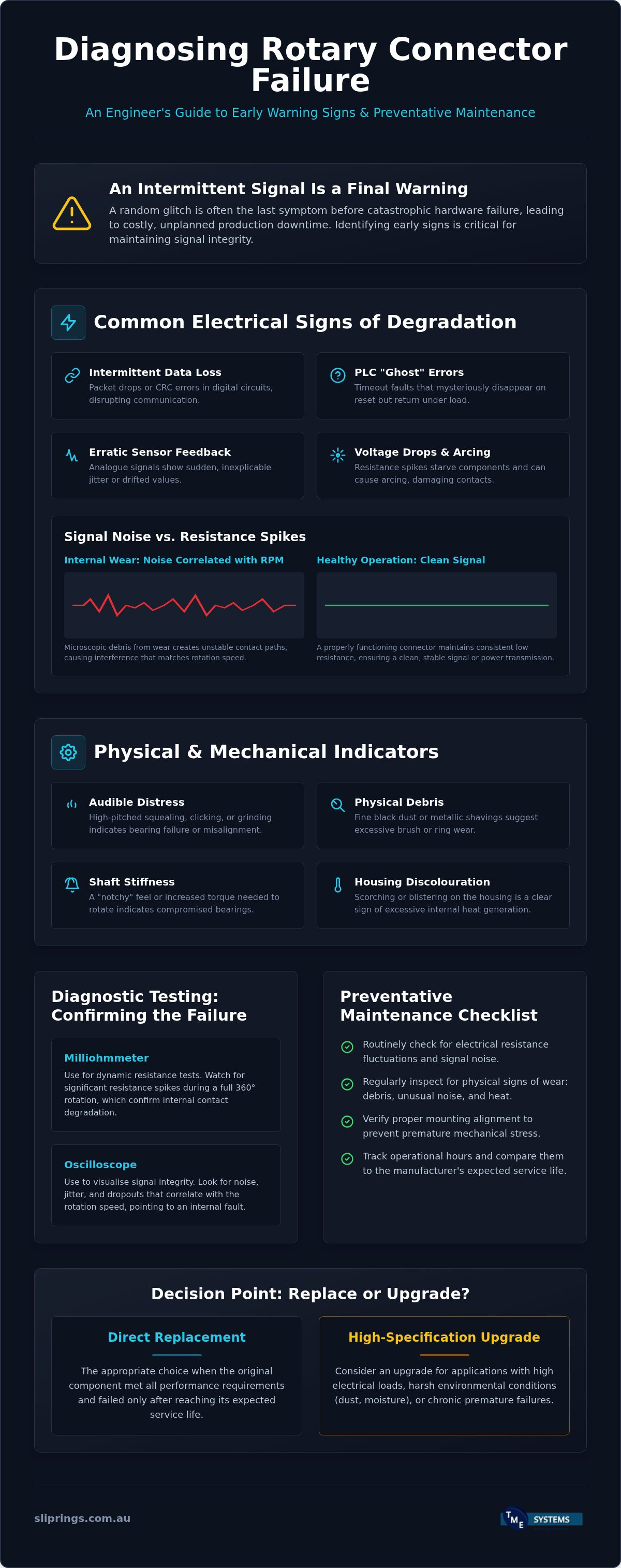
Proactive maintenance is the most effective strategy for managing the lifecycle of rotating hardware. By identifying the signs of a failing rotary connector before they result in a total system shutdown, maintenance teams can organise planned replacements during scheduled outages. A structured maintenance programme should be based on the specific operational hours and environmental stresses of each unique application. Regular auditing ensures that the hardware continues to operate within its designed parameters.
Your preventative maintenance schedule should include the following critical checks:
- Operational Hour Audit: Schedule detailed inspections every 2,000 to 5,000 hours, depending on the severity of the operating environment.
- Electrical Load Verification: Ensure the actual current and voltage do not exceed 80% of the connector's rated capacity to provide a safety margin against thermal spikes.
- RPM Monitoring: Confirm that the rotation speed remains within the manufacturer’s specification; exceeding these limits causes rapid brush wear and bearing fatigue.
- Seal Integrity: Inspect IP-rated seals for brittleness, cracking, or signs of ingress, particularly in washdown or high-dust zones.
Alignment and Mounting Verification
Rigidly coupling a rotary connector to a drive shaft is a frequent cause of premature failure. Even minor misalignments create radial loads that internal bearings are not designed to handle. A "flexible" mounting arrangement, where the connector body is allowed to float slightly while the shaft is driven, is almost always preferred. Technicians should use a dial indicator to check for shaft runout. Any deviation beyond the manufacturer's tolerances will accelerate the appearance of signs of a failing rotary connector. For heavy-duty applications such as wind turbines or large-scale pivots, BGB Innovation Slip Rings Australia offers robust mounting designs specifically engineered to tolerate these industrial stresses.
Environmental Protection and Sealing
Environmental ingress is a primary cause of contact corrosion in Australian mining and marine sectors. Maintaining the integrity of IP-rated seals is vital for long-term reliability. For traditional brush-style units, conductive dust must be regularly removed using dry, low-pressure air to prevent short-circuiting between rings. In high-contamination areas where traditional cleaning is insufficient, it is often more cost-effective to upgrade to a Mercotac liquid metal connector. These units are hermetically sealed, which eliminates the maintenance requirements associated with brush wear and dust accumulation. If your current maintenance regime is failing to prevent downtime, contact our team for technical application consulting to review your hardware specifications and mounting configurations.
When to Replace: Selecting the Correct Replacement
Once the signs of a failing rotary connector have been confirmed through diagnostic testing, the objective shifts to selecting a replacement that prevents a recurrence of the fault. It's vital to assess whether the failure resulted from reaching the natural end of the component's service life or from an "incorrect specification" for the current application. Industrial processes often evolve; a connector that was suitable five years ago may now be operating at the edge of its thermal or electrical limits due to increased duty cycles or higher data throughput requirements.
Engineers should audit the following parameters before procurement:
- Electrical Load: Do the current peak Amps and Voltage still align with the original connector ratings?
- Rotational Speed: Has the machine's RPM been increased since the last installation, potentially exceeding the mechanical limits of the bearing?
- Environmental Stressors: Are there new factors, such as increased moisture, chemical exposure, or vibration, that necessitate a higher IP rating?
Upgrading for Better Reliability
If your existing hardware has failed prematurely due to signal noise or brush wear, simply replacing it with an identical unit may lead to another breakdown. Upgrading to advanced technologies can significantly extend maintenance intervals. For instance, comparing traditional carbon brush slip rings with Meridian Laboratory or Mercotac options reveals substantial differences in longevity. Meridian Laboratory offers mercury-free liquid metal connectors that provide exceptional signal integrity and near-zero electrical noise, even in high-speed applications. These units are often the preferred choice for sensitive data transmission where traditional brush-style connectors show early signs of a failing rotary connector.
Technical Consultation and Procurement
Selecting the correct replacement requires a thorough data set to ensure compatibility and performance. When requesting a quote, providing specific data points is essential for an accurate technical match. You should be prepared to provide the required circuit count, maximum operating RPM, mounting configuration, and any specific environmental constraints. Utilising Australian-based technical support ensures that your procurement process is backed by experts who understand the local industrial landscape. If you need assistance in navigating these variables, you can contact TME Systems for expert help selecting your next rotary connector. Our team acts as a technical partner to help you move from a failing component to a robust, long-term solution.
Securing Long-Term Rotational Reliability
Maintaining the integrity of industrial equipment requires a shift from reactive repairs to predictive maintenance. By mastering the diagnostic techniques discussed, you can identify the signs of a failing rotary connector before they escalate into costly system failures. Success in high-speed or high-power applications often depends on selecting hardware that matches your specific environmental and electrical variables. Simply replacing a failed unit with the same model may lead to chronic issues if the original specification was inadequate for your operational needs.
TME Systems serves as a specialised partner for the Australian industry, providing technical application consulting to ensure your hardware choices are grounded in engineering reality. As an authorised distributor for Mercotac, BGB Innovation, and Meridian Laboratory, we offer access to the most reliable liquid metal and brush-style technologies available. Whether you're troubleshooting an existing fault or designing a new installation, our team is ready to assist. Browse our range of high-performance rotary connectors or contact us for technical advice to secure your plant's uptime. Taking a proactive approach today ensures a more stable production environment tomorrow.
Frequently Asked Questions
What is the most common cause of rotary connector failure?
The most common causes are internal contact wear and environmental ingress. In traditional brush units, friction eventually degrades the conductive surfaces, leading to debris accumulation. In Australian industrial settings, dust or moisture often bypasses seals, causing corrosion. This degradation manifests as the physical signs of a failing rotary connector, such as increased resistance or signal jitter, eventually leading to a complete circuit failure.
How can I tell if signal noise is coming from the rotary connector?
You can identify the source by correlating the interference with the machine's rotation. If the signal noise fluctuates or spikes in direct synchronisation with the RPM, the connector is the likely culprit. Using an oscilloscope allows you to visualise these patterns. External EMI usually remains constant regardless of rotation, whereas internal surface degradation creates specific noisy spots in the 360-degree cycle as the brushes pass over pitted or contaminated areas.
Can a failing slip ring cause a fire in industrial machinery?
Yes, a failing unit can pose a significant fire risk through localised overheating and electrical arcing. When internal resistance increases, the connector body generates excessive thermal energy. In high-current applications, this can ignite nearby contaminants like grease or hydraulic fluid. Regular thermal imaging is a vital safety measure to detect these hotspots before the housing reaches critical temperatures, ensuring the safety of the broader machine assembly.
How long should a high-quality rotary connector typically last?
Service life varies significantly based on technology and operating conditions. Traditional brush-style connectors may require maintenance or replacement after several million revolutions. Conversely, high-performance liquid metal units, such as those from Mercotac or Meridian Laboratory, are designed for hundreds of millions of cycles without degradation. Factors like rotational speed, ambient temperature, and electrical load will ultimately determine the actual lifespan in your specific industrial application.
Is it possible to repair a Mercotac or liquid metal rotary connector?
No, Mercotac and other liquid metal rotary connectors are hermetically sealed factory units and cannot be repaired. Any attempt to open the housing will compromise the containment of the conductive fluid and void the warranty. When these units reach the end of their service life or show signs of leakage, the only safe and reliable course of action is a complete component replacement to maintain system integrity.
What happens if I exceed the RPM rating of my rotary connector?
Exceeding the rated RPM causes rapid mechanical degradation and excessive heat generation. Higher speeds increase the friction between brushes and rings, leading to accelerated surface wear and debris buildup. In liquid metal units, excessive speed can cause the conductive fluid to displace, resulting in signal loss or internal short-circuiting. It also places undue stress on the bearings, which can lead to a total mechanical seizure of the rotating shaft.
Why is my rotary connector getting hot during operation?
Excessive heat is typically caused by high electrical resistance or mechanical friction. If the internal contacts are worn or contaminated, they generate thermal energy as current passes through the interface. Alternatively, failing bearings often produce heat due to lack of lubrication or misalignment. Monitoring these signs of a failing rotary connector with an infrared thermometer helps distinguish between normal operational temperature rises and a critical fault requiring immediate intervention.
Does vibration always lead to rotary connector failure?
While not an immediate cause of failure, persistent vibration is a leading contributor to premature wear. High vibration levels can cause the brushes to bounce on the ring surface, leading to micro-arcing and signal instability. It also accelerates bearing fatigue and can loosen mounting hardware, resulting in shaft misalignment. Ensuring a stable, vibration-dampened installation is essential for achieving the maximum rated service life of any industrial rotary interface.