A slip ring failure is rarely an isolated mechanical event; it is often the final symptom of a systemic misalignment that will likely compromise your next component if the root cause remains unaddressed. When production grinds to a halt due to intermittent signal noise or total power loss, a comprehensive slip ring replacement guide becomes more than a maintenance manual. It serves as a critical technical audit for your entire rotary interface. You've likely experienced the frustration of costly, unplanned downtime and the uncertainty of whether a replacement unit will maintain electrical integrity under harsh industrial loads.
This guide provides a professional engineering framework to diagnose failures, conduct precise root cause analysis, and execute a replacement programme that ensures 100% mechanical and electrical compatibility. We will examine common failure modes, cross-reference critical specifications for Mercotac and BGB Innovation units, and outline the steps to optimise the operational lifespan of your new hardware. By following this methodical approach, you can minimise downtime with a fast diagnosis while ensuring your installation complies with current AS/NZS 3000 standards.
Key Takeaways
- Recognise signal noise as a critical early warning sign of electrical degradation to avoid unplanned machinery downtime.
- Execute a thorough failure analysis by investigating environmental factors, such as high humidity in northern Australia, and checking for electrical overloading.
- Utilise this slip ring replacement guide to follow a structured procedure that prioritises LOTO safety and accurate circuit mapping.
- Determine the viability of repairs versus replacement, particularly for sealed units like Mercotac which necessitate a complete unit exchange.
- Optimise your system by consulting with engineering specialists to explore up-speccing options like liquid metal for superior signal clarity.
Identifying Industrial Slip Ring Failure Modes
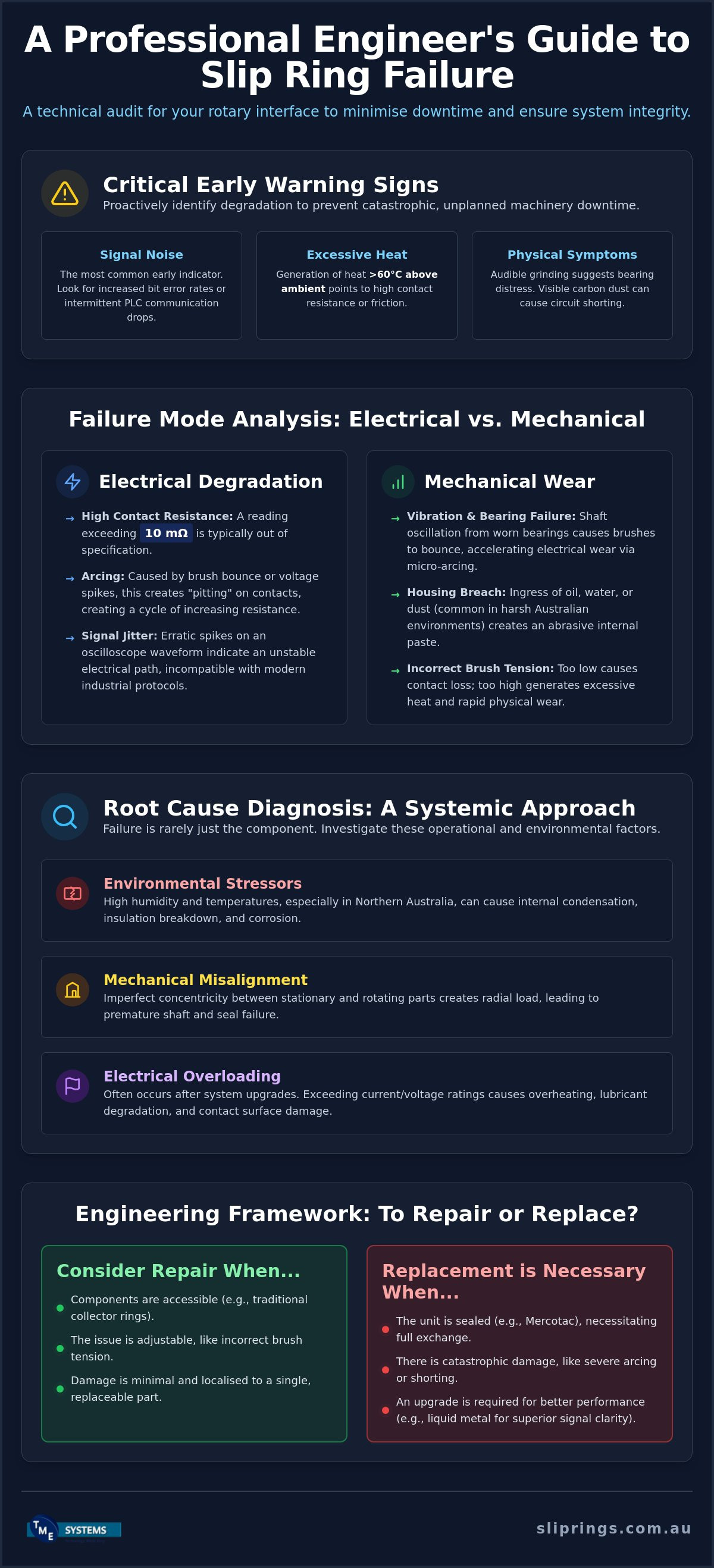
Industrial slip ring failure analysis is the systematic investigation of electrical and mechanical degradation within a rotary interface. Rather than treating a component swap as a routine task, engineers should view it as a forensic opportunity to identify why a unit reached its end of life. Understanding these failure modes is a prerequisite for any effective slip ring replacement guide, as it prevents the same stressors from damaging the new installation. Signal noise represents the most common early warning sign, particularly in data-sensitive applications where bit error rates or PLC communication drops indicate a compromised contact surface.
Physical symptoms often manifest alongside electrical issues. Excessive heat generation, often exceeding 60°C above ambient temperatures, typically points to high contact resistance or friction. Maintenance teams should also listen for audible grinding, which suggests internal bearing distress, and look for visible carbon dust accumulation. This dust is conductive and can lead to catastrophic circuit shorting if it migrates across the insulation barriers of the rotary assembly. Before beginning a replacement, it's helpful to understand the basics of What is a Slip Ring? and how its specific composition influences these degradation patterns.
Electrical Performance Degradation
Measuring contact resistance is the most reliable method for quantifying electrical health. For most industrial units, a reading exceeding 10 milliohms is considered out of spec, though this varies by the specific technology used. High resistance often stems from arcing, which occurs when a brush loses contact or the voltage exceeds the dielectric strength of the air gap. This arcing pits precious metal or carbon brush contacts, creating a cycle of increasing resistance. Using an oscilloscope allows technicians to visualise signal jitter. If the waveform shows erratic spikes during rotation, the rotary interface is no longer providing the stable path required for modern industrial protocols.
Mechanical Wear and Physical Indicators
Vibration is a primary driver of premature failure, often originating from bearing wear. When a bearing loses its precision, the resulting shaft oscillation causes the brushes to bounce, accelerating electrical wear through micro-arcing. In harsh Australian environments, housing breaches are a constant risk. Technicians must check for the ingress of oil, water, or fine dust, which can turn into an abrasive paste inside the unit. In traditional collector ring systems, assessing brush tension is vital. If the tension is too low, contact is lost; if it's too high, the friction generates excessive heat and rapid physical wear, shortening the maintenance interval significantly. Integrating these observations into your slip ring replacement guide ensures the root cause is eliminated before the new unit is commissioned.
Conductive Failure Analysis: Root Cause Diagnosis
Root cause diagnosis moves beyond identifying a fault to understanding the environmental and operational variables that triggered it. A thorough slip ring replacement guide must account for these factors to ensure the new unit doesn't suffer the same fate. Engineers need to distinguish between a natural end-of-life event and "infant mortality," which is frequently caused by installation errors or incorrect specification for the application. If a unit fails within its first few months of service, the issue is rarely wear; it's usually a fundamental mismatch between the hardware and its operating conditions.
Environmental stressors play a significant role in the Australian industrial sector. In Northern Australia, high ambient temperatures combined with extreme humidity can lead to condensation within the housing, causing insulation breakdown or accelerated corrosion. Research into Industrial Slip Ring Failure Modes highlights how these external variables can drastically accelerate material degradation. Mechanical misalignment is another frequent culprit. If the coupling between the stationary and rotating components isn't perfectly concentric, the resulting radial load leads to premature shaft and seal failure, often accompanied by an increase in audible vibration.
Electrical overloading frequently occurs when systems are upgraded without reassessing the rotary interface. If the current or voltage exceeds the original rating, the resulting heat can soften contact surfaces and degrade lubricants. Continuous 24/7 duty cycles further strain heat dissipation, especially in enclosed cabinets. Voltage spikes or surge events leave distinct "pitting" marks on the conductive rings, which increases electrical noise and creates a cycle of worsening contact quality. If you're unsure whether your current unit is correctly specified for your environment, seeking technical application consulting can prevent repeat failures.
Environmental and Chemical Factors
Coastal processing plants face unique challenges where salt-laden air acts as a catalyst for galvanic corrosion. This makes the selection of robust components like BGB Innovation slip rings essential, as they are engineered to withstand the corrosive atmospheres of marine and wind energy sectors. In mining and quarrying, dust ingress is the primary threat. High IP-rated sealing is mandatory to prevent abrasive particles from entering the contact chamber and turning lubricants into a grinding paste. Chemical compatibility also matters; using the wrong cleaning agent can chemically attack the precious metal or carbon contacts, leading to rapid surface oxidation.
Electrical and Operational Stress
Exceeding the design limits of a unit is a common cause of premature failure in high-speed manufacturing. Rated speed is the maximum continuous RPM a unit can sustain without exceeding its thermal limits or causing brush bounce, acting as the primary boundary for managing frictional wear. When these limits are pushed, the increased friction generates heat that cannot be dissipated, leading to thermal expansion and potential mechanical seizure. Documenting the actual duty cycle versus the manufacturer's specification is a vital step in any slip ring replacement guide to ensure the new component is fit for purpose.
To Repair or Replace? An Engineering Framework
Deciding whether to refurbish an existing component or invest in a new unit is a pivotal moment in any slip ring replacement guide. This decision shouldn't be based on the purchase price of the hardware alone. Engineers must conduct a rigorous cost-benefit analysis that accounts for the labour costs of a rebuild, the potential for repeat failure, and the financial impact of extended machinery downtime. In critical systems where a secondary fault could lead to catastrophic production losses, the risk associated with a "partial repair" often outweighs the savings of avoiding a full replacement.
Technology constraints frequently dictate the path forward. For instance, Mercotac slip rings are hermetically sealed, maintenance-free units. Their design prevents internal access, meaning any sign of degradation or electrical failure necessitates a full unit replacement. Attempting to open these units compromises their integrity and safety. Conversely, lead times often serve as the final deciding factor for Australian operations. When a replacement unit is available from local stock, the speed of swapping the component usually provides a better return on investment than waiting weeks for a factory refurbishment or attempting a complex on-site rebuild.
When Repair is Viable
Repairing a rotary interface is typically viable for large-diameter collector rings used in heavy industry. These systems allow for routine brush replacement and ring resurfacing protocols that can extend the service life without a total overhaul. Cleaning and re-lubricating open-style units is also effective if performed in controlled factory environments where contaminant ingress is minimised. Modular systems, such as those from Prosper Rotation, offer a middle ground. Their design allows technicians to replace specific faulty channels or modular segments while retaining the primary housing and shaft assembly, provided the mechanical core remains sound.
When Full Replacement is Mandatory
A full replacement becomes mandatory when the core mechanical or insulation properties of the unit are compromised. Internal bearing failure in high-speed Meridian Laboratory units is a prime example; once the precision races are damaged, the resulting vibration will rapidly destroy any new electrical contacts. Safety also dictates replacement in cases of severe housing damage or internal insulation breakdown, where the risk of a high-voltage short circuit is present. Furthermore, any evidence of liquid metal leakage or oxidation in mercury-wetted connectors requires immediate decommissioning and replacement to ensure both operational reliability and environmental safety.
Step-by-Step Slip Ring Replacement Procedure
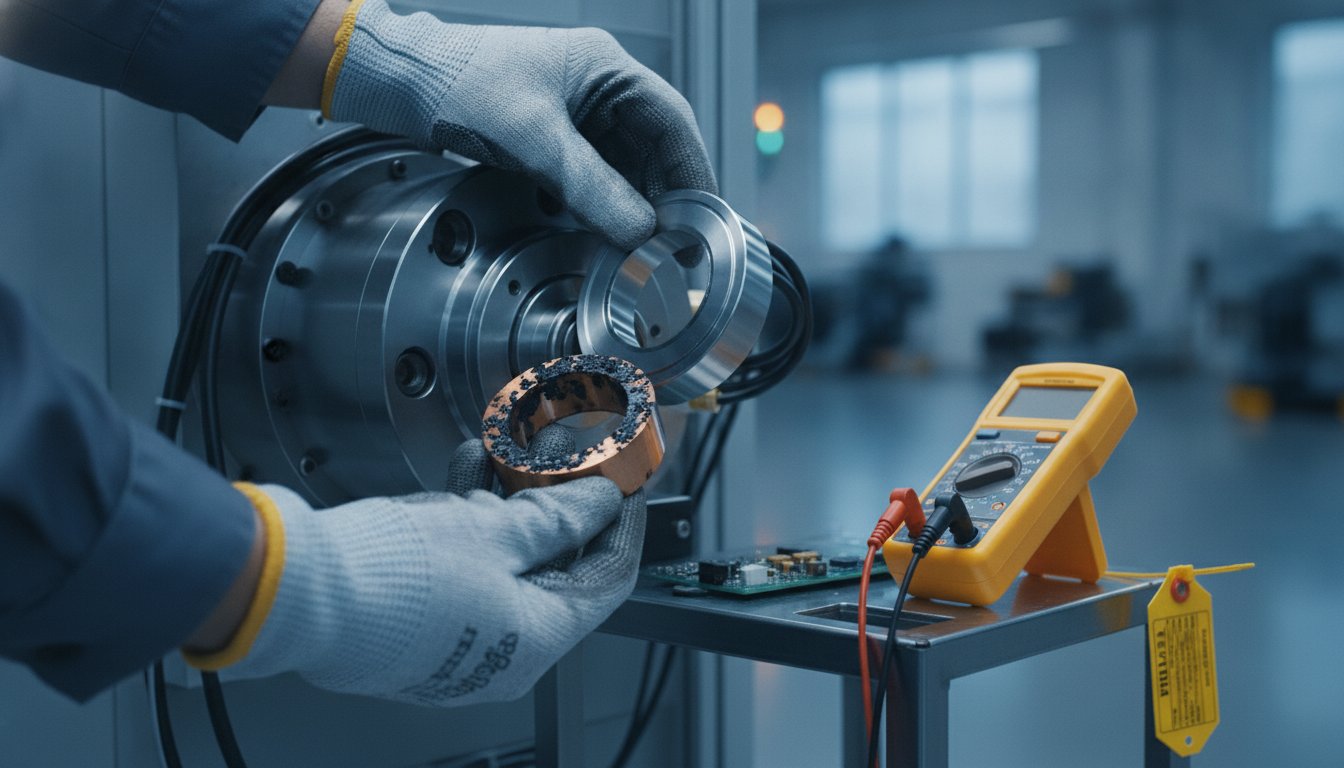
Executing a precise replacement requires a methodical approach to avoid introducing new mechanical stressors. This slip ring replacement guide prioritises a "safety first" methodology. Before any mechanical work begins, you must isolate all power sources and follow Australian standard LOTO (Lock Out, Tag Out) procedures. Skipping this step is a safety risk. It can also lead to accidental electrical surges that damage sensitive downstream equipment. Once safe, document the existing wiring configurations. Multi-channel units often feature complex colour coding, so mapping every circuit to its corresponding terminal is essential for a successful commissioning phase.
Mechanical removal should never involve prying or excessive force. Use the correct pullers to draw the unit off the shaft, as even minor gouges can lead to eccentric rotation in the replacement unit. After removal, prepare the mounting surface by cleaning the flange or shaft of all debris and old anti-seize compounds. A clean surface is vital for achieving the perfect alignment needed to prevent premature seal failure. If you are upgrading your hardware during this process, ensure you source high-performance BGB Innovation units to match your specific industrial requirements.
Removal and Preparation
Carefully disconnect signal cables to avoid putting unnecessary strain on the connector pins. Even slight deformation of these pins can cause intermittent signal loss once the system is back under load. While the unit is removed, verify the dimensions of the replacement unit against the original specification. Check the shaft diameter, mounting hole patterns, and total length. This ensures the new unit will fit within the existing spatial constraints without requiring field modifications that could compromise its IP rating.
Installation and Alignment
When securing the new unit, pay close attention to torque specifications for anti-rotation tabs. If these are too tight, they can bind the internal bearings and cause rapid heat buildup. It's critical to ensure "float" in the mounting. This allows for thermal expansion and minor mechanical run-out without putting lateral pressure on the contacts. Aligning the rotating axis of the slip ring perfectly with the drive shaft ensures uniform contact pressure across all circuits.
Post-Installation Testing
The final phase is electrical validation. Perform insulation testing and circuit continuity checks before applying full power to the machine. Rotate the assembly slowly by hand and check for "dead spots" or intermittent resistance spikes. Once operational, verify signal integrity at full RPM using a digital multimeter or oscilloscope. Monitor the housing temperature during the first hour of operation to ensure no excessive friction is present. This methodical verification confirms that the replacement has been executed to a professional engineering standard.
Sourcing High-Performance Replacements in Australia
Procurement is the final stage of an effective slip ring replacement guide, yet it's often where the most critical errors occur. Simply ordering an identical part number may lead to a repeat of the failure if the original component wasn't correctly specified for the application's evolving demands. Consulting with a slip ring application engineering specialist allows for a technical review that ensures the new unit is genuinely fit for purpose. This is also the ideal time to identify opportunities for "up-speccing." For instance, moving from traditional carbon brushes to liquid metal interfaces, such as those found in Mercotac slip rings, can significantly lower electrical noise and extend maintenance intervals in data-critical environments.
Relying on local Australian inventory offers a distinct strategic advantage by bypassing the volatility of global supply chains. When a machine is down, waiting weeks for an international shipment is rarely an option for national industrial clients. Local distribution ensures that technical support for bespoke configurations is available in the same time zone, allowing for rapid adjustments if a standard off-the-shelf unit fails to meet specific environmental or mechanical constraints. Whether you require a high-precision solution from Meridian Laboratory or a robust power interface, sourcing through a specialised local partner provides the reliability required for long-term operational success.
Technical Selection Criteria
Precision in matching electrical and mechanical specifications is non-negotiable. Technicians must match circuit counts, current ratings, and voltage requirements precisely to the existing load profiles. The mounting style is equally vital; you must determine if a through-bore, flange, or end-of-shaft configuration is required to maintain the integrity of the rotary assembly. Environmental protection levels must also be scrutinised. In the Australian mining and manufacturing sectors, ensuring IP65 or IP67 ratings match the specific operational zone is the only way to prevent the dust and moisture ingress discussed in earlier sections of this slip ring replacement guide.
The Advantage of Australian Distribution
Partnering with industrial slip ring suppliers in Australia provides access to expert advice that factory-direct models often lack. This relationship simplifies the warranty process and ensures that technical support is immediate, preventing the delays associated with international communication. For high-volume OEM users, customised procurement programmes can be established to maintain buffer stocks of critical components. This proactive approach to supply chain management ensures that when a replacement is eventually required, the correct, high-performance unit is already on the ground and ready for installation.
Optimising Rotary Reliability Through Technical Precision
Successful slip ring replacement depends on more than just a mechanical swap; it requires a deep understanding of failure modes and environmental stressors. By conducting a systematic root cause diagnosis and following a structured installation procedure, you can eliminate the variables that lead to premature wear and unplanned downtime. It's about shifting from reactive maintenance to an engineering-led strategy that prioritises long-term compatibility and electrical integrity.
This slip ring replacement guide serves as a framework for maintaining high-performance rotary interfaces across diverse Australian industries. Whether you're upgrading to liquid metal technology or replacing modular carbon brush systems, selecting a unit that's truly fit for purpose is essential. As an authorised distributor for Mercotac and BGB Innovation, we provide the specialised technical support and precision engineering expertise required to ensure your machinery operates at peak efficiency.
Request a Technical Consultation for Your Replacement Needs to secure the reliability of your next installation. Proper planning today prevents costly failures tomorrow.
Frequently Asked Questions
How do I know if my slip ring brushes are worn out?
Indicators include visible carbon dust, signal jitter, or audible grinding. You should measure the brush length against the manufacturer's minimum wear specification. If the brush tension has weakened or the contact surface is pitted, the unit has reached its end of service life. Regular inspections prevent these physical symptoms from escalating into a total system failure that halts production.
Can I replace a carbon brush slip ring with a liquid metal unit?
Upgrading to a liquid metal unit is possible and often preferred for precision data applications. These units, such as those from Mercotac or Meridian Laboratory, provide superior signal clarity compared to carbon brushes. However, you must verify that the RPM limits and mounting orientation are compatible. A technical consultation is recommended to ensure the new technology handles your specific electrical loads and mechanical constraints.
What causes a slip ring to overheat during operation?
Overheating typically stems from high contact resistance, electrical overloading, or mechanical friction. When the current exceeds the unit's rated capacity, the resulting thermal stress can degrade internal lubricants and soften contact materials. Mechanical issues, such as shaft misalignment or over-tightened anti-rotation tabs, also cause bearings to bind. This generates excessive heat that cannot be dissipated in enclosed industrial cabinets.
How often should I perform failure analysis on my rotary connectors?
You should perform a systematic failure analysis every time a component is removed from service. Incorporating this step into your slip ring replacement guide helps identify if the fault was due to natural wear or an external stressor like dust ingress. For critical machinery, conducting a technical audit every 12 months allows you to spot early signs of degradation before they cause unplanned downtime.
Is it possible to repair a Mercotac liquid metal slip ring?
Mercotac liquid metal units are hermetically sealed and cannot be repaired or serviced. Their maintenance-free design is a core feature, but it means that any internal fault or mechanical damage requires a complete unit replacement. Attempting to disassemble these units is dangerous and will lead to the loss of the conductive liquid metal, rendering the component entirely non-functional and potentially hazardous.
What are the risks of using a non-OEM replacement slip ring?
Non-OEM replacements often fail to meet the rigorous environmental sealing and material standards required for Australian mining or processing plants. The primary risks include intermittent signal interference, rapid contact oxidation, and mechanical mismatch. While the initial cost might be lower, the increased risk of premature failure and potential damage to connected control systems often results in higher total operational costs over time.
How does vibration affect the lifespan of a new slip ring installation?
Vibration causes the internal contacts to bounce, which triggers micro-arcing and pits the conductive surfaces. This process rapidly increases electrical noise and shortens the operational life of the bearings. Following a professional slip ring replacement guide ensures that the unit is perfectly aligned with the drive shaft, which is the most effective way to mitigate vibration and protect the precision of the rotary interface.