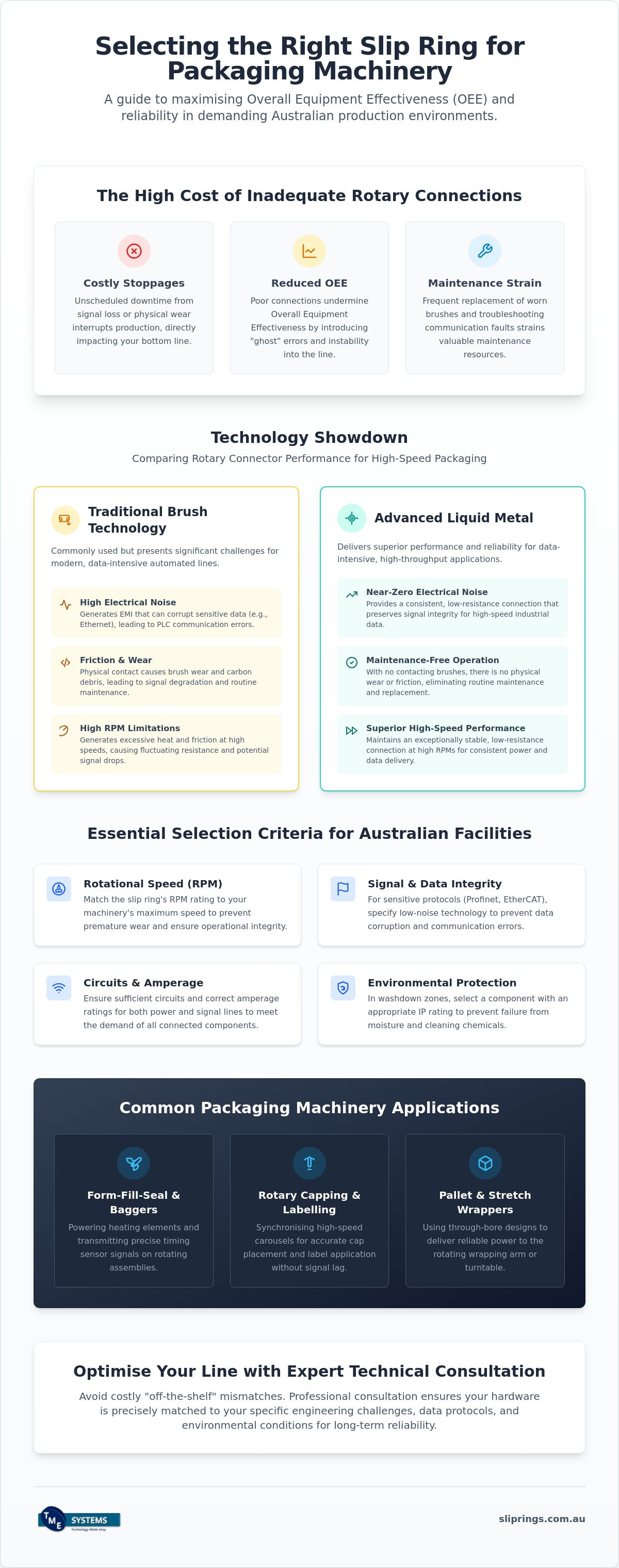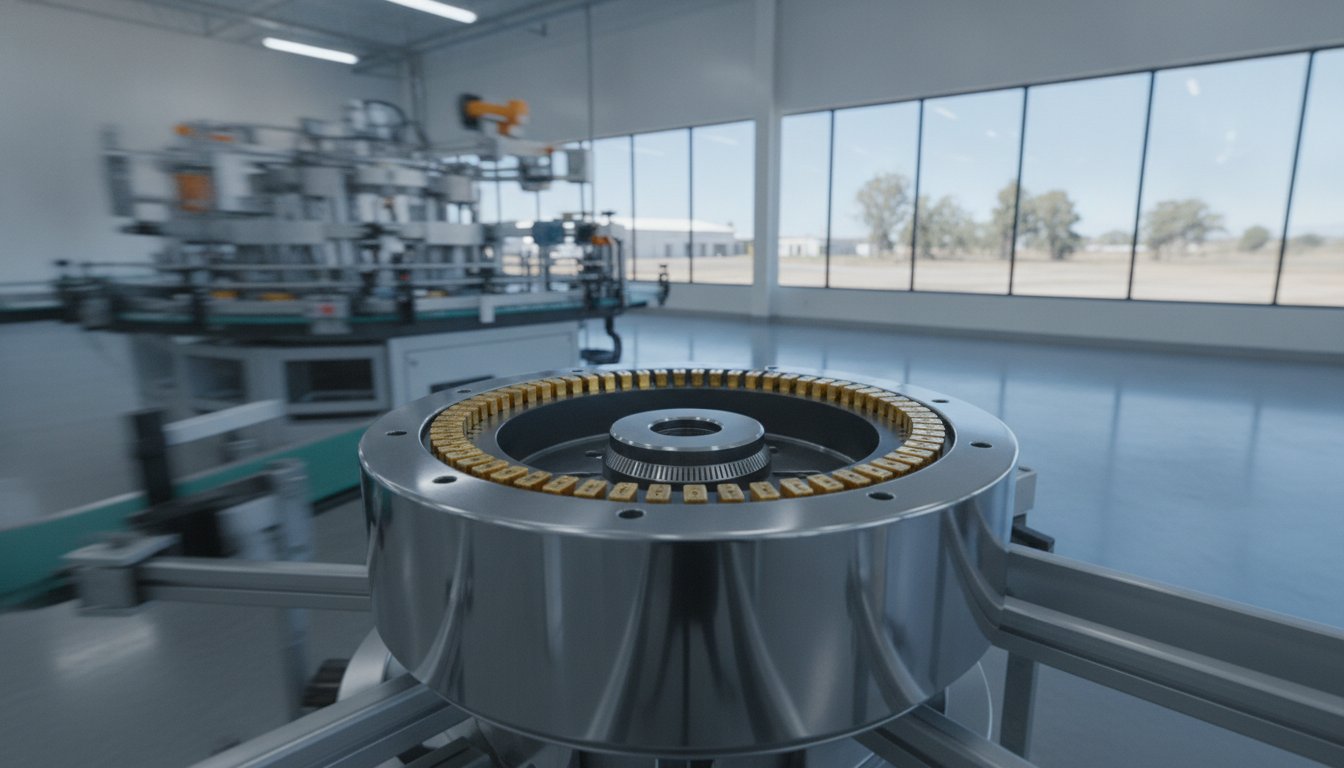
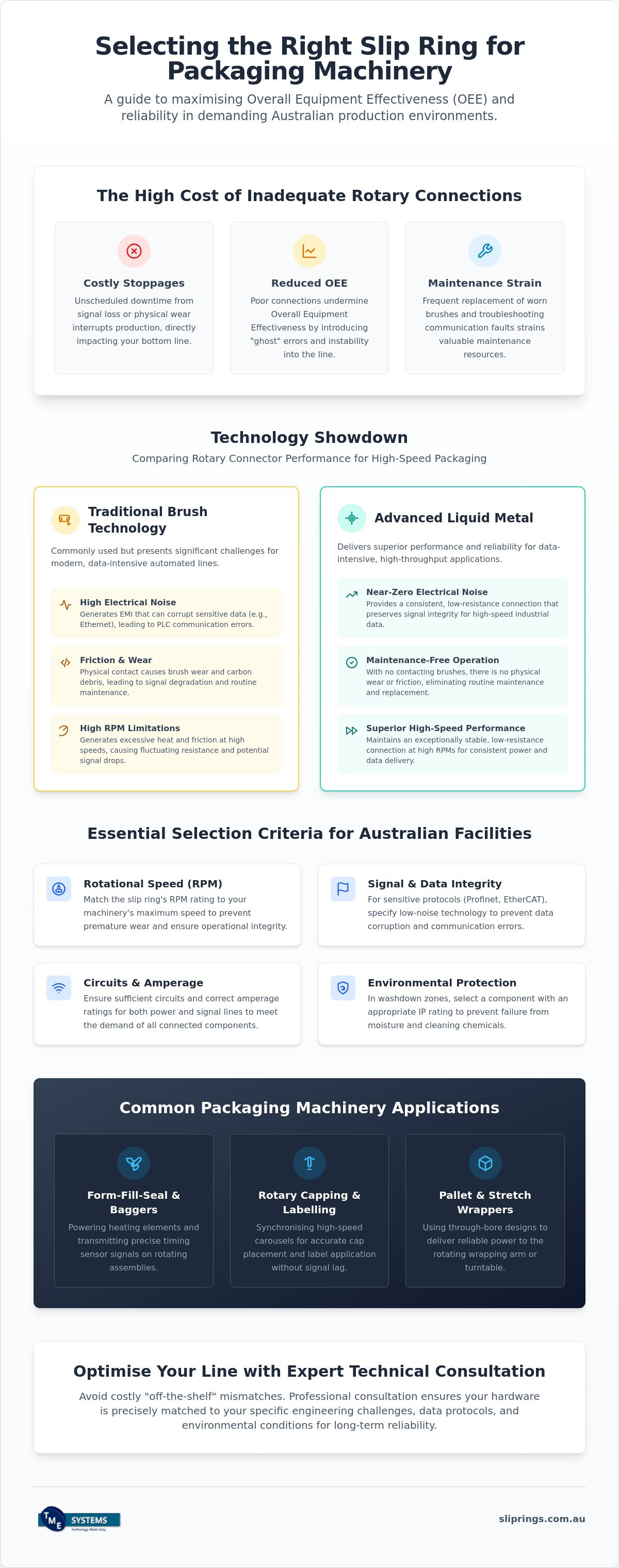
In a high-speed packaging line, the difference between peak performance and a costly unscheduled stoppage often comes down to a single millimetre of electrical contact. You likely recognise the frustration of seeing a PLC drop a signal or a rotary filler grind to a halt because of brush wear or moisture ingress in a washdown zone. These interruptions do more than just stall production; they undermine your Overall Equipment Effectiveness (OEE) and strain maintenance resources. Selecting the right slip ring for packaging machinery is therefore a critical engineering decision that dictates the long-term reliability of your rotary systems.
This technical guide provides the framework you need to specify components that ensure high-speed signal integrity and maintenance-free operation in demanding Australian environments. We will examine the performance trade-offs between liquid metal and traditional brush technologies, identify the correct IP ratings for hygienic washdown zones, and explain how to utilise local technical consultation to match hardware to your specific RPM and data requirements. By the end of this article, you will have a clear pathway to achieving zero-loss data transmission and reducing unplanned downtime on your factory floor.
Key Takeaways
- Determine the impact of rotary interface selection on your Overall Equipment Effectiveness (OEE) and the reduction of unplanned maintenance.
- Learn how to specify the correct slip ring for packaging machinery by balancing RPM requirements with signal integrity for sensitive PLC and Ethernet data.
- Evaluate the performance advantages of liquid metal connectors over traditional brush technologies for low-noise signal transmission in high-speed lines.
- Identify the essential selection criteria for Australian facilities, including circuit count, amperage, and environmental protection for washdown zones.
- Understand the value of technical consultation in matching hardware to specific engineering challenges rather than relying on generic off-the-shelf components.
The Role of Slip Rings in Modern Packaging Automation
A slip ring for packaging machinery is a precision rotary interface for electrical continuity. In the context of modern automation, these components serve as the bridge between stationary control systems and the rotating mechanical elements essential for high-throughput production. Without a reliable rotary interface, the continuous 360-degree motion required for high-speed bottling or bagging would be impossible; hard-wired cables would quickly twist, fatigue, and fail.
For Australian manufacturers, the reliability of this interface directly impacts Overall Equipment Effectiveness (OEE). When a slip ring fails, the entire line stops. These unplanned stoppages are often caused by excessive electrical noise or physical wear in traditional brush systems. As machinery speeds increase to meet market demands, the technical requirements for these connectors have shifted from simple power delivery to the transmission of complex, high-speed data. Ensuring that this connection remains stable under high-cycle conditions is the first step in avoiding the high costs associated with production downtime.
Common Packaging Applications for Rotary Connectors
Rotary connectivity is fundamental to several critical machine types found in Australian facilities:
- Form-Fill-Seal (FFS) machines and vertical baggers: These systems require power for heating elements and signal transmission for precise timing sensors on rotating assemblies.
- Rotary capping and labelling systems: High-speed carousels depend on slip rings to synchronise cap placement and label application without signal lag.
- Pallet wrappers and turntable stretch wrappers: These machines often use through-bore designs to provide power to the wrapping arm or turntable as it orbits a pallet.
The Evolution of Data Transfer in Packaging
The packaging industry has moved beyond basic electrical circuits. Modern lines now require the transmission of Industrial Ethernet, Profinet, and EtherCAT protocols through the rotary joint. This shift introduces significant engineering challenges. Standard carbon brushes often generate electrical noise that can corrupt sensitive data packets, leading to PLC communication errors and sensor inaccuracies.
To maintain signal integrity, many operators are moving toward advanced technologies like Mercotac slip rings, which use liquid metal contacts to provide a near-zero-noise connection. This technical evolution ensures that even at high RPMs, the data required for real-time quality control and automation remains consistent. By choosing the correct technology for the data protocol in use, engineers can prevent the "ghost" errors that often plague automated packaging systems.
Key Technical Demands: Speed, Precision, and Signal Integrity
Operating a high-throughput packaging line requires components that withstand relentless mechanical stress while maintaining electrical precision. For a slip ring for packaging machinery, the primary challenge is the preservation of low contact resistance across millions of rotations. As the rotational speed increases, so does the friction between the stationary brushes and the rotating rings. This friction generates heat, which, if left unmanaged, can alter the material properties of the contacts and lead to fluctuating resistance levels. Stable resistance is vital; even minor variations can cause voltage drops that disrupt the operation of sensitive heaters or actuators.
Electrical noise remains one of the most persistent issues in automated packaging. In environments where high-power motor circuits run alongside low-voltage sensor signals, electromagnetic interference (EMI) is a constant threat. Sensitive packaging sensors, such as those used for bottle counting or label positioning, are particularly vulnerable. If the rotary interface introduces noise into the circuit, the resulting signal degradation can lead to false triggers or missed counts, directly impacting the accuracy of the production run. Professional technical application consulting can help identify the specific noise thresholds required for your control protocols.
Managing High RPM in Packaging Lines
High-speed rotary fillers and cappers often operate at several hundred RPM, creating significant centrifugal forces. In traditional brush-based slip rings, these forces can cause the brushes to bounce or lift slightly from the ring surface. This momentary loss of contact leads to micro-arcing, which accelerates wear and introduces electrical spikes. When selecting a slip ring for packaging machinery, you must distinguish between intermittent rotation, like that found in a pallet wrapper, and the continuous high-speed duty cycles of a bottling carousel. Continuous operations require materials with high thermal conductivity to dissipate heat effectively and maintain contact stability over 24/7 shifts.
Signal Integrity for Digital Controls
Modern digital control systems leave no room for data packet loss. Protocols like Profinet or EtherCAT rely on high-frequency signals that are easily corrupted by the mechanical "chatter" of a wearing slip ring. Effective circuit isolation and internal shielding are necessary to prevent cross-talk between power and data channels. For those experiencing intermittent communication errors, reviewing technical strategies for troubleshooting signal noise in rotary connections is a vital step in restoring system stability. Maintaining this integrity ensures that your PLC receives clear, accurate data, allowing for the precise timing essential to high-speed packaging automation.
Comparing Slip Ring Technologies for Packaging Applications
Selecting the correct contact technology is a decision that affects both initial capital expenditure and long-term maintenance schedules. While previous sections established the need for signal integrity, the physical form factor of a slip ring for packaging machinery must also match the mechanical constraints of the equipment. Engineers often choose between several mounting configurations to suit specific machine architectures. Through-bore designs feature a hollow centre, allowing the unit to slide over an existing drive shaft or accommodate pneumatic lines. Capsule slip rings offer a compact, fully enclosed housing suitable for small-scale sensors and control signals where space is at a premium. For applications with severe height restrictions, pancake designs utilise a flat, platter-like arrangement, though these require careful specification due to the varying surface speeds across the diameter of the ring.
The trade-off between contact technologies often centres on the balance between signal clarity and power capacity. Traditional mechanical brushes are reliable for high-current applications but can introduce electrical noise as the contact surfaces wear over time. Conversely, non-traditional contacts provide a cleaner signal path but may have different environmental or mounting limitations. Understanding these distinctions is essential for avoiding the "ghost" signals in PLCs that often lead to mystery downtime in automated bagging or bottling lines.
Mercotac Liquid Metal Technology
For high-speed sensors and sensitive data protocols, liquid metal technology represents the benchmark for signal quality. Unlike traditional mechanical contacts, these units use a pool of liquid metal to maintain electrical continuity. This eliminates the "chatter" and micro-sparks associated with physical brushes, resulting in near-zero signal noise. Because there are no wearing parts in the contact path, these units are essentially maintenance-free for the duration of their service life. If your application involves high-frequency data or low-voltage signals that are prone to interference, you should explore Mercotac slip rings for superior signal performance.
Traditional Brush and Collector Ring Systems
While liquid metal is ideal for data, traditional brush systems remain the standard for heavy-duty power transmission. Brands like BGB Innovation and Prosper Rotation provide robust solutions for applications requiring higher amperage, such as heating elements in form-fill-seal machines. These systems use carbon or precious metal brushes that contact a rotating ring. They are generally more cost-effective for high-power circuits and are designed for easy brush replacement during scheduled maintenance intervals. You can view the BGB Innovation range for robust industrial use where high current capacity and mechanical durability are the primary requirements.
Selection Criteria: Engineering for Australian Production Environments
Specifying a slip ring for packaging machinery requires a methodical approach to ensure the component survives the specific rigours of the factory floor. Procurement errors often stem from a lack of technical detail regarding electrical loads or mechanical clearances. A structured selection process reduces the risk of premature failure and avoids the high costs of retrofitting incompatible hardware. It's not just about the connection; it's about the environment in which that connection must operate.
The first step involves defining the total circuit count and amperage requirements. You must separate high-current power circuits, such as those for heating elements in bagging machines, from sensitive signal circuits. Overloading a circuit leads to rapid heat buildup and contact degradation. Simultaneously, you must assess voltage ratings and insulation needs to comply with Australian electrical safety standards. Finally, the mechanical mounting style must be determined. A through-bore unit is typically chosen for mounting directly onto a drive shaft, while a flange-mounted capsule is preferred for compact, end-of-shaft installations where space is limited.
Washdown and Hygiene Standards
In Australian food and beverage facilities, hygiene standards necessitate frequent high-pressure washdowns. For these environments, IP65 or IP67 ratings are critical. A standard industrial housing won't prevent moisture ingress, which leads to immediate short circuits and long-term corrosion. You should specify sealing materials that withstand caustic cleaning agents and consider stainless steel housings for humid or refrigerated environments. If your line involves liquid filling or dairy processing, ensuring the rotary joint is properly sealed is non-negotiable for operational stability.
Electrical Specification Checklist
Maintaining signal purity requires careful circuit organisation. Separating power and signal channels within the unit prevents electromagnetic crosstalk, which is a primary cause of PLC data errors. You should also calculate potential voltage drops, especially in long rotary cable runs, to ensure actuators receive the correct power levels. For a deeper look at safety parameters and insulation requirements, refer to our slip ring voltage rating guide. To ensure your selection meets all local engineering requirements, you can consult with our technical team for a full application audit before procurement.
Optimising Your Packaging Line with Expert Technical Consultation
Procuring a slip ring for packaging machinery should never be a purely transactional process based on a catalogue number. While basic specifications like circuit count and diameter provide a starting point, they do not account for the nuanced variables of a high-speed production environment. Professional application engineering ensures that every technical parameter, from rotational torque to signal-to-noise ratios, is matched to the specific demands of your equipment. By engaging in a technical audit before procurement, Australian OEMs and end-users can avoid the common pitfalls of "guess-work" selection that often lead to premature component failure and degraded signal quality.
TME Systems Pty Ltd acts as a knowledgeable intermediary for the Australian packaging industry, providing the technical bridge between complex manufacturing capabilities and local operational needs. Our approach prioritises long-term reliability over quick wins. We assist engineers in navigating the trade-offs between different contact technologies, ensuring that the chosen solution provides the necessary signal integrity for modern digital protocols while remaining within the mechanical constraints of the machine. This consultative process reduces long-term operational costs by extending maintenance intervals and ensuring that the rotary interface does not become the weak link in your automation chain.
Customised Solutions for Unique Machinery
Standard components often require adaptation to fit bespoke or legacy packaging equipment. This might involve modifying housing dimensions, specifying non-standard lead lengths, or integrating multiple technologies into a single assembly. For complex machines that require the simultaneous transfer of power, data, and fluids, we can assist in specifying hybrid systems that combine rotary unions with electrical slip rings. This integration simplifies the mechanical design and reduces the number of potential failure points on a rotating shaft. For a deeper look at these complex configurations, see our pillar article on slip ring application engineering.
Streamlining Procurement in Australia
Accessing world-leading brands like Meridian Laboratory and Prosper Rotation is straightforward through local distribution channels. TME Systems Pty Ltd provides design engineers with the necessary technical data sheets and CAD support to ensure seamless integration during the machine design phase. This level of detail allows for precise mechanical fitment and electrical compatibility before the first component is even ordered. Accessing locally-available technical support is a vital safeguard that ensures any performance anomalies are addressed immediately to minimise downtime. By combining global technology with national technical backup, Australian packaging operations can maintain high-speed connectivity with absolute confidence in their hardware's resilience.
Securing Long-Term Reliability in Rotary Packaging Systems
Selecting the ideal slip ring for packaging machinery is a decision that extends far beyond initial component cost; it is a fundamental step in safeguarding your line's OEE through precise engineering. As discussed throughout this guide, managing the electrical noise of high-speed data protocols and ensuring mechanical resilience in caustic washdown zones are the keys to a stable production environment. When these technical variables are correctly addressed during the specification phase, the result is a significant reduction in unplanned maintenance and a measurable increase in overall system longevity.
TME Systems Pty Ltd serves as an authorised Australian distributor for Mercotac and BGB Innovation, offering expert technical selection advice to match your specific RPM and environmental needs. With national delivery across all Australian states, our team ensures you have access to the hardware and application engineering required to maintain peak performance. If you are ready to eliminate signal interference and minimise downtime on your factory floor, request a technical consultation for your packaging machinery today. Our specialists are prepared to help you specify a solution that stands up to the rigours of modern packaging automation.
Frequently Asked Questions
What is the best slip ring for high-speed packaging applications?
Mercotac liquid metal connectors are generally considered the best choice for high-speed packaging applications due to their near-zero electrical noise. While traditional brushes can bounce at high RPMs, liquid metal maintains a constant, stable connection. This technology is particularly effective for rotary fillers or cappers where signal integrity is paramount for timing sensors. For applications exceeding 1,000 RPM, specific Meridian Laboratory models may also be specified to ensure mechanical stability and long-term reliability.
How do I reduce signal noise in my rotary packaging machine?
Reducing signal noise requires a combination of superior contact technology and proper circuit isolation. Utilising a liquid metal slip ring for packaging machinery is the most effective way to eliminate mechanical chatter and micro-arcing. You should also ensure that high-power motor leads are physically separated from low-voltage data lines within the assembly. Effective internal shielding and the use of twisted-pair wiring for communication protocols like Ethernet or Profinet further safeguard your signal integrity.
Can I use a slip ring in a food-grade washdown environment?
Yes, you can use slip rings in washdown environments provided they carry the correct Ingress Protection (IP) rating. For standard cleaning, an IP65 rating is usually sufficient, but for intensive high-pressure washdowns common in Australian food processing, an IP67 or IP69K rating is necessary. These units feature specialised seals and often utilise stainless steel or anodised aluminium housings to resist corrosion from caustic cleaning agents and frequent moisture exposure.
How many circuits can a packaging machinery slip ring handle?
The number of circuits depends entirely on the physical frame size and the specific application requirements. Standard units can handle anywhere from two to over 100 circuits in a single assembly. In a slip ring for packaging machinery, it's common to combine a few high-amperage circuits for heating elements with multiple low-current circuits for sensors and PLCs. If space is limited, capsule designs offer high circuit density, while through-bore models allow for larger circuit counts.
What is the difference between a slip ring and a rotary union?
A slip ring transmits electrical power and data, whereas a rotary union facilitates the transfer of fluids or gases such as compressed air, water, or oil. While they serve different functions, they are often used together on the same rotating axis. Hybrid units are available that integrate both technologies into a single component. This allows a machine to provide electrical power to a heater while simultaneously delivering pneumatic pressure to an actuator on a rotating carousel.
How often do slip rings in packaging machines need maintenance?
Maintenance frequency depends on the contact technology used in your equipment. Traditional carbon or precious metal brush systems require periodic inspection for wear and the removal of conductive dust, typically every few million revolutions. In contrast, liquid metal slip rings are essentially maintenance-free because they have no wearing contact surfaces. Regardless of the type, you should regularly check for mechanical looseness or signs of moisture ingress to prevent unexpected failures during a production shift.
Are liquid metal slip rings safe for use in the food industry?
Liquid metal slip rings are safe for the food industry when they are correctly integrated into the machine design and properly sealed. The liquid metal is contained within a robust, hermetically sealed housing that prevents any leakage under normal operating conditions. These units are widely used in rotary bottling and bagging lines because they provide the signal clarity needed for precision automation without the risk of generating conductive dust associated with traditional carbon brushes.
How do I select a replacement slip ring for an old packaging line?
Selecting a replacement for an older line requires a detailed technical audit of the existing setup. You must identify the required RPM, the number of circuits, the maximum current per circuit, and the available mounting space. It's also vital to assess whether the original component failed due to environmental factors like humidity or chemical exposure. Consulting with a technical specialist can help you determine if an upgrade to a more modern, durable technology would improve your line's overall reliability.