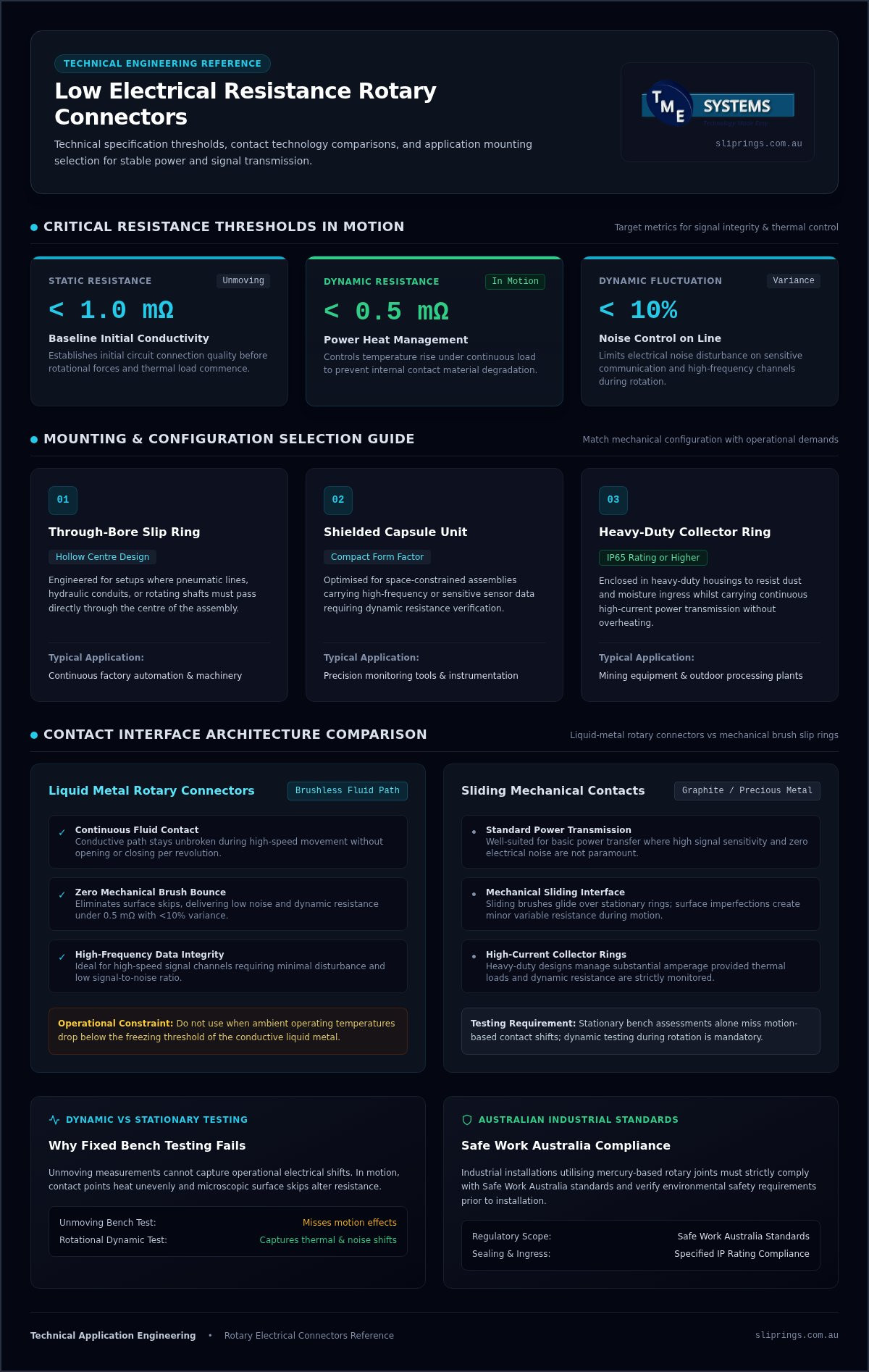
Low electrical resistance rotary connectors hold static contact resistance under 1.0 mΩ and dynamic resistance under 0.5 mΩ so signal paths and high-power circuits stay stable in motion. Choosing between brushless liquid-metal designs and mechanical slip rings depends on speed, noise tolerance, and environmental protection ratings like IP65.
Key Takeaways: A low electrical resistance rotary connector maintains static resistance under 1.0 mΩ and dynamic resistance under 0.5 mΩ to ensure stable power and signal transmission.
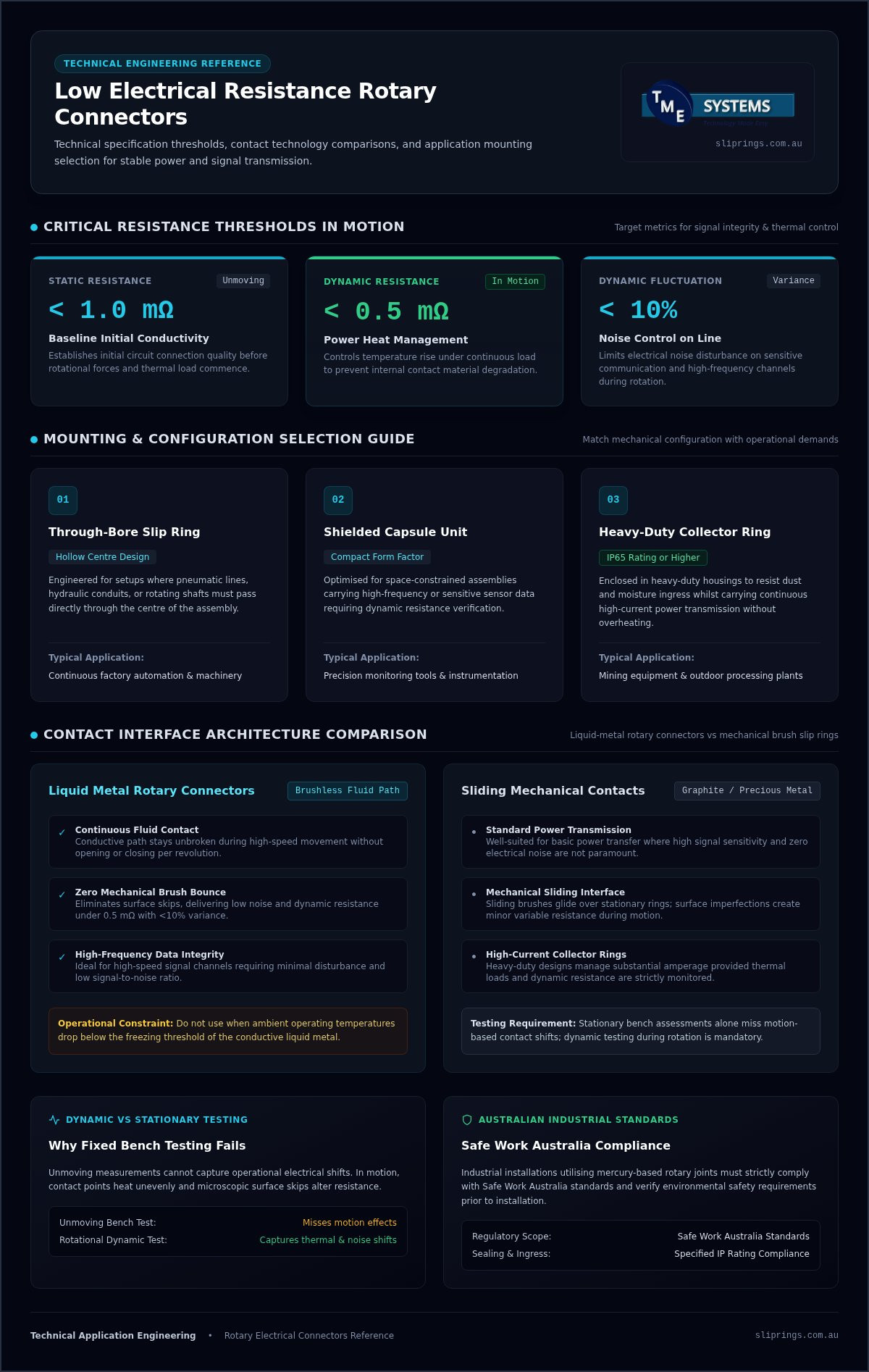
- Liquid-metal designs achieve dynamic resistance under 0.5 mΩ with less than 10% fluctuation during rotation.
- Skip it when operating temperatures fall below the freezing threshold of the conductive liquid metal.
- Choose liquid-metal transmission for high-frequency data applications requiring minimal noise and zero brush bounce.
- You must comply with Safe Work Australia standards when using mercury-based connectors in industrial environments.
Match mounting, load and noise before you commit to a rotary connector
Selecting the right component means matching your mechanical layout with the demands of the job. Picture a busy factory floor where automated machinery spins continuously without twisting internal cables.
Before you read on, three common situations and the matching choice from the options below:
- Continuous automation with air or fluid through the shaft: use a hollow centre connector (through-bore slip ring).
- Compact monitoring with sensitive data: prefer a shielded capsule and verify contact resistance under rotation.
- Mining or outdoor plant gear: specify a heavy-duty housing at IP65 or higher.
Your first step is the physical mounting style. A hollow centre connector suits setups where air or fluid lines must pass directly through the shaft centre.
Next, examine low resistance (contact resistance) parameters for power stability. Bench readings taken while the unit is still often miss motion effects, so dynamic evaluation of slip ring contact resistance is essential if you want to avoid thermal problems. You can explore the industrial procurement guide to understand local procurement standards.
When sensitive signal transmission is necessary, keep noise on the line low enough to preserve data integrity. Shielded capsule designs fit compact monitoring tools, while heavy-duty industrial units suit mining equipment.
Costs vary based on IP ratings and circuit counts. Request a personalised quote for precise pricing.
What a rotary electrical connector does at the rotating joint
A rotary electrical connector transmits current and signals across a rotating joint without twisting wires. Traditional mechanical designs use sliding graphite or precious metal contacts that glide against stationary rings. Modern alternatives use liquid metal inside a sealed chamber to establish a continuous conductive path.
Liquid-metal units deliver low resistance because the conductive path stays continuous. Sliding mechanical assemblies create variable resistance when surface imperfections interrupt physical contact during motion, so liquid metal produces less disturbance on sensitive channels than a brush that skips across a ring.
Testing still needs care. Stationary assessments miss motion-based electrical shifts, so a clean static result is not enough on its own: measure slip ring contact resistance while the assembly is rotating. Standard sliding units remain suitable for basic power transfer, whereas liquid-metal systems fit high-speed data applications that need minimal signal disturbance.
Designers often select a hollow centre connector when routing shafts through the centre. Liquid metal can improve performance in those data roles, provided the unit meets local environmental safety requirements before installation. For precise technical specifications, consult the professional engineering reference.
Resistance specs that keep high-power rotating assemblies cool
High-power models must hold sub-milliohm low resistance under dynamic conditions to prevent overheating during continuous operation. Excess thermal energy quickly degrades internal contact materials when high-current power crosses a rotating assembly without a stable path.
Situation → action → result: a collector ring carrying continuous high current starts to heat at the contact interface; you specify hardware that holds dynamic resistance under 0.5 mΩ with fluctuation under 10%; heat stays controlled and the contact materials last longer in service. Running a heavy-duty collector ring without managing that thermal load leads directly to premature hardware degradation.
| Specification Metric | Target Threshold | Operational Impact |
|---|---|---|
| Static Resistance | < 1.0 mΩ | Baseline initial electrical conductivity |
| Dynamic Resistance | < 0.5 mΩ | Real-world power transmission heat control |
| Dynamic Fluctuation | < 10% variance | Limits noise on the line during rotation |
Unmoving measurements do not capture electrical performance in motion, which makes fixed-only testing a weak basis for acceptance. Contact points heat unevenly under load once movement begins. Choose low-resistance units rated for the speeds you actually run.
An undersized connector behaves like a constricted hose on a water pipe: pressure builds and heat concentrates at the restriction. To assess these operational values safely, engineering guidance is available through TME Systems Pty Ltd.
Where liquid-metal contact improves signal stability
Liquid-metal transmission provides continuous fluid contact across rotating interfaces, which helps keep sensitive data channels stable. The fluid path stays unbroken during high-speed movement, so the conductive area does not open and close with each revolution.
Unlike mechanical brushes that wear down, liquid-metal solutions deliver low resistance and low electrical noise (signal-to-noise ratio). Maintaining that stable fluid connection matters: according to Wikipedia's 2025 slip ring overview, continuous electrical contact prevents signal degradation in rotatable assemblies. You can compare this with standard mechanical designs in the guide on how slip rings work. More on this: How Does a Slip Ring.
Fluid interfaces suit high-frequency applications because they remove physical bounce at the contact face. Still test the assembly under dynamic conditions and measure slip ring contact resistance during operational rotation, not only at rest.
A liquid-metal design fits systems that need minimal interference and little maintenance downtime. TME Systems Pty Ltd supplies specialised rotary options for harsh industrial environments. Ask for configuration details matched to your circuit count and speed.
Safety Standards for Mercury Joints in AU
Mercury-based slip rings face strict Australian regulatory oversight because of toxic heavy metal exposure hazards.
Compliance with Safe Work Australia standards requires heavy industrial applications to contain hazardous liquid metals. Evaluate alternative liquid metal connectors or sealed designs so a failure does not release contamination. Mercury containment functions as a sealed barrier inside the machine assembly.
When you compare dynamic electrical interfaces, treat low resistance claims with the same discipline you apply to any power component: confirm performance while the shaft turns. Traditional solid-contact designs or gallium-based alloys often present safer alternatives for Australian manufacturing facilities that need to reduce operational liability.
Safety regulations make proper containment non-negotiable for industrial power units. Prioritise designs with certified sealing protocols so workers stay protected and the installation stays compliant.
Tip: Always verify that outdoor enclosures meet at least IP65 to prevent environmental moisture from degrading internal conductive pathways.
How to select a low electrical resistance rotary connector
Pick a rotary connector by reading operating speed, electrical load, signal types, and physical mounting against the maker’s ratings. The wrong model wears fast and drifts out of spec.
- Map your current and signal needs: Calculate total amperage and decide whether sensitive data needs low resistance.
- Determine rotation speed: Match the rated RPM of the component to your assembly speed.
- Assess space constraints: Choose between a compact solid shaft or a hollow centre connector based on your layout.
- Verify dynamic performance: Prove the unit under operational movement rather than resting conditions.
A passing static test is often misleading and fails to show how slip ring contact resistance behaves under real-world dynamic conditions. Vibration in the machine can degrade electrical contacts faster than continuous high speed alone, so housing protection deserves equal weight beside the electrical sheet.
TME Systems Pty Ltd provides rotary joints for demanding conditions and can help you refine shaft dimensions and circuit counts before you buy. Send your mounting drawing and load list to narrow the options.
When mechanical slip rings are the practical choice
Standard mechanical units are often the right choice when budget limits or harsh operating conditions drive the hardware decision.
Traditional carbon brush systems handle high power loads at a lower purchase cost. Brushes ride against a rotating track and carry current without fluid reservoirs. A liquid metal device provides lower contact resistance (low resistance), yet it cannot operate below its freezing threshold. Standard mechanical assemblies cover wider thermal ranges without that constraint.
Mechanical units also avoid hazardous material handling rules. Liquid metal components need careful mounting to prevent fluid leaks, which raises installation effort. Traditional units mount in a straightforward way. Mechanical designs make economic sense on slow-rotating machinery where purchase cost matters more than ultra-quiet signal paths.
Still evaluate dynamic performance during selection so contact resistance under load does not surprise you after install. For continuous high-speed signal transfer, TME Systems Pty Ltd provides advanced rotary options. Request a hardware review against your speed, load and environment so the shortlist fits the duty cycle.
Frequently asked questions
What is a rotating electrical connector?
A rotating electrical connector passes power and signals across a moving joint continuously without tangling cables. The device keeps the circuit closed while the shaft turns. You can use a low resistance rotary connector when delicate data feeds share the same rotating interface.
How does a liquid‑metal connector achieve low resistance?
A liquid‑metal connector uses fluid metal pools to link internal rotating contacts. The liquid interface keeps the contact area large and stable, so the path does not open with brush bounce. You get steady power output because the liquid pool stays continuous during rotation.
What are the main types of rotating connectors?
Rotating connectors come as solid shaft designs, mercury-free fluid models, and hollow centre connector configurations. Solid shaft variants fit compact end-of-shaft mountings. Hollow core designs allow air or hydraulic lines to pass through the middle. TME Systems Pty Ltd supplies configurations matched to your physical layout.
Which industries use rotating connectors?
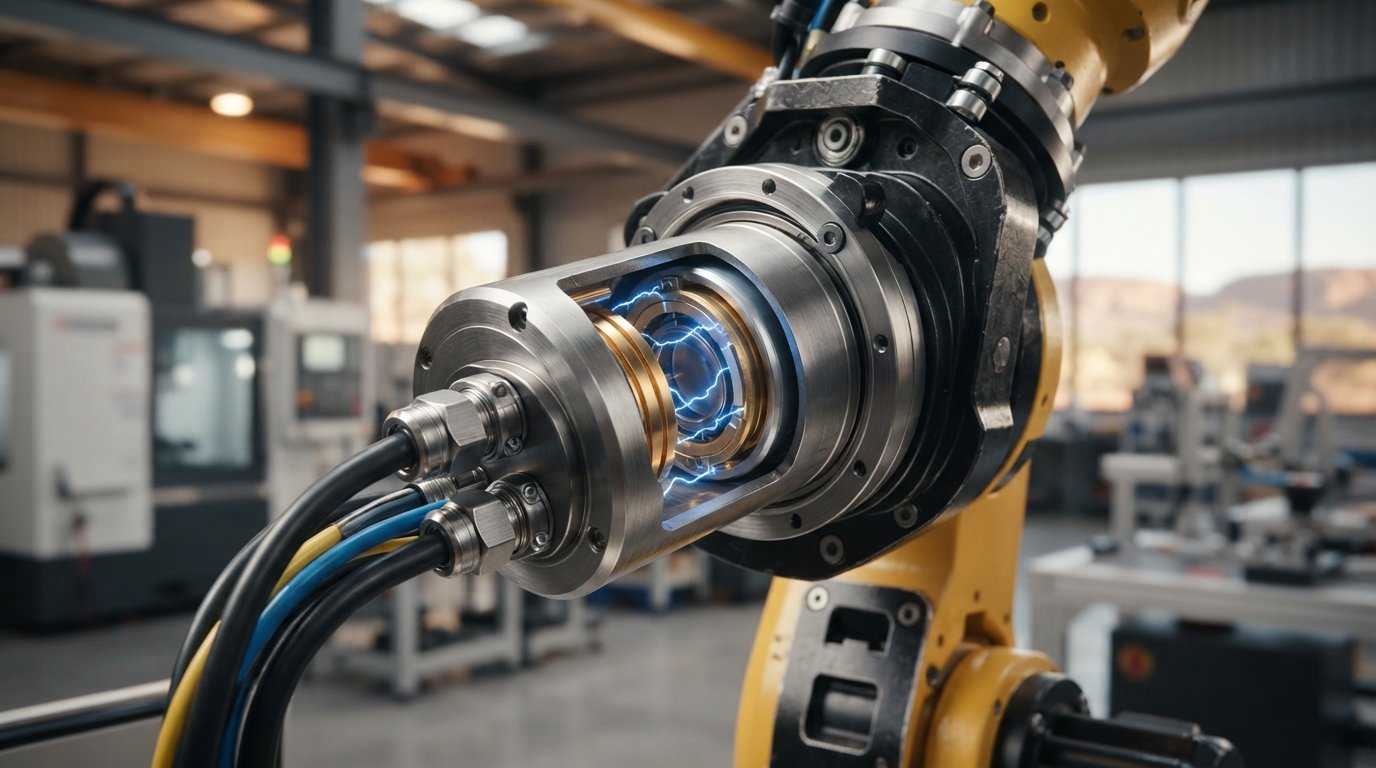
Packaging machinery, medical equipment, and automation lines rely on these components. Robotics systems use them to turn arm joints without cable wind-up. Wind turbines depend on them to transfer power from spinning blades. Video camera rigs install them so the head can rotate freely without binding control wires.
How does it differ from a conventional slip ring?
A standard slip ring relies on sliding graphite or metal brushes that wear down over time. Fluid or advanced contact connectors use sealed liquid pools or precious metals instead. Traditional brushes produce wear debris and signal fluctuation. Upgraded designs offer longer service lives and need less routine maintenance.
Steady performance starts with the right rotating interface
Selecting a low resistance rotary connector is how you keep data and power stable across critical rotating equipment. The same questions you opened with (speed, noise tolerance, IP rating, and dynamic contact behaviour) still decide whether liquid-metal or mechanical hardware belongs on the shaft.
System stability follows from that disciplined selection. In 2026, proper evaluation prevents premature field failures in industrial environments.
TME Systems Pty Ltd provides technical rotary joint expertise across Australia to help you integrate these interfaces into your hardware. Explore engineered interfaces at sliprings.com.au. Direct technical enquiries to the engineering team for a personalised quote tailored to your application.